
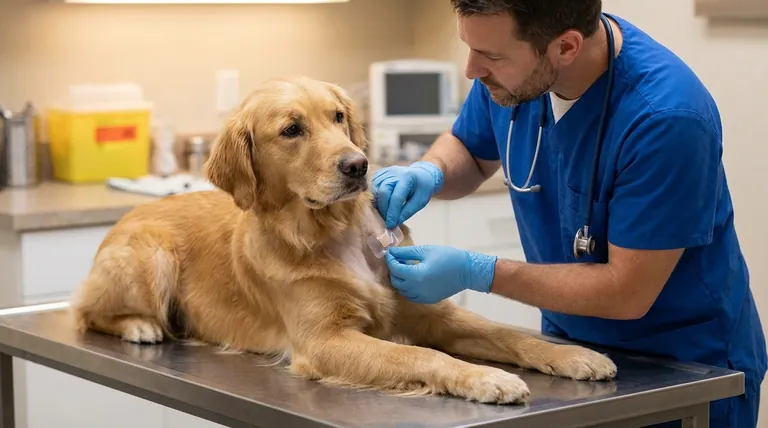
When a dog receives a dog fentanyl patch, it's crucial to follow the veterinarian's instructions for follow-up care. The primary reason for returning is to have the patch safely removed and disposed of, as improper handling can lead to accidental exposure or overdose. Additionally, if a dose is missed or a new patch is needed, consulting the vet ensures proper dosing intervals are maintained without risking overdose by applying multiple patches. Never cut or apply two patches simultaneously, as this disrupts the controlled release mechanism.
Key Points Explained:
-
Patch Removal and Disposal
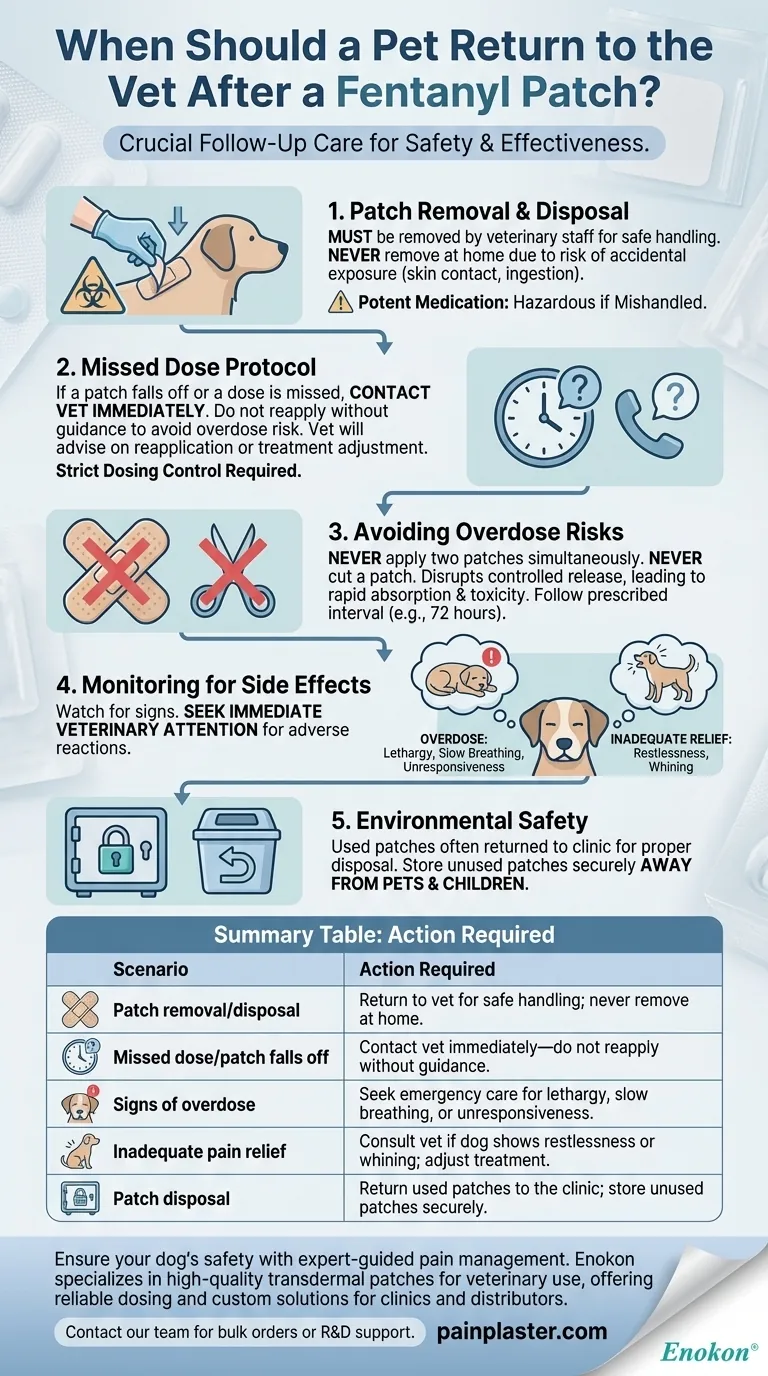
- The patch must be removed by the veterinary office to ensure safe handling and disposal. Fentanyl patches contain potent medication that can be hazardous if mishandled.
- Owners should never remove the patch themselves due to risks of accidental exposure (e.g., through skin contact or ingestion by pets/children).
-
Missed Dose Protocol
- If a patch falls off or a dose is missed, contact the veterinarian immediately. They will advise whether to reapply a new patch or adjust the treatment plan.
- Applying a new patch without guidance risks overdose, as fentanyl’s potency requires strict dosing control.
-
Avoiding Overdose Risks
- Never apply two patches at once or cut a patch, as this disrupts the controlled-release mechanism, potentially leading to rapid drug absorption and toxicity.
- Follow the prescribed interval between patch changes (typically 72 hours, but vet-specific instructions may vary).
-
Monitoring for Side Effects
- After application, watch for signs of overdose (lethargy, slow breathing, unresponsiveness) or inadequate pain relief (restlessness, whining).
- Immediate veterinary attention is needed if adverse reactions occur.
-
Environmental Safety
- Used patches must be disposed of properly (often returned to the clinic) to prevent accidental exposure to humans or other animals.
- Store unused patches securely, away from pets and children.
By adhering to these guidelines, owners can ensure their dog’s safety while benefiting from effective pain management. Always prioritize clear communication with the vet to address any concerns post-application.
Summary Table:
| Scenario | Action Required |
|---|---|
| Patch removal/disposal | Return to vet for safe handling; never remove at home. |
| Missed dose/patch falls off | Contact vet immediately—do not reapply without guidance. |
| Signs of overdose | Seek emergency care for lethargy, slow breathing, or unresponsiveness. |
| Inadequate pain relief | Consult vet if dog shows restlessness or whining; adjust treatment as needed. |
| Patch disposal | Return used patches to the clinic; store unused patches securely. |
Ensure your dog’s safety with expert-guided pain management. Enokon specializes in high-quality transdermal patches for veterinary use, offering reliable dosing and custom solutions for clinics and distributors. Contact our team for bulk orders or R&D support.
Visual Guide
Related Products
- Menthol Gel Pain Relief Patch
- Icy Hot Menthol Medicine Pain Relief Patch
- Capsaicin Chili Medicated Pain Relief Patches
- Lidocaine Hydrogel Pain Relief Patch for Pain Relief
- Mugwort Wormwood Pain Relief Patch for Neck Pain
People Also Ask
- How effective are pain relief patches for muscle pain? Target Localized Pain with Transdermal Delivery
- How do pain relief patches compare to other pain relief methods? Discover Targeted, Long-Lasting Relief
- Who should consult a healthcare professional before using pain relief patches? Ensure Your Safety with Medical Advice
- How do drug loading and permeation enhancers ensure patch efficacy? Achieve Superior Clinical-Grade Pain Relief.
- What are some common applications of pain relief patches? Effective Relief for Muscle & Joint Pain



















