
Proper disposal of transdermal fentanyl patches is a critical public safety measure. Unlike most medications, a used fentanyl patch still contains a significant, and potentially lethal, amount of the drug. If not disposed of correctly, these patches pose a life-threatening risk of accidental poisoning to children, pets, and others, as well as a risk of being diverted for illicit use.
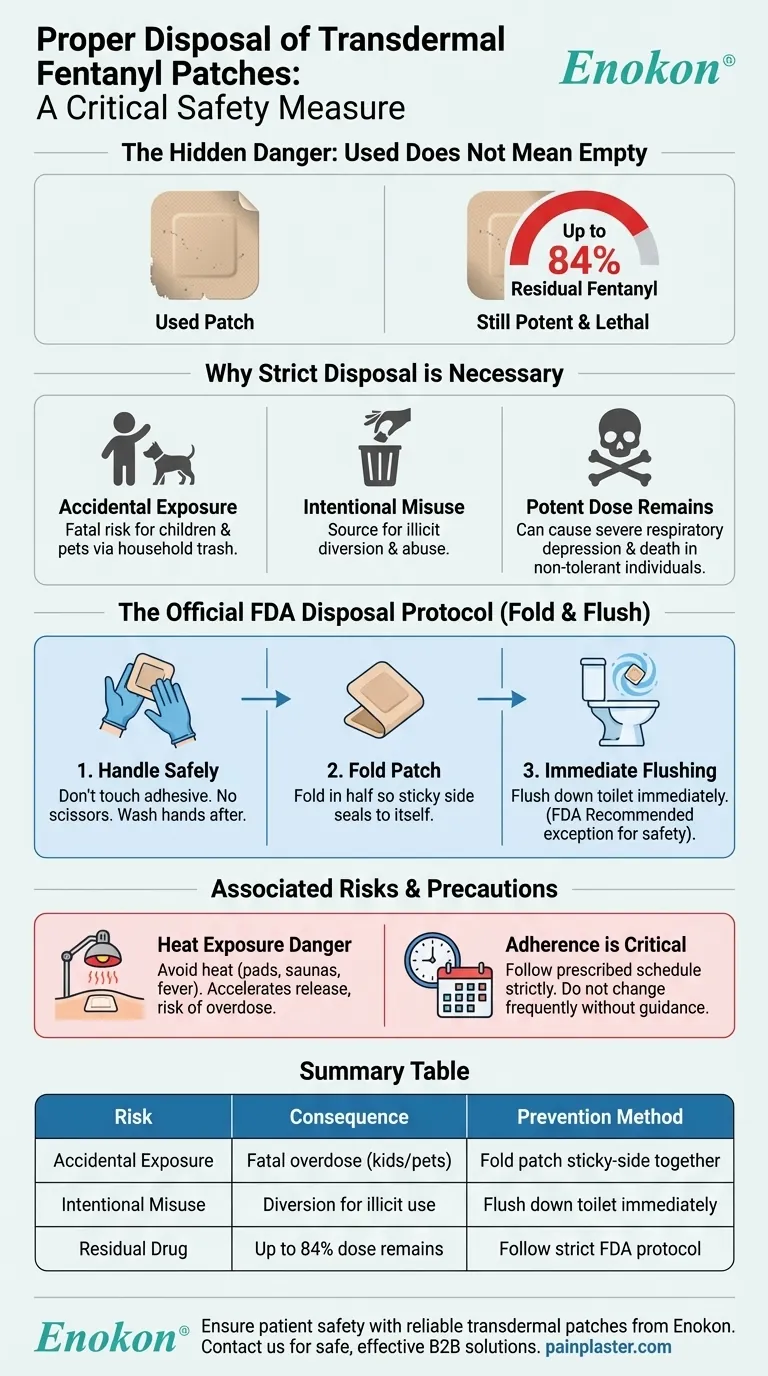
The core issue is that "used" does not mean "empty." Because a used fentanyl patch can retain up to 84% of its original dose, the risk of a fatal overdose from accidental exposure is so high that the FDA recommends the unusual step of flushing it down a toilet.
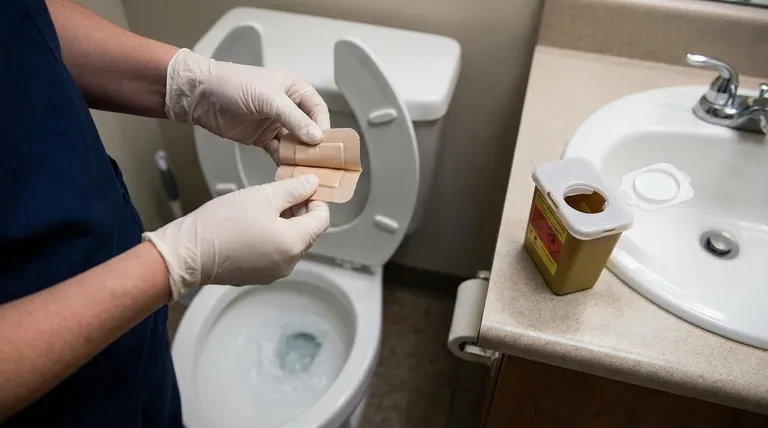
The Hidden Danger in a "Used" Patch
To understand the strict disposal protocol, you must first appreciate the danger that remains after a patch has been worn for its intended duration.
A Potent Dose Remains
A fentanyl patch is designed to deliver a steady, controlled dose of medication over 72 hours. However, a large amount of the opioid remains in the patch matrix even after it's removed.
This residual fentanyl is powerful enough to cause severe respiratory depression and death, especially in someone who is not opioid-tolerant, like a small child.
The Risk of Accidental Exposure
The primary reason for the disposal protocol is to prevent accidental contact. Patches thrown in household trash can be easily found.
A child might put the patch in their mouth or apply it to their skin out of curiosity. A pet could lick or chew on it. In either case, the result could be a fatal overdose.
The Threat of Intentional Misuse
Fentanyl is a powerful and highly sought-after substance for illicit use. Patches discarded in the trash can be retrieved by individuals seeking to abuse the remaining drug, contributing to the broader opioid crisis.
Proper disposal permanently removes the patch from the home and waste system, eliminating this opportunity.
The Official Disposal Protocol
The FDA has established a clear, multi-step process for disposing of fentanyl patches to mitigate these risks.
Step 1: Handling the Patch
When removing a used patch, be careful not to touch the sticky, adhesive side. Never use scissors to cut a patch.
After handling, always wash your hands thoroughly with soap and water.
Step 2: Folding the Patch
Immediately after removal, fold the used patch in half so that the adhesive side sticks to itself.
This action seals away the surface containing the residual medication, making it much more difficult for the drug to be transferred upon contact.
Step 3: Immediate Flushing
The FDA recommends that you immediately flush the folded patch down a toilet. This is the most secure way to ensure it cannot harm anyone.
While flushing medications is generally discouraged due to environmental concerns, the FDA has determined that the risk of death from accidental fentanyl exposure outweighs the potential environmental impact. This recommendation is reserved for only a small number of extremely dangerous medicines.
Disposing of Unused or Expired Patches
Unused patches pose the same, if not greater, risk. The preferred method of disposal is to take them to a medication take-back program or event.
If a take-back program is not available, follow the same procedure: fold any unused patches with the sticky sides together and flush them down the toilet.
Understanding the Associated Risks
Proper disposal is part of a larger safety framework required when using this powerful medication.
The Danger of Heat Exposure
Patients must avoid exposing the patch to direct heat sources like heating pads, electric blankets, saunas, or hot baths. A fever can also increase absorption.
Heat accelerates the rate at which fentanyl is released from the patch into your body, which can easily lead to a dangerous overdose.
The Importance of Adherence
It is critical to follow your doctor's instructions precisely. Changing patches more frequently than prescribed (typically every 72 hours) or increasing the dose without medical guidance can have fatal consequences.
Loss of control over the drug's effects can occur quickly, making strict adherence to the prescribed schedule essential for safety.
A Non-Negotiable Safety Protocol
Choosing the correct disposal method for fentanyl patches isn't a suggestion; it's a necessary step to prevent a potential tragedy.
- If you are a patient or caregiver: Make the "fold and flush" procedure an immediate and unbreakable habit the moment a patch is removed.
- If you are a healthcare professional: Provide clear, direct, and repeated instructions to patients on this critical disposal process, explaining exactly why it is necessary.
- If you find a discarded patch: Do not touch it with your bare hands. Use gloves or a tool to pick it up, fold it sticky-side-in, and flush it down a toilet immediately.
This simple, deliberate action is the final, crucial step in using this medication safely and protecting those around you.
Summary Table:
| Risk | Consequence | Prevention Method |
|---|---|---|
| Accidental Exposure | Fatal overdose in children/pets | Fold patch sticky-side together |
| Intentional Misuse | Diversion for illicit use | Flush down toilet immediately |
| Residual Drug | Up to 84% of dose remains in used patch | Follow strict FDA disposal protocol |
Ensure patient safety with reliable transdermal patches from Enokon.
As a bulk manufacturer of transdermal patches and pain plasters for healthcare and pharmaceutical distributors, we prioritize safety and efficacy in every product. Our technical expertise supports custom R&D and development to meet your specific needs.
Contact us today to discuss how we can help you provide safe, effective transdermal solutions for your patients. Get in touch via our Contact Form
Visual Guide
Related Products
- Silicone Scar Sheets Patch Transdermal Drug Patch
- Menthol Gel Pain Relief Patch
- Far Infrared Heat Pain Relief Patches Transdermal Patches
- Icy Hot Menthol Medicine Pain Relief Patch
- Mugwort Wormwood Pain Relief Patch for Neck Pain
People Also Ask
- What role does a silicone-based transdermal delivery system play in Parkinson's? Enhancing Early-Stage Patient Care
- How is the long-term skin tolerance of silicone-based transdermal patches evaluated in clinical settings? R&D and Safety
- Why is a polarizing microscope used to evaluate the long-term stability of transdermal drug patches? Ensure Efficacy.
- What are common adverse effects of transdermal drug delivery? Risks & Prevention Tips
- What are the advantages of transdermal drug patches? Optimize Medication Delivery with Patches

















