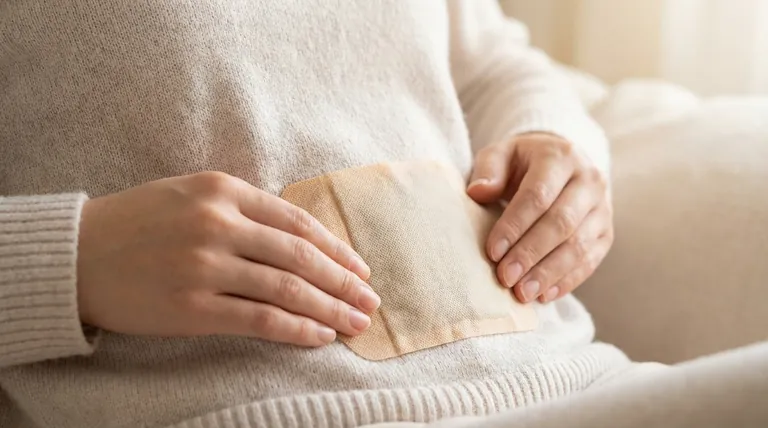
The Illusion of Simplicity
A self-heating patch is a small marvel of material science. A controlled, gentle exothermic reaction packaged in a biocompatible adhesive, engineered to deliver therapeutic warmth precisely where it's needed.
Its genius lies in its simplicity. Peel, stick, and feel the relief.
But this elegant simplicity masks a complex interaction. The patch is one half of a system; the other half is the dynamic, unpredictable, and incredibly nuanced human body. The failure to appreciate this interface is where simple relief can turn into a significant risk. This isn't a product failure; it's a system failure rooted in human psychology. We are wired to underestimate the risks of things that seem simple and familiar.
The Interface Problem: Where Chemistry Meets Biology
The most critical point of interaction is the skin. We often think of it as a simple surface, but it's a living, breathing organ—a complex biological interface.
The Skin as a Dynamic System
Applying a patch to broken, irritated, or compromised skin is like building a house on an unstable foundation. The skin's barrier is already breached, altering its response to both the adhesive and the thermal energy.
The same risk applies to areas with reduced sensation, a common issue for individuals with diabetic neuropathy. The body's crucial feedback loop—the sensation of "this is getting too hot"—is disabled. The user is flying blind, unable to detect the early warnings of a thermal injury.
This is why protocol is paramount:
- Apply only to clean, dry, and intact skin.
- Never apply over cuts, rashes, or areas where you can't feel sensation normally.
- Rotate application sites to allow the skin barrier to fully recover.
The Chemical Handshake: Adhesives and Active Ingredients
An allergy test isn't just a box-ticking exercise. It is a necessary chemical handshake between the product and your unique physiology. The patch's adhesive components and its active ingredients (like capsaicin in some pain plasters) are foreign substances.
Performing a small patch test 24 hours prior to full use allows your body's immune system to review the ingredients and signal any potential conflicts through redness, itching, or swelling. Ignoring this step is betting that your biology perfectly matches the statistical norm.
The User Variable: Personal Health as a Critical Input
A well-engineered patch is designed for a standard user. But in healthcare, there is no "standard user." Every individual's medical history is a critical variable that changes the safety equation.
Beyond the Surface: Chronic Conditions
Certain conditions fundamentally alter how the body manages heat and reacts to topical applications.
- Diabetes: As mentioned, impaired nerve function can mask burns.
- Circulatory Disorders: Poor circulation can lead to heat concentrating in one area instead of dissipating, increasing burn risk.
- Skin Conditions: Eczema or psoriasis can be exacerbated by adhesives and heat.
Consulting a healthcare provider isn't about seeking permission; it's about data validation. You are providing your doctor with the patch's operational parameters and asking them to run it against your unique physiological blueprint to identify potential system conflicts, including interactions with medications like blood thinners.
Special Population Safety Protocols
| Population | Key Risk Factor | Recommended Action |
|---|---|---|
| Elderly | Thinner, more fragile skin. | Shorter wear times; more frequent skin checks. |
| Diabetics | Reduced sensation (neuropathy). | Avoid use on feet/legs; visual inspection for burns. |
| Children | More sensitive skin; unable to communicate discomfort effectively. | Use only under strict medical supervision. |
| Pregnant Individuals | Potential systemic effects. | Always consult a physician before use. |
The Environmental Context: A System Within a System
Finally, the patch and user system doesn't operate in a vacuum. The external environment adds another layer of complexity.
Adding external heat—from a heating pad, direct sunlight, or a hot bath—is like overclocking a processor without adding cooling. You are pushing the skin's thermal regulation capacity beyond its designed limits, turning therapeutic warmth into a source of cellular damage.
Proper storage is also part of the safety protocol. It ensures the chemical components remain stable and that the exothermic reaction performs exactly as the engineers intended—no more, no less.
True safety, then, is an engineered outcome. It's born from the manufacturer's diligence in creating a reliable and predictable product, and the user's diligence in applying it with a full understanding of the system they are creating.
This is why the foundational engineering behind the patch is so critical. For healthcare brands and distributors, ensuring that every patch delivers consistent, predictable, and safe thermal therapy is non-negotiable. It requires a deep understanding of material science, biocompatibility, and manufacturing precision. For partners committed to delivering this level of engineered safety and reliability, we can help build solutions that honor this complexity. Contact Our Experts
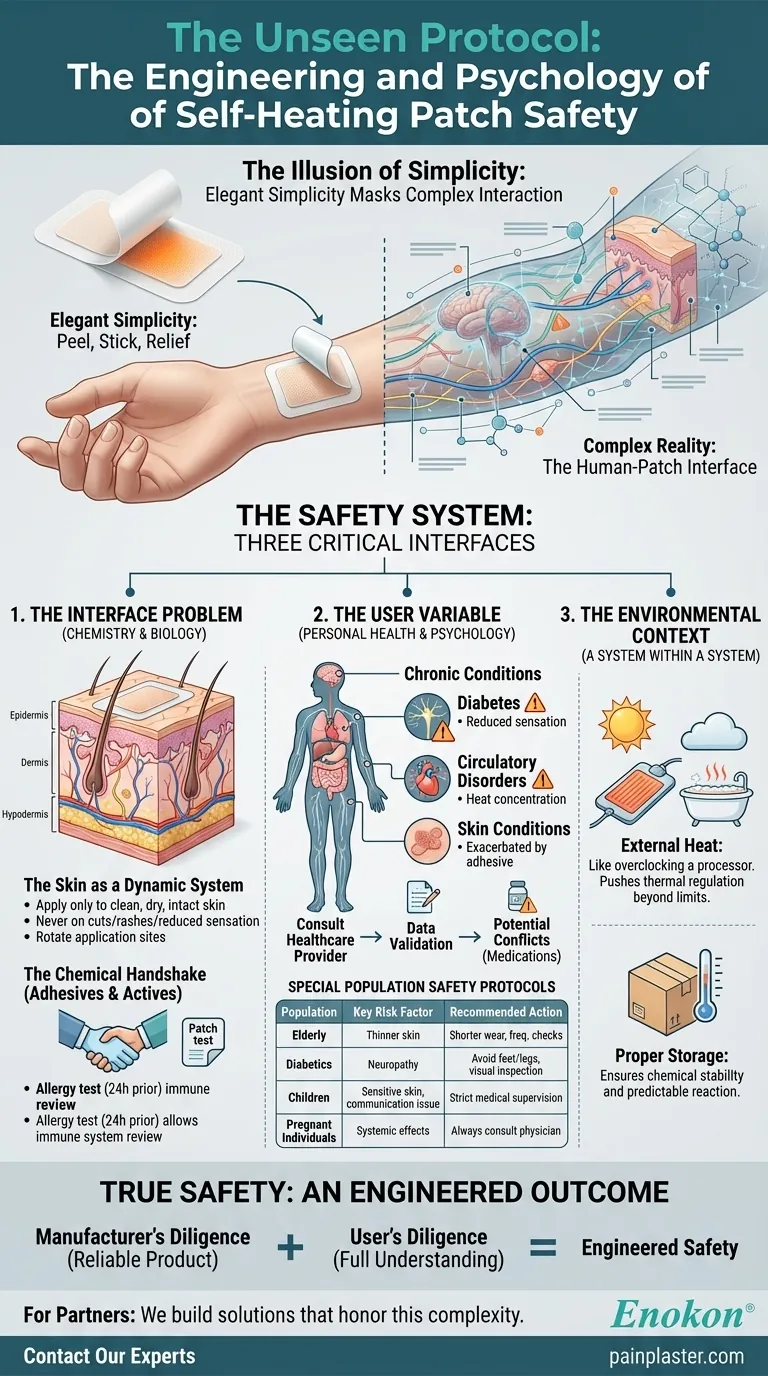
Visual Guide
Related Products
- Heating Pain Relief Patches for Menstrual Cramps
- Far Infrared Heat Pain Relief Patches Transdermal Patches
- Heat Relief Capsicum Patch for Lower Back Pain Relief
- Far Infrared Deep Heat Relief Patches Medicated Pain Relief Patches
- Far Infrared Knee Pain Patch Heat Patches for Pain Relief
Related Articles
- The Hidden Economics of Pain Relief: Why a $2 Patch Can Outperform a $150 Session
- Precision Over Pills: The Engineering and Psychology of Targeted Pain Relief
- Beyond the Pill: The Engineering and Psychology of Targeted Heat Therapy
- The Multiplier Effect: Why Integrated Heat Therapy is the Future of Recovery
- Precision in a Patch: The Vascular Dynamics of Localized Heat Therapy



















