
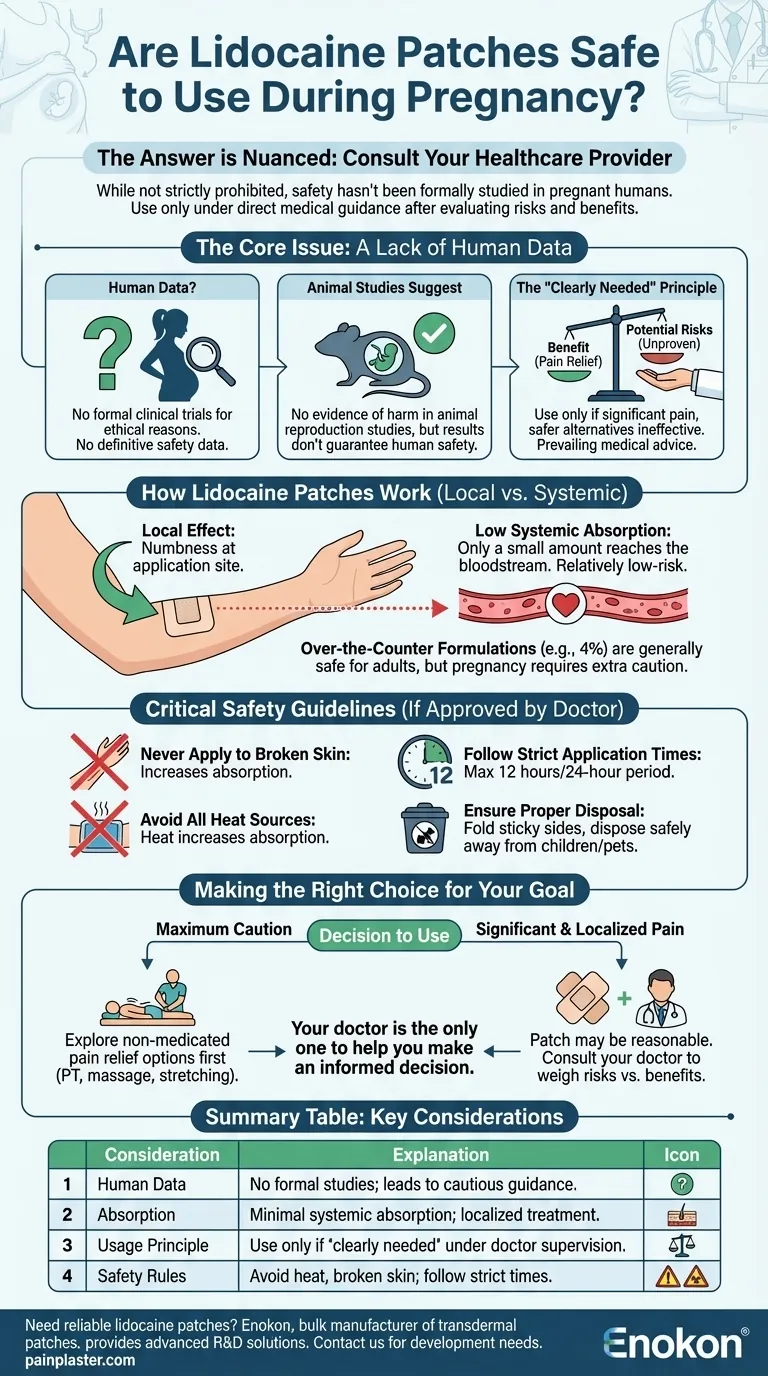
The short answer is nuanced: While lidocaine patches are not strictly prohibited, their safety during pregnancy has not been formally studied in humans. Therefore, they should only be used under the direct guidance of a healthcare provider after a careful evaluation of the risks and benefits for your specific situation.
The central issue is a lack of definitive data. Because there are no controlled studies on pregnant women, medical guidance advises using lidocaine patches only when the benefit of relieving significant pain clearly outweighs any potential, though unproven, risks.

The Core Issue: A Lack of Human Data
Why the Answer Isn't a Simple "Yes"
The primary reason for caution is that formal clinical trials are not conducted on pregnant women for ethical reasons. This means there is no direct human data to definitively establish the safety of lidocaine patches during pregnancy.
What Animal Studies Suggest
Animal reproduction studies using lidocaine did not show evidence of harm to the fetus. However, results from animal studies do not always translate directly to human health, which is why experts remain cautious.
The "Clearly Needed" Principle
Given the lack of human studies, the prevailing medical advice is to use lidocaine patches during pregnancy only if they are clearly needed. This means the pain is significant and other, safer alternatives have been considered or are not effective.
How Lidocaine Patches Work
Local vs. Systemic Effect
Lidocaine patches are designed to work locally, numbing the specific area of pain where they are applied. This is a significant advantage over oral pain medications.
Only a very small amount of the lidocaine is absorbed into the bloodstream. This low systemic absorption is the main reason they are considered a relatively low-risk option for localized pain, even with the lack of pregnancy-specific data.
Over-the-Counter Formulations
Many lidocaine patches, such as the common 4% formulation, are available over the counter. This speaks to their general safety profile for the adult population, but pregnancy requires a higher level of caution.
Critical Safety Guidelines (If Approved by Your Doctor)
If your healthcare provider determines that a lidocaine patch is the right choice for you, it is crucial to follow safety protocols to minimize any potential risk.
Never Apply to Broken Skin
Do not use a patch on skin that is broken, irritated, or inflamed. Damaged skin can significantly increase the amount of medication absorbed into your bloodstream.
Avoid All Heat Sources
Never apply a heating pad or any other heat source over a lidocaine patch. Heat increases blood flow to the area, which can cause your body to absorb more of the medication than intended.
Follow Strict Application Times
Use the patch only for the recommended duration, which is typically no more than 12 hours in a 24-hour period. Using it for longer does not increase the benefit and may increase risk.
Ensure Proper Disposal
After use, fold the sticky sides of the patch together and dispose of it immediately in a location inaccessible to children and pets. Even a used patch contains enough lidocaine to be harmful if ingested.
Making the Right Choice for Your Goal
Ultimately, the decision to use a lidocaine patch during pregnancy is a conversation between you and your doctor.
- If your primary focus is maximum caution: Explore non-medicated pain relief options first, such as physical therapy, massage, or approved stretching exercises.
- If your pain is significant and localized: A lidocaine patch may be a reasonable option, but you must consult your healthcare provider to weigh the benefits against the theoretical risks.
Your doctor is the only one who can help you make an informed decision based on your health, your specific pain, and your stage of pregnancy.
Summary Table:
| Key Consideration | Explanation |
|---|---|
| Human Data | No formal studies exist on pregnant women, leading to cautious guidance. |
| Absorption | Only a small amount is absorbed systemically, making it a localized treatment. |
| Usage Principle | Should only be used if "clearly needed" and under a doctor's supervision. |
| Safety Rules | Avoid heat, broken skin, and follow strict application times. |
Need a reliable, high-quality lidocaine patch for your brand or distribution network? As Enokon, a bulk manufacturer of reliable transdermal patches and pain plasters, we provide healthcare and pharma distributors with technically advanced, custom R&D solutions. Let our expertise ensure your products meet the highest standards of safety and efficacy. Contact our team today to discuss your development needs.
Visual Guide
Related Products
- Lidocaine Hydrogel Pain Relief Patch for Pain Relief
- Capsaicin Chili Medicated Pain Relief Patches
- Menthol Gel Pain Relief Patch
- Icy Hot Menthol Medicine Pain Relief Patch
- Herbal Medicated Anti Diarrhea Patch for Digestive Relief
People Also Ask
- How does the aqueous base in a lidocaine patch contribute to drug delivery? Unlocking Sustained Pain Relief Technology
- What are the advantages of topical anesthetics over invasive Lidocaine infiltration? Discover Safer, Scalable Relief
- Which pain patch is most effective for arthritis? Find the Best Relief for Your Joint Pain
- Why are lidocaine patches preferred over oral medications? Targeted Relief & Scale Your Brand with OEM R&D Solutions
- Will a GP routinely continue prescribing lidocaine patches after the initial period? Understanding Short-Term Pain Relief



















