
To put it directly, natural and herbal pain relief patches can be an effective and safe option for managing certain types of localized pain. Their effectiveness stems from delivering plant-derived active ingredients directly to the source of discomfort, while their safety profile is generally favorable due to a lower risk of the systemic side effects associated with oral medications.
The core value of a natural pain patch is its ability to provide targeted relief by absorbing active ingredients through the skin. This approach minimizes exposure to synthetic chemicals and reduces the likelihood of adverse reactions, but it requires careful consideration of the specific ingredients and your own skin sensitivity.

How Natural Patches Deliver Pain Relief
The primary mechanism behind herbal pain patches is transdermal delivery. This simply means the active ingredients are absorbed through the skin.
The Principle of Targeted Application
Instead of being ingested and processed by your digestive system, a patch delivers its ingredients directly to the muscles and tissues in a specific area.
This localized approach concentrates the therapeutic compounds exactly where you feel the pain, whether it's a sore muscle, an aching joint, or nerve discomfort.
Bypassing Systemic Side Effects
A significant advantage of this method is that it largely bypasses the digestive tract and liver. This is why patches are less likely to cause the stomach irritation or other systemic side effects commonly linked to oral pain relievers.
Decoding the Common Active Ingredients
The effectiveness of any herbal patch depends entirely on its ingredients. Different compounds are suited for different types of pain.
Capsaicin: For Nerve Pain
Derived from chili peppers, capsaicin works by desensitizing nerve receptors. It is often used for nerve pain and can create a warming sensation upon application.
Menthol: The Cooling Sensation
Menthol provides a cooling effect that helps distract your brain from pain signals. It's excellent for soothing sore muscles and providing immediate, temporary relief.
Willow Bark: A Natural Anti-Inflammatory
Often called "nature's aspirin," willow bark contains salicin, which has anti-inflammatory properties. It is frequently used for conditions involving inflammation, such as back pain.
Turmeric: For Joint Stiffness
Turmeric is well-known for its ability to reduce inflammation. In a patch, it can be particularly helpful for targeting the pain and stiffness associated with joint issues.
Belladonna: For Muscle Aches
Belladonna is another traditional ingredient often included in formulations designed to relieve muscle and back pain.
Understanding the Trade-offs and Safety
While generally safe, natural patches are not without potential downsides. Understanding these limitations is key to using them effectively.
The Primary Risk: Skin Irritation
The most common issue with any adhesive patch is skin sensitivity. Ingredients, especially potent ones like capsaicin, can cause redness, itching, or irritation in some individuals.
It is always recommended to perform a patch test on a small area of skin before full application. If any irritation occurs, you should discontinue use immediately.
When to Consult a Healthcare Professional
You should always consult with a healthcare provider before using these patches if you have underlying medical conditions, are pregnant, or are taking other medications. This ensures there are no potential interactions or contraindications for your specific health situation.
Making the Right Choice for Your Pain
To select the best patch, match the active ingredients to your specific type of pain.
- If your primary focus is chronic nerve pain: Look for a patch where capsaicin is a primary active ingredient.
- If your primary focus is acute muscle soreness or a sprain: A patch with menthol will provide immediate cooling relief.
- If your primary focus is inflammatory joint pain or stiffness: Formulations containing turmeric or willow bark are designed for this purpose.
- If you have sensitive skin: Always perform a patch test first and choose a product known for being gentle on the skin.
Ultimately, natural pain patches offer a compelling, non-systemic alternative for managing localized pain and discomfort.
Summary Table:
| Ingredient | Primary Use | Key Benefit |
|---|---|---|
| Capsaicin | Nerve Pain | Desensitizes nerve receptors, warming sensation |
| Menthol | Muscle Soreness | Provides cooling relief, distracts from pain |
| Willow Bark | Inflammatory Pain | Natural anti-inflammatory, reduces swelling |
| Turmeric | Joint Stiffness | Fights inflammation, eases stiffness |
| Belladonna | Muscle Aches | Traditional remedy for muscle and back pain |
Looking for a reliable supplier of high-quality, natural pain relief patches?
As Enokon, a bulk manufacturer of reliable transdermal patches and pain plasters, we partner with healthcare and pharmaceutical distributors and brands to deliver effective solutions. Benefit from our technical expertise for custom R&D and product development tailored to your market's needs.
Contact our experts today to discuss how we can help you develop safe and effective herbal pain relief products.
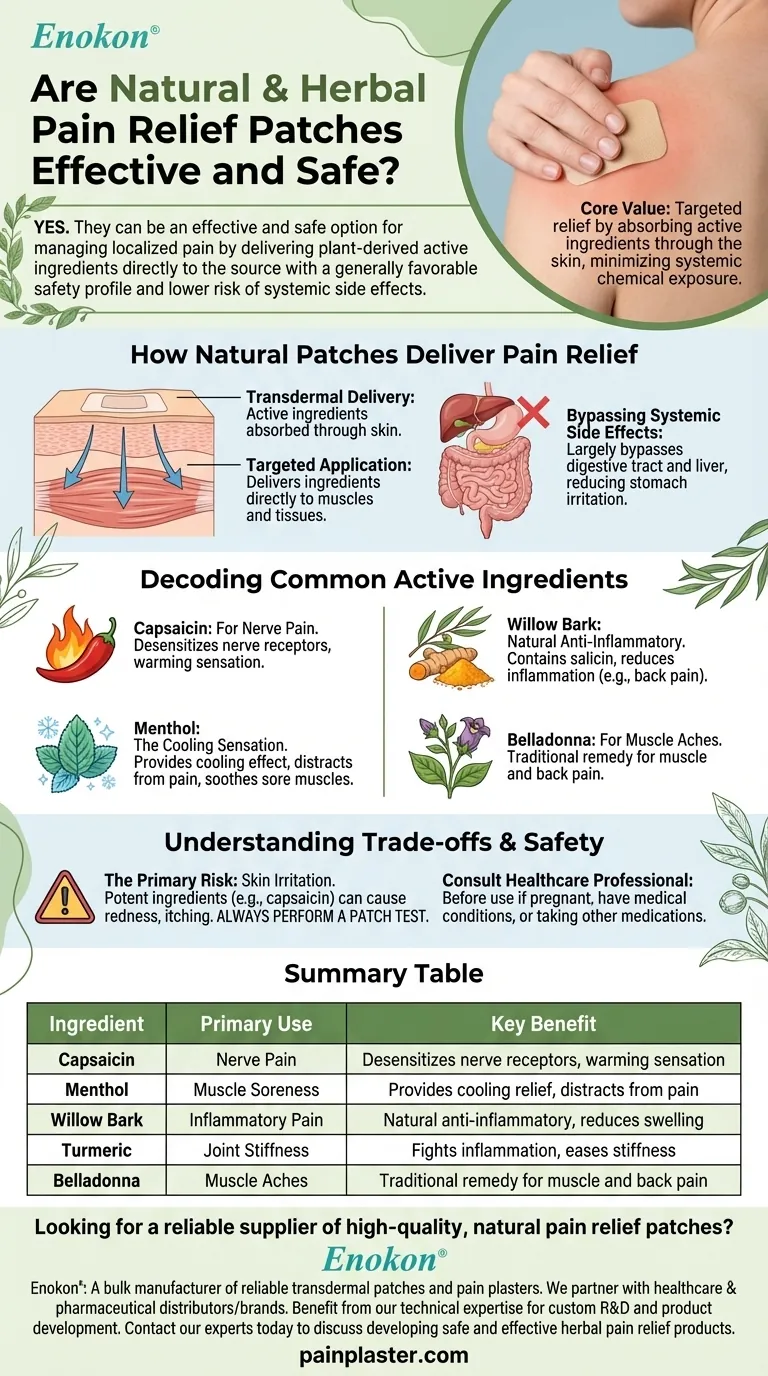
Visual Guide
Related Products
- Mugwort Wormwood Pain Relief Patch for Neck Pain
- Natural Herbal Wormwood Patch Pain Plaster
- Far Infrared Heat Pain Relief Patches Transdermal Patches
- Icy Hot Menthol Medicine Pain Relief Patch
- Natural Herbal Patch for Motion Sickness and Car Sickness Relief
People Also Ask
- What safety considerations should be kept in mind when using pain relief patches? Ensure Safe & Effective Pain Management
- How should pain relief patches be applied and used? A Guide to Safe & Effective Targeted Relief
- How do pain relief patches provide targeted relief? Discover the Science Behind Effective Pain Management
- How do pain relief patches compare to oral painkillers? Targeted Relief vs. Systemic Effects
- Are pain relief pills and patches available without a prescription? Choose the Right OTC Pain Relief



















