
In short, no—for most healthy individuals, the common side effects of the birth control patch are not dangerous. However, like all combination hormonal contraceptives, the patch carries rare but serious risks, particularly for those with specific health conditions or lifestyle factors.
The crucial distinction is between common, manageable side effects that often fade over time and the rare but serious cardiovascular risks. Understanding your personal health profile is the key to determining if the patch is a safe option for you.

Distinguishing Common vs. Serious Side Effects
The vast majority of side effects associated with the birth control patch are mild and temporary. Your body often needs a few months to adjust to the new hormone levels.
Common, Mild Side Effects
Most side effects are manageable and tend to resolve within the first two to three cycles. These frequently include:
- Skin Irritation: Redness or a rash at the application site.
- Irregular Bleeding: Spotting or breakthrough bleeding between periods.
- Breast Tenderness: A common hormonal effect.
- Headaches and Nausea: Often mild and diminish over time.
- Mood Swings: Changes in mood or emotional state.
Rare but Serious Risks
While very uncommon, the patch is associated with a slightly increased risk of serious medical events. These are the primary safety concerns you and your doctor must evaluate. They include:
- Blood Clots: Clots forming in the legs (deep vein thrombosis) or lungs (pulmonary embolism).
- Heart Attack and Stroke: A risk that increases significantly with other cardiovascular factors.
- High Blood Pressure: The hormones can cause an elevation in blood pressure.
- Gallbladder and Liver Issues: In rare cases, the patch can affect these organs.
Why These Risks Exist: The Role of Estrogen
The birth control patch is a combination hormonal method, meaning it contains both progestin and estrogen. The serious risks are primarily linked to the estrogen component.
The Estrogen Connection
Estrogen can slightly increase the body's production of clotting factors, which is why it raises the risk of blood clots, heart attack, and stroke.
The Patch vs. The Pill
The patch functions similarly to combination birth control pills. However, some research indicates that the patch may expose a user to slightly higher overall levels of estrogen compared to some low-dose pills, potentially leading to a slightly higher risk of estrogen-related adverse events.
Understanding the Trade-offs: Who Is at Highest Risk?
The safety of the birth control patch is not universal; it depends entirely on your individual health profile. Certain factors dramatically increase the risk of serious complications, making the patch an unsafe choice.
Key Contraindications
You should not use the birth control patch if you have a history of:
- Blood clots, heart attack, or stroke
- Uncontrolled high blood pressure
- Breast cancer or uterine cancer
- Liver disease
- Unexplained vaginal bleeding
The Impact of Smoking and Age
The most significant risk magnifier is the combination of smoking and being over the age of 35. For this group, the risk of a serious cardiovascular event like a heart attack or stroke while using the patch increases substantially.
Making an Informed Decision with Your Doctor
Evaluating whether the patch is safe for you is a medical decision that requires a professional consultation.
- If you are a healthy non-smoker under 35: The patch is generally considered a safe option, but you should discuss your full medical history with your provider.
- If you have pre-existing conditions like migraines, high blood pressure, or diabetes: A thorough evaluation is critical, as the patch may not be the safest choice.
- If you are over 35 and smoke: The patch is generally not recommended due to the significantly elevated risk of serious side effects.
Ultimately, a conversation with a healthcare provider is the only way to weigh your personal risks and benefits accurately.
Summary Table:
| Side Effect Type | Examples | Key Takeaway |
|---|---|---|
| Common & Mild | Skin irritation, irregular bleeding, headaches | Usually temporary and manageable. |
| Serious & Rare | Blood clots, heart attack, stroke | Risk is higher for smokers over 35 and those with specific health conditions. |
Ready to develop safe, reliable transdermal patches? Partner with Enokon, a bulk manufacturer of medical-grade patches for healthcare and pharma brands. Our technical expertise ensures your product meets the highest safety and efficacy standards. Let's discuss your custom R&D needs—contact our experts today to get started.
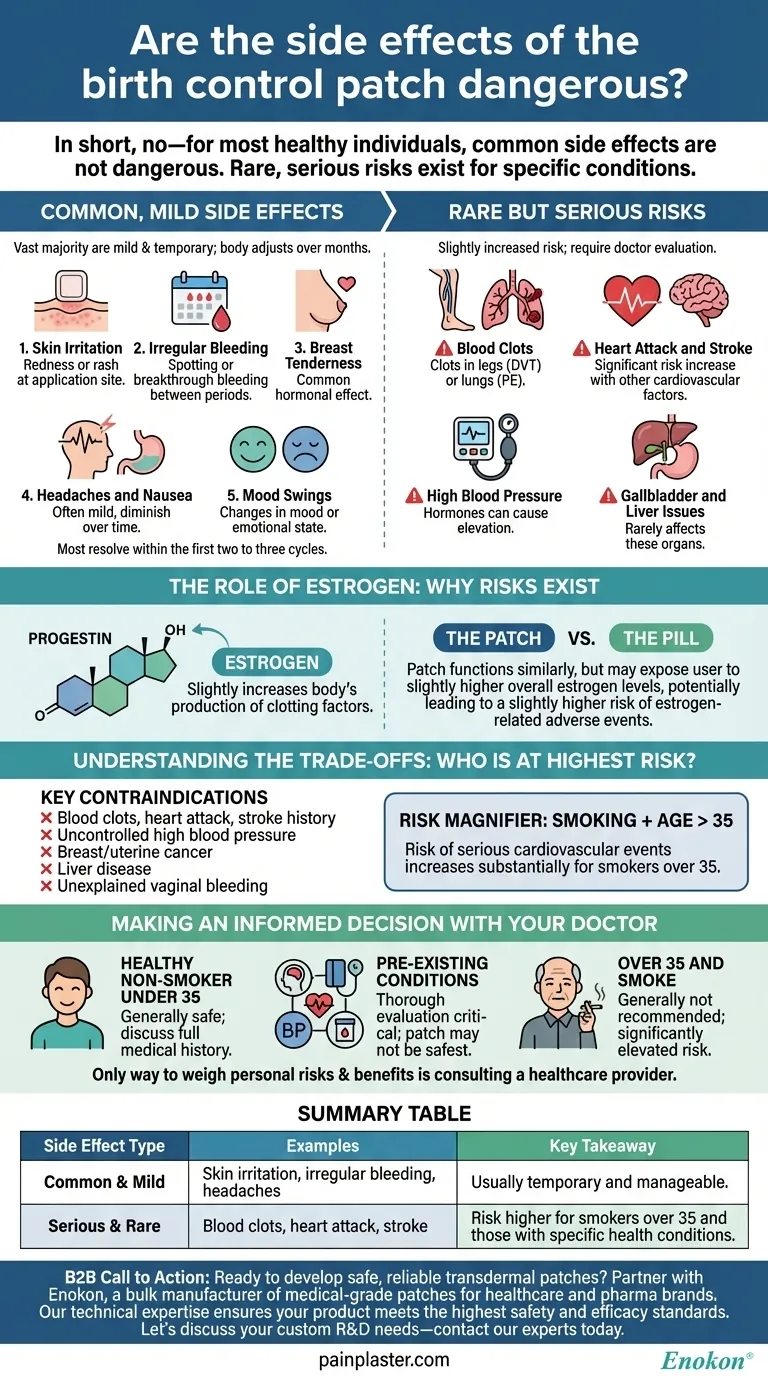
Visual Guide
Related Products
- Prostate Pain Kidney Health Care Patch for Men
- Heating Pain Relief Patches for Menstrual Cramps
- Silicone Scar Sheets Patch Transdermal Drug Patch
- Menthol Gel Pain Relief Patch
- Icy Hot Menthol Medicine Pain Relief Patch
People Also Ask
- What are the key components of Chinese herbal pain patches? Discover the Science Behind Natural Pain Relief
- How can Chinese pain patches help with back pain? Natural Relief & Healing Benefits
- What complementary practices enhance the effectiveness of Chinese pain patches? Boost Relief with Holistic Care
- What are Chinese pain patches used for? Natural Relief for Joint & Muscle Pain
- What are some popular Chinese pain patches and their uses? Discover Top Herbal Solutions for Pain Relief








