
Yes, there are numerous alternatives to the Daytrana patch for ADHD treatment. These options span different delivery methods, medication classes, and cost structures, ranging from other long-acting stimulant pills and liquids to entirely different non-stimulant medications. The best alternative depends entirely on the specific reason you are looking to make a change, whether it's due to cost, skin irritation, convenience, or treatment effectiveness.
The core issue isn't simply finding a replacement for a patch, but understanding the broader landscape of ADHD treatment. The right alternative will be found by identifying the specific limitation of Daytrana for you or your child and then matching that need to a different medication class or formulation in consultation with a doctor.
Understanding Daytrana's Role in ADHD Treatment
To find the right alternative, it's essential to first understand what Daytrana is and why people often seek other options.
What is Daytrana?
Daytrana is a transdermal patch that delivers methylphenidate, a central nervous system stimulant. It belongs to the same class of medication as Ritalin and Concerta.
Its main advantage is providing a smooth, continuous dose of medication throughout the day without the need to swallow a pill.
Common Reasons for Seeking Alternatives
People typically look for an alternative to the Daytrana patch for a few key reasons:
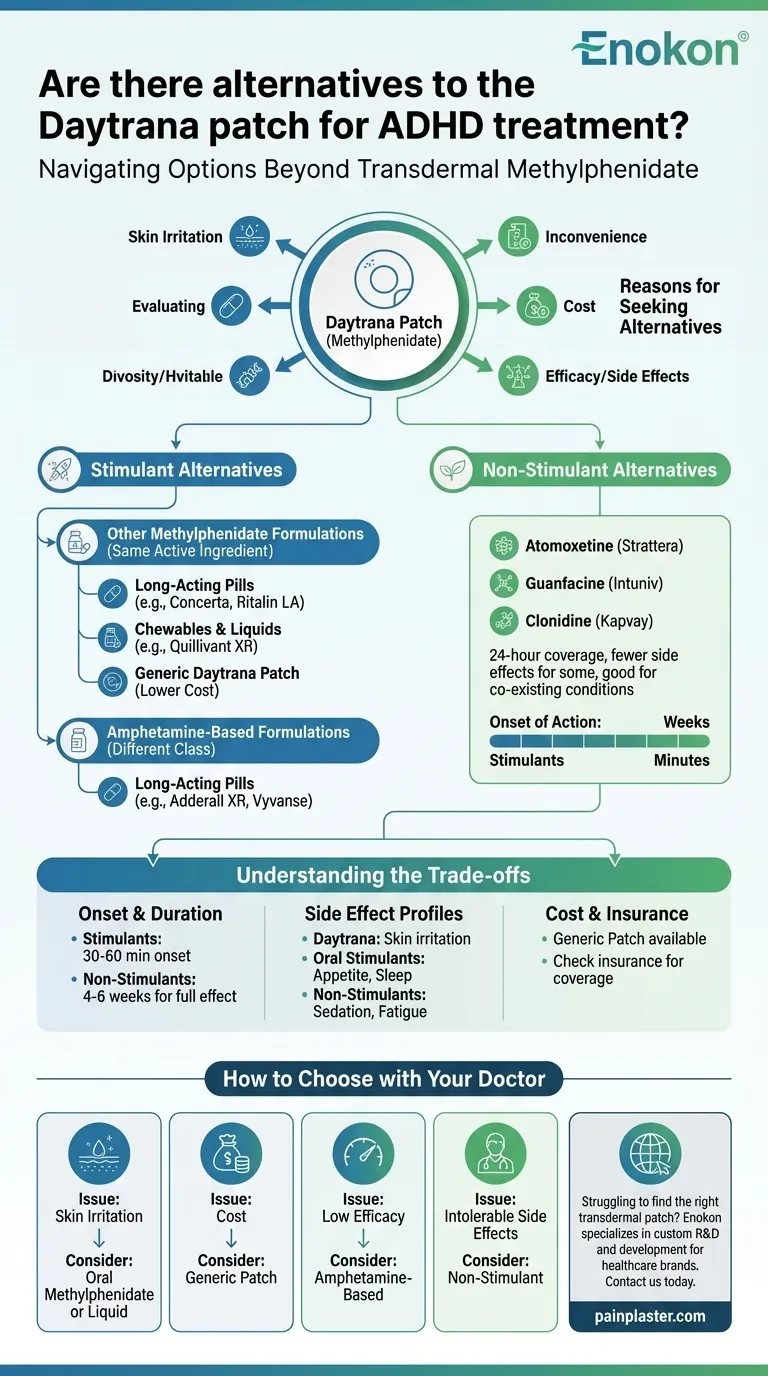
- Skin Irritation: The adhesive can cause redness, itching, or rashes at the application site.
- Inconvenience: Daily application and removal can be a hassle, and the patch can sometimes fall off during physical activity.
- Cost: Brand-name medications can be expensive, and insurance coverage may be limited.
- Efficacy or Side Effects: The medication itself (methylphenidate) may not be the most effective option for an individual, or it may produce undesirable side effects like appetite suppression or sleep issues.
Stimulant Alternatives to the Daytrana Patch
If the stimulant medication works well but the patch format is the problem, you have many excellent options. These are often divided into two main chemical families: methylphenidate (like Daytrana) and amphetamine.
Other Methylphenidate Formulations
These medications contain the same active ingredient as Daytrana but come in an oral form.
- Long-Acting Pills: Medications like Concerta, Ritalin LA, and Metadate CD provide all-day symptom control in a single daily capsule.
- Chewables and Liquids: For individuals who struggle to swallow pills, options like Quillivant XR (liquid) and Cotempla XR-ODT (orally disintegrating tablet) offer an easier method of administration.
- The Generic Daytrana Patch: As of June 2022, a generic version of the Daytrana patch became available. This is a direct, often lower-cost alternative if the patch works well for you but the brand-name price is a barrier.
Amphetamine-Based Formulations
For some individuals, amphetamine-based stimulants are more effective or have a more tolerable side-effect profile than methylphenidate.
- Long-Acting Pills: Well-known options include Adderall XR (mixed amphetamine salts) and Vyvanse (lisdexamfetamine). Vyvanse is notable for its smooth onset and offset, which can reduce the "rebound" effect for some people.
Non-Stimulant Alternatives
If stimulants cause intolerable side effects (like anxiety, tics, or severe appetite loss) or are not sufficiently effective, non-stimulant medications provide a completely different approach to treatment.
When to Consider Non-Stimulants
Non-stimulants are often a good choice when there is a co-existing condition like anxiety, or when the "ups and downs" of stimulants are a problem. They offer 24-hour coverage without the same risk profile as stimulants.
Key Non-Stimulant Options
- Atomoxetine (Strattera): This medication works by increasing levels of norepinephrine, a different neurotransmitter than the one primarily targeted by stimulants. It can take several weeks to reach its full effect.
- Guanfacine (Intuniv) and Clonidine (Kapvay): These medications, known as alpha-2 adrenergic agonists, are also approved for ADHD. They are often used to help with hyperactivity, impulsivity, and emotional regulation, sometimes in combination with a stimulant.
Understanding the Trade-offs
Choosing a medication involves balancing several factors. No single option is universally superior.
Onset of Action and Duration
Stimulants, whether oral or patch, generally begin working within 30 to 60 minutes. Non-stimulants like atomoxetine can take four to six weeks of consistent daily use to build up to their full therapeutic effect.
Side Effect Profiles
While all medications have potential side effects, they differ by class. Daytrana's unique issue is skin irritation. Oral stimulants are more commonly associated with appetite suppression and difficulty sleeping. Non-stimulants can cause sedation or fatigue, especially when first starting.
Cost and Insurance Coverage
The launch of the generic Daytrana patch provides a significant cost-saving opportunity. However, many long-acting oral stimulants also have generic versions available. Always check with your insurance provider, as coverage can heavily influence your final cost.
How to Choose the Right Alternative with Your Doctor
The best path forward is a collaborative discussion with a healthcare provider. Use your reason for wanting a change as the starting point.
- If your primary issue is skin irritation from the patch: Discuss long-acting oral methylphenidate options like Concerta or a liquid formulation like Quillivant XR.
- If your primary issue is the cost of brand-name Daytrana: Ask your doctor or pharmacist about the generic methylphenidate patch.
- If Daytrana isn't providing enough symptom control: Explore amphetamine-based stimulants like Vyvanse or Adderall XR, as your body may respond differently to this class of medication.
- If you experience intolerable side effects from all stimulants: Consider a trial of a non-stimulant medication like atomoxetine (Strattera) or guanfacine (Intuniv).
Working closely with your provider will ensure you find a personalized treatment that effectively manages symptoms while fitting your lifestyle and budget.
Summary Table:
| Alternative Type | Key Examples | Primary Benefit |
|---|---|---|
| Oral Methylphenidate | Concerta, Quillivant XR | Same active ingredient, no skin irritation |
| Amphetamine-Based | Vyvanse, Adderall XR | Different stimulant class, may offer better efficacy |
| Non-Stimulants | Strattera, Intuniv | 24-hour coverage, fewer side effects for some |
| Generic Patch | Generic methylphenidate patch | Lower cost, same delivery method |
Struggling to find the right transdermal patch for your medication needs? As Enokon, a bulk manufacturer of reliable transdermal patches and pain plasters, we specialize in custom R&D and development for healthcare and pharma distributors and brands. Our technical expertise ensures a patch that delivers consistent medication without irritation. Let us develop a solution tailored to your requirements. Contact our experts today to discuss your project.
Visual Guide
Related Products
- Far Infrared Heat Pain Relief Patches Transdermal Patches
- Silicone Scar Sheets Patch Transdermal Drug Patch
- Icy Hot Menthol Medicine Pain Relief Patch
- Menthol Gel Pain Relief Patch
- Mugwort Wormwood Pain Relief Patch for Neck Pain
People Also Ask
- Why is the selection of matrix materials critical when developing customized transdermal patches? Optimize Efficacy
- What are the physical impacts of external heat exposure on the performance and safety of transdermal patches? - Guide
- What are the clinical advantages of local transdermal delivery systems? Unlock Safer, More Effective Pain Relief Solutions
- What role does a skin tolerance scoring system play in the safety evaluation of transdermal patches? Key Safety Metrics
- How does high-purity far-infrared ceramic powder contribute to the efficacy of far-infrared physical therapy patches?





