
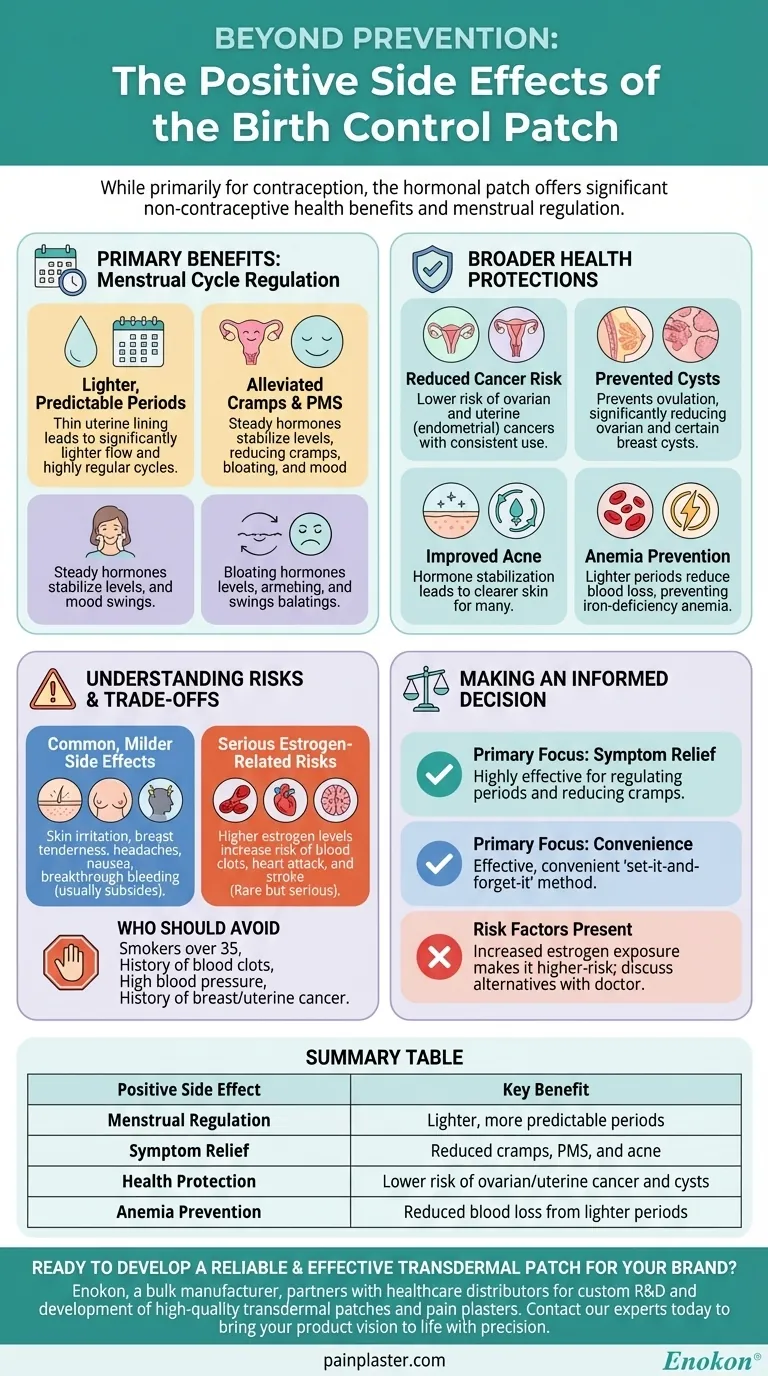
Yes, the birth control patch has several positive side effects beyond pregnancy prevention. While primarily a contraceptive, the hormones it releases can regulate your menstrual cycle and offer significant non-contraceptive health benefits, such as making periods lighter and more predictable, reducing cramps and PMS symptoms, and helping to clear up acne. It can also offer protective effects against certain types of cysts and cancers.
The core function of the birth control patch is to prevent pregnancy, but the steady delivery of hormones it provides often has the welcome secondary effect of regulating the menstrual cycle, which in turn alleviates many common and disruptive symptoms.
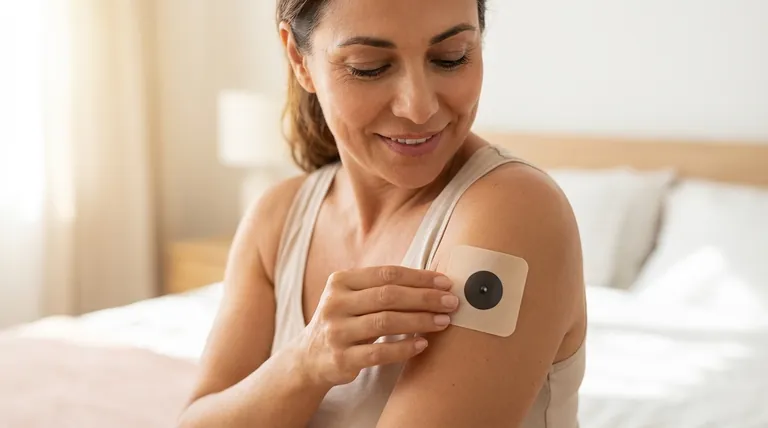
The Primary Benefits: Regulating Your Menstrual Cycle
The most immediate and noticeable benefits of the patch are often related to your period. The hormones in the patch—estrogen and progestin—work by preventing ovulation and thinning the uterine lining.
Lighter, More Predictable Periods
By preventing the uterine lining from building up as much as it normally would, the patch leads to significantly lighter periods. It also makes your cycle highly regular and predictable.
Alleviating Menstrual Cramps and PMS
Painful cramps (dysmenorrhea) and symptoms of Premenstrual Syndrome (PMS) are often caused by hormonal fluctuations. The patch delivers a steady dose of hormones, which helps to stabilize these levels, leading to a marked reduction in cramps, bloating, and mood swings for many users.
Broader Health Protections
Beyond cycle regulation, the hormonal action of the patch can provide several other important health benefits.
Reducing the Risk of Certain Cancers
Consistent use of combination hormonal contraceptives like the patch has been shown to lower the risk of developing both ovarian and uterine (endometrial) cancers.
Preventing Cysts in Breasts and Ovaries
The patch prevents ovulation. Since many ovarian cysts form during the ovulation process, using the patch can significantly reduce your risk of developing them. It may also help prevent certain non-cancerous breast cysts.
Improving Acne
Hormonal acne is often triggered by an imbalance of hormones. The specific hormones in the birth control patch can help stabilize these levels, leading to clearer skin for many individuals.
Guarding Against Anemia
Because the patch makes periods lighter, you lose less blood each month. This can help prevent or treat iron-deficiency anemia, a condition caused by insufficient iron that can lead to fatigue and weakness.
Understanding the Trade-offs and Risks
To make an informed decision, it's crucial to weigh the benefits against the potential negative side effects. While many are mild and temporary, some are serious.
Common, Milder Side Effects
Many users experience side effects that subside after the first two or three months. These can include skin irritation at the application site, breast tenderness, headaches, nausea, and breakthrough bleeding or spotting between periods.
The Estrogen Factor: Serious but Rare Risks
The patch exposes users to higher levels of estrogen than many combination birth control pills. This increases the risk of serious cardiovascular events, including blood clots, heart attack, and stroke.
Who Should Avoid the Patch
The risks associated with the patch are significantly higher for certain individuals. You should not use the patch if you smoke and are over 35, have a history of blood clots, have high blood pressure, have a history of breast or uterine cancer, or have certain other medical conditions. A thorough discussion with your doctor is essential.
Making an Informed Decision for Your Health
Choosing a birth control method involves balancing its effectiveness and benefits against your personal health profile and potential risks.
- If your primary focus is regulating periods and reducing cramps: The patch is a highly effective option for managing these symptoms, often providing significant relief.
- If your primary focus is convenience and pregnancy prevention: The patch is very effective when used correctly and is a convenient "set-it-and-forget-it" method for one week at a time.
- If you have risk factors for blood clots (like smoking or being over 35): The increased estrogen exposure from the patch makes it a higher-risk option, and you must discuss safer alternatives with your doctor.
Ultimately, understanding both the benefits and the risks is the key to choosing the contraceptive method that is safest and most effective for you.
Summary Table:
| Positive Side Effect | Key Benefit |
|---|---|
| Menstrual Regulation | Lighter, more predictable periods |
| Symptom Relief | Reduced cramps, PMS, and acne |
| Health Protection | Lower risk of ovarian/uterine cancer and cysts |
| Anemia Prevention | Reduced blood loss from lighter periods |
Ready to develop a reliable and effective transdermal patch for your brand?
As Enokon, a bulk manufacturer of high-quality transdermal patches and pain plasters, we partner with healthcare and pharmaceutical distributors and brands. Our technical expertise ensures custom R&D and development to meet your specific needs, from innovative birth control solutions to therapeutic pain relief patches.
Contact our experts today to discuss how we can bring your product vision to life with precision and reliability.
Visual Guide
Related Products
- Heating Pain Relief Patches for Menstrual Cramps
- Prostate Pain Kidney Health Care Patch for Men
- Silicone Scar Sheets Patch Transdermal Drug Patch
- Cooling Fever Patches Color Change Cold Fever Patch
- Mugwort Wormwood Pain Relief Patch for Neck Pain
People Also Ask
- What are the benefits of Period Pain Heat Patches? Drug-Free, On-the-Go Relief
- What are the key benefits of heating patches for elderly individuals? Relieve Pain & Improve Mobility
- What are the different types of heat patches? Find the Right Pain Relief for Your Needs
- What are the key differences between conventional heat patches and deep heat devices? Choosing the Right Pain Relief Solution
- What percentage of people with back pain use heat patches for relief? Discover the Popular Choice for Pain Management




