
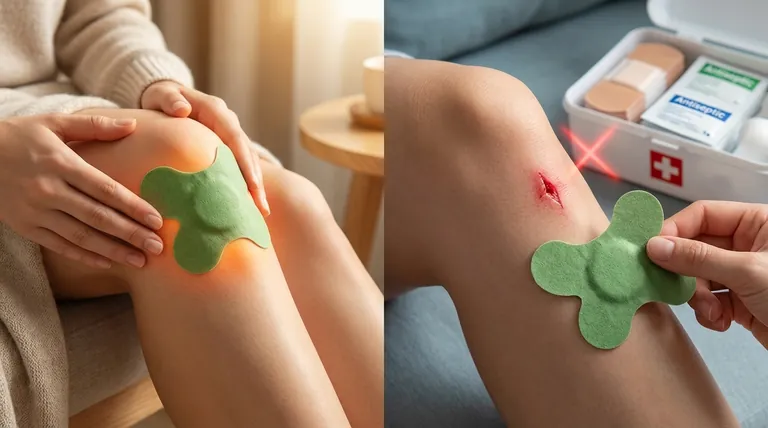
Chinese plasters are not recommended for use on open wounds due to the risk of infection and potential irritation. They are designed for intact skin to provide pain relief and reduce inflammation. For open wounds, it's essential to follow proper medical advice and use treatments specifically intended for wound care. Consulting a healthcare provider ensures safe and effective treatment tailored to individual needs.
Key Points Explained:
-
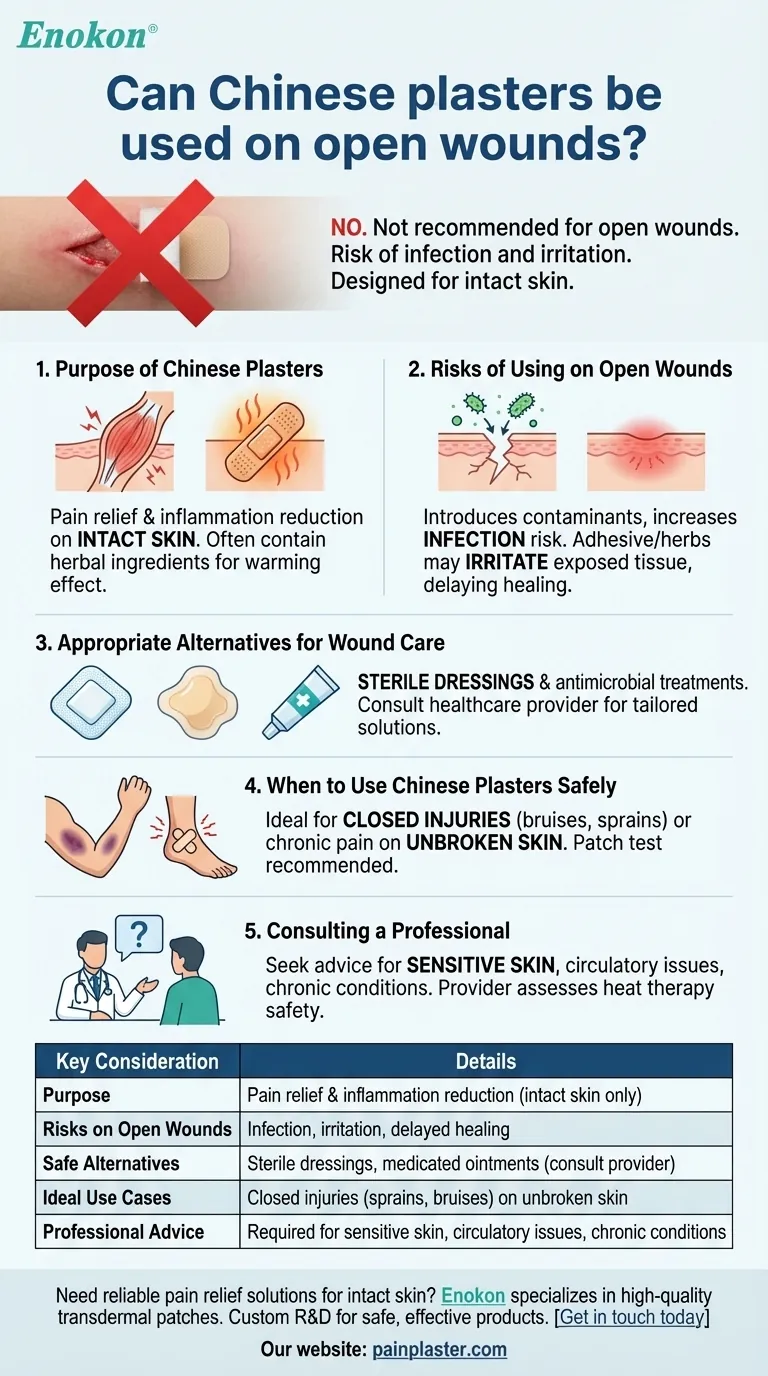
Purpose of Chinese Plasters
- Chinese plasters are traditionally used for pain relief and reducing inflammation on intact skin.
- They often contain herbal ingredients that generate a warming effect, which can be beneficial for muscle or joint pain but are unsuitable for broken skin.
-
Risks of Using on Open Wounds
- Applying plasters to open wounds can introduce contaminants, increasing the risk of infection.
- The adhesive or herbal components may irritate exposed tissue, delaying healing or causing further damage.
-
Appropriate Alternatives for Wound Care
- Open wounds require sterile dressings and antimicrobial treatments to prevent infection.
- Consult a healthcare provider for tailored solutions like hydrocolloid bandages or medicated ointments.
-
When to Use Chinese Plasters Safely
- Ideal for closed injuries (e.g., bruises, sprains) or chronic pain areas with unbroken skin.
- Always perform a patch test to check for skin sensitivity before full application.
-
Consulting a Professional
- Individuals with sensitive skin, circulatory issues, or chronic conditions should seek medical advice before use.
- A provider can assess whether heat therapy (a common feature of these plasters) is safe for your specific situation.
For optimal results, match the product to the injury type—reserving Chinese plasters for intact skin and relying on clinical-grade wound care for open injuries.
Summary Table:
| Key Consideration | Details |
|---|---|
| Purpose | Pain relief and inflammation reduction for intact skin only. |
| Risks on Open Wounds | Infection, irritation, delayed healing. |
| Safe Alternatives | Sterile dressings, medicated ointments (consult a healthcare provider). |
| Ideal Use Cases | Closed injuries (sprains, bruises) with unbroken skin. |
| Professional Advice | Required for sensitive skin, circulatory issues, or chronic conditions. |
Need reliable pain relief solutions for intact skin? Enokon specializes in high-quality transdermal patches and plasters for distributors and healthcare brands. Our expertise in custom R&D ensures safe, effective products tailored to your needs. Get in touch today to discuss partnerships or product development!
Visual Guide
Related Products
- Capsaicin Chili Medicated Pain Relief Patches
- Natural Herbal Wormwood Patch Pain Plaster
- Prostate Pain Kidney Health Care Patch for Men
- Heat Relief Capsicum Patch for Lower Back Pain Relief
- Asthma Cough and Pain Relief Patch for Adults and Kids
People Also Ask
- What conditions should be reported to a care team before using capsaicin patches? Ensure Safe Pain Relief
- What conditions can capsaicin creams and patches help relieve? Find Targeted Pain Relief for Nerves & Joints
- What are the uses of nonprescription capsaicin patches? Natural Pain Relief for Muscles & Joints
- What should be avoided while using capsaicin patches? Essential Safety Tips for Effective Pain Relief
- What precautions should be taken when using capsaicin patches? A Guide to Safe and Effective Pain Relief




