
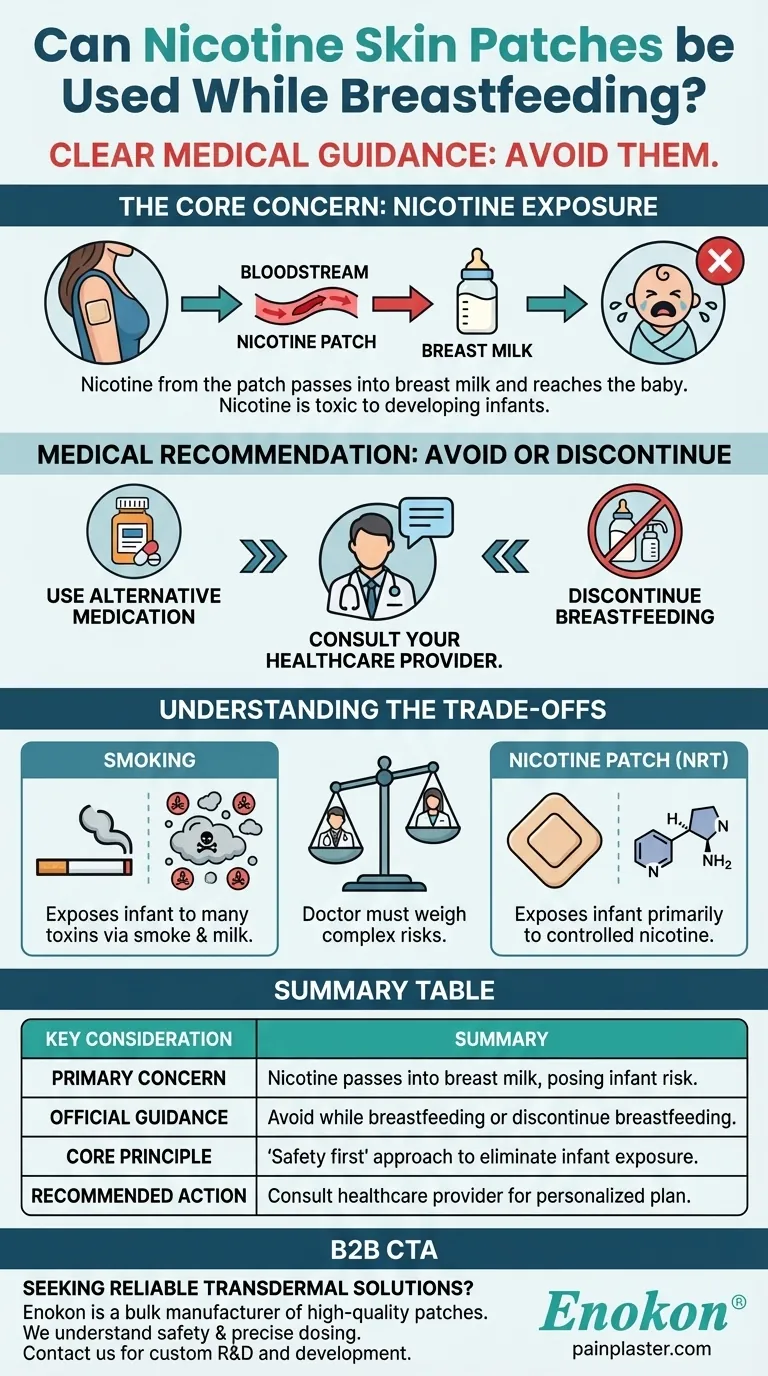
When considering nicotine skin patches while breastfeeding, the clear medical guidance is to avoid them. Studies have demonstrated harmful effects on infants from nicotine passed through breast milk from patches. The standard recommendation is to either seek an alternative medication or discontinue breastfeeding if using this medicine is necessary.
The core issue is managing the risk of nicotine exposure to your infant. While the goal is to stop smoking, the provided medical advice prioritizes protecting the baby by recommending against the use of nicotine patches during lactation.

The Core Concern: Nicotine Exposure in Infants
The primary reason for the strong cautionary advice is the known toxicity of nicotine and its ability to pass directly to a nursing infant.
How Nicotine Reaches Your Baby
When you use a nicotine patch, the drug is absorbed through your skin into your bloodstream. From there, it passes into your breast milk. This creates a direct route of exposure for your baby.
Why Nicotine is a Risk for Infants
Nicotine is a powerful substance that can have significant effects on a developing child. Even small amounts can be harmful, which is why all nicotine products, including used patches, must be kept far away from children. This inherent risk is the basis for recommending against its use while breastfeeding.
Understanding the Medical Recommendation
The official guidance is based on a "safety first" principle for the infant. The evidence of potential harm is significant enough to warrant a clear and direct warning.
The "Avoid or Discontinue" Guideline
The recommendation to either use an alternative or stop breastfeeding is a risk-averse approach. It is designed to completely eliminate the infant's exposure to nicotine from a transdermal patch.
The Importance of Medical Consultation
This situation highlights the absolute necessity of consulting with your healthcare provider. They can assess your specific health situation, your level of nicotine dependence, and help you create a safe and effective plan to quit smoking.
Understanding the Trade-offs
For any mother who smokes, the decision is rarely as simple as just stopping. It often involves choosing the least harmful path forward, which requires professional medical guidance.
The Goal is to Minimize Harm
Both continued smoking and using nicotine replacement therapy (NRT) introduce risks. Smoking exposes an infant to numerous toxins through secondhand smoke and breast milk, while a patch exposes the infant primarily to nicotine.
Why a Doctor's Guidance is Essential
A healthcare provider is the only one qualified to weigh these complex risks. They can help you understand the potential harm from continued smoking versus the controlled, and often lower, dose of nicotine from a patch. They can also discuss timing the patch application or feeding to minimize the nicotine concentration in your milk.
This Is Not a Decision to Make Alone
Do not attempt to manage this on your own. A doctor can prescribe alternatives or provide a strategy that best protects you and your baby, ensuring you have the support you need to quit smoking successfully.
Making the Safest Choice for You and Your Baby
Navigating this requires a clear-headed approach focused on the health of both you and your child, guided by professional medical advice.
- If your primary focus is eliminating all risk from NRT: Follow the provided guidance and do not use nicotine patches while breastfeeding.
- If you are committed to quitting smoking for your baby's health: Immediately schedule an appointment with your doctor to discuss the safest cessation methods available to you as a breastfeeding mother.
- If you are considering any form of nicotine replacement: Discuss every option (patches, gum, lozenges) with your provider to understand the specific risks and benefits of each during lactation.
Making an informed decision with your doctor is the most powerful step you can take for your and your baby's long-term health.
Summary Table:
| Key Consideration | Summary |
|---|---|
| Primary Concern | Nicotine from patches passes into breast milk, posing a risk to the infant. |
| Official Guidance | Avoid use while breastfeeding or discontinue breastfeeding if use is necessary. |
| Core Principle | A 'safety first' approach to eliminate infant exposure to nicotine. |
| Recommended Action | Consult a healthcare provider for a safe, personalized smoking cessation plan. |
Seeking a Reliable Partner for Your Transdermal Solutions?
As you navigate complex health decisions, having a trusted manufacturer is key. Enokon is a bulk manufacturer of reliable, high-quality transdermal patches and pain plasters for healthcare and pharmaceutical distributors and brands.
We understand the critical importance of safety and precise dosing in medical products. Our technical expertise supports custom R&D and development to meet your specific requirements.
Let's discuss how we can support your product development needs. Contact our team today to learn more about our capabilities.
Visual Guide
Related Products
- Capsaicin Chili Medicated Pain Relief Patches
- Icy Hot Menthol Medicine Pain Relief Patch
- Menthol Gel Pain Relief Patch
- Lidocaine Hydrogel Pain Relief Patch for Pain Relief
- Cooling Fever Patches Color Change Cold Fever Patch
People Also Ask
- What conditions can capsaicin creams and patches help relieve? Find Targeted Pain Relief for Nerves & Joints
- What conditions should be reported to a care team before using capsaicin patches? Ensure Safe Pain Relief
- What are the uses of nonprescription capsaicin patches? Natural Pain Relief for Muscles & Joints
- What should be avoided while using capsaicin patches? Essential Safety Tips for Effective Pain Relief
- What special precautions should be followed before using capsaicin patches? Ensure Safe and Effective Pain Relief







