
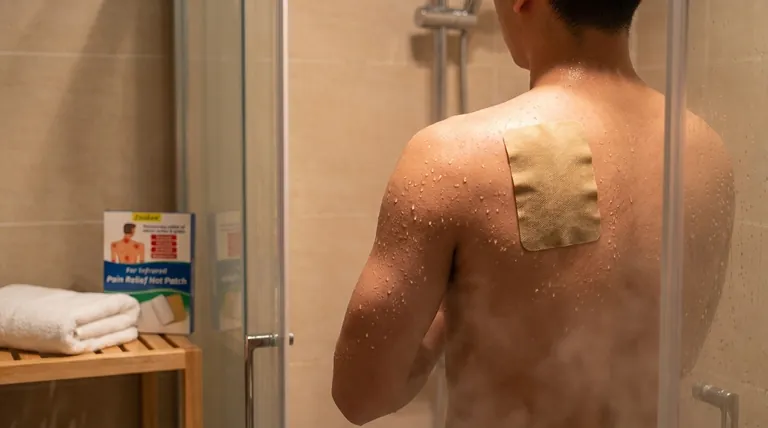
Transdermal patches are designed to adhere to the skin and deliver medication over time, but their exposure to water requires careful consideration. While brief contact with water (like showering) is generally acceptable, prolonged immersion can compromise adhesion and effectiveness. Proper application and precautions ensure the patch remains functional during daily activities involving water exposure.
Key Points Explained:
-
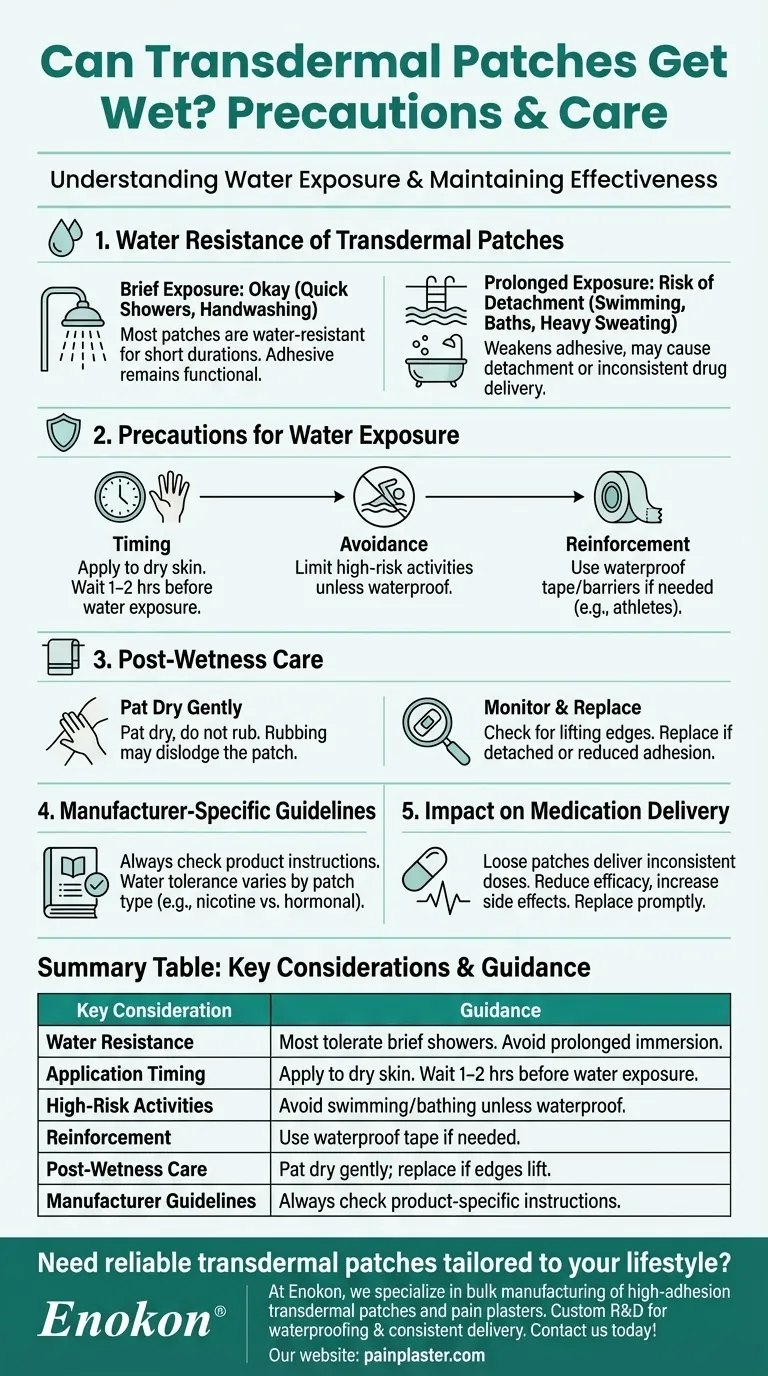
Water Resistance of Transdermal Patches
- Most patches are water-resistant to some degree, allowing for short-term exposure (e.g., quick showers or handwashing).
- Prolonged water exposure (swimming, baths, or heavy sweating) can weaken the adhesive, leading to detachment or uneven drug delivery.
-
Precautions for Water Exposure
- Timing: Apply patches to dry skin and wait at least 1–2 hours before showering to ensure adhesion.
- Avoidance: Limit activities like swimming or long baths unless the patch is explicitly labeled as waterproof.
- Reinforcement: Use waterproof tape or adhesive barriers if water exposure is unavoidable (e.g., for athletes or in humid climates).
-
Post-Wetness Care
- Gently pat the patch dry if it gets wet; rubbing may dislodge it.
- Monitor for edges lifting or signs of reduced adhesion, and replace if necessary.
-
Manufacturer-Specific Guidelines
- Always check the product instructions, as water tolerance varies by patch type (e.g., nicotine vs. hormonal patches).
-
Impact on Medication Delivery
- A loose patch may deliver inconsistent doses, reducing efficacy or causing side effects. Replace detached patches promptly.
By balancing daily hygiene with these precautions, users can maintain patch effectiveness while minimizing disruptions. Have you considered how lifestyle habits might influence your patch choice or care routine?
Summary Table:
| Key Consideration | Guidance |
|---|---|
| Water Resistance | Most patches tolerate brief showers but avoid prolonged immersion. |
| Application Timing | Apply to dry skin; wait 1–2 hours before water exposure. |
| High-Risk Activities | Avoid swimming/bathing unless patch is waterproof. |
| Reinforcement | Use waterproof tape if needed (e.g., for athletes). |
| Post-Wetness Care | Pat dry gently; replace if edges lift. |
| Manufacturer Guidelines | Always check product-specific instructions. |
Need reliable transdermal patches tailored to your lifestyle?
At Enokon, we specialize in bulk manufacturing of high-adhesion transdermal patches and pain plasters for healthcare brands and distributors. Our technical expertise ensures custom R&D solutions for waterproofing, durability, and consistent drug delivery.
Contact us today to discuss your project or explore our product range!
Visual Guide
Related Products
- Far Infrared Heat Pain Relief Patches Transdermal Patches
- Silicone Scar Sheets Patch Transdermal Drug Patch
- Icy Hot Menthol Medicine Pain Relief Patch
- Menthol Gel Pain Relief Patch
- Mugwort Wormwood Pain Relief Patch for Neck Pain
People Also Ask
- Why is the selection of matrix materials critical when developing customized transdermal patches? Optimize Efficacy
- What role does a skin tolerance scoring system play in the safety evaluation of transdermal patches? Key Safety Metrics
- How does high-purity far-infrared ceramic powder contribute to the efficacy of far-infrared physical therapy patches?
- Why is an optical microscope used for the quality assessment of transdermal patches? Ensure Safety & Matrix Integrity
- What is the purpose of vacuum filtration for polymer solutions? Ensuring Quality in Transdermal Patch Manufacturing



















