
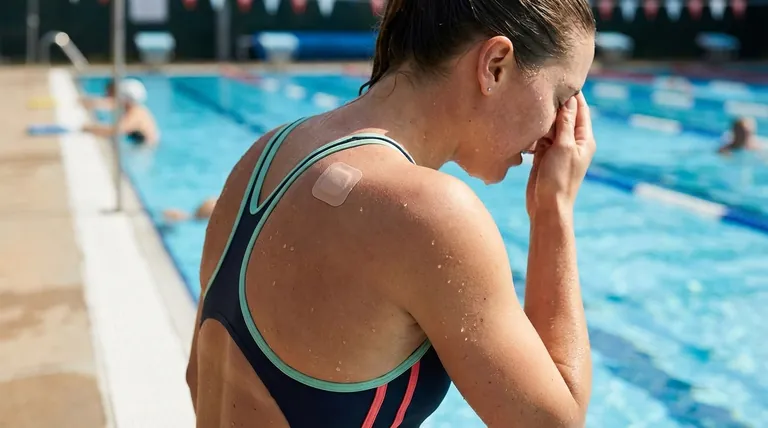
Yes, you absolutely can engage in physical activities like exercising, showering, and swimming while wearing an oxybutynin patch. The patch is designed to be water-resistant and accommodate an active lifestyle. Its purpose is to treat overactive bladder by relaxing the bladder muscles, allowing you to go about your day with more confidence and control.
The oxybutynin patch is built for daily life, including exercise and swimming. However, its effectiveness hinges on two key factors: ensuring a secure application and being aware of how heat and friction can impact both the patch's adhesion and your body's response to exertion.
Ensuring Your Patch Stays Secure
The most common concern is whether the patch will stay on during activity. Proper application is the single most important factor for ensuring it remains effective.
The Correct Application Method
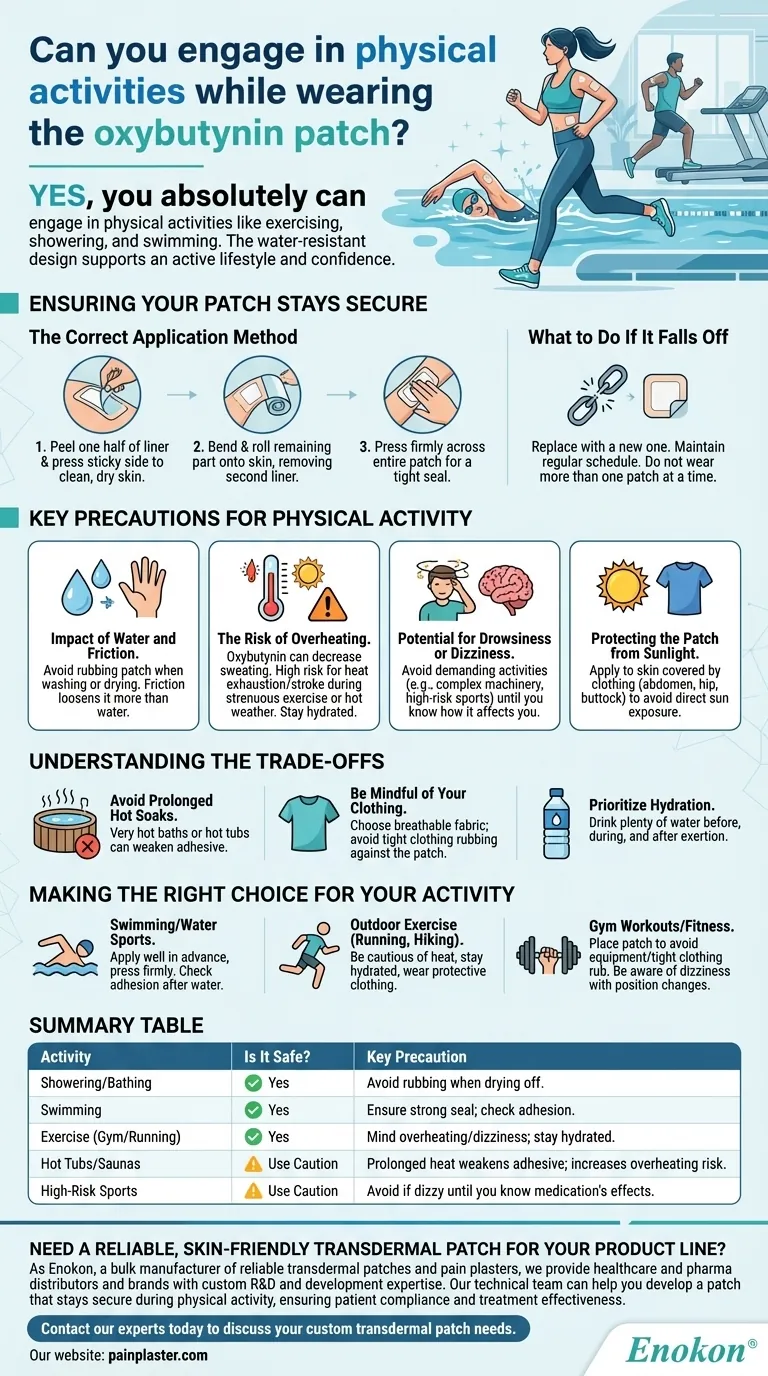
To create a strong seal, open the protective pouch and remove the patch. Peel off one half of the protective liner and press the sticky side firmly onto clean, dry skin. Bend the patch and roll the remaining part onto your skin, allowing the second liner to come off. Once applied, press down firmly across the entire patch to ensure it is tightly sealed.
What to Do If It Falls Off
If your patch comes off during swimming, bathing, or any other activity, simply replace it with a new one. However, it is important to maintain your regular schedule. Remove the new patch at the time you were originally scheduled to change it. Do not wear more than one patch at a time.
Key Precautions for Physical Activity
While the patch is durable, certain activities and environments require extra awareness to ensure both safety and effectiveness.
The Impact of Water and Friction
You can bathe, shower, and swim while wearing the patch. However, you should avoid rubbing the patch directly while washing or drying off. Friction is more likely to loosen the patch than water alone.
The Risk of Overheating
This is a critical safety consideration. Oxybutynin can decrease your body's ability to sweat. During strenuous exercise or in hot weather, this reduced sweating can put you at a higher risk for heat exhaustion or heatstroke. Be mindful of how you feel and stay well-hydrated.
Potential for Drowsiness or Dizziness
Oxybutynin can cause drowsiness or dizziness in some people. Until you know how it affects you, avoid demanding physical activities that require sharp focus, such as operating complex machinery or engaging in high-risk sports.
Protecting the Patch from Sunlight
The patch should be kept away from direct sunlight. This is easily managed by always applying it to an area of skin that will be covered by clothing, such as the abdomen, hip, or buttock.
Understanding the Trade-offs
Using the patch effectively during physical activity means understanding its limitations and planning accordingly.
Avoid Prolonged Hot Soaks
While a warm shower is fine, soaking in a very hot bath or a hot tub for an extended period can weaken the patch's adhesive and cause it to peel off.
Be Mindful of Your Clothing
Choose workout clothing that doesn't constantly rub against the patch location. A secure but breathable fabric over the patch is ideal.
Prioritize Hydration
Because the medication can reduce your ability to cool down through sweating, drinking plenty of water during any physical exertion is more important than ever.
Making the Right Choice for Your Activity
Your approach should be tailored to the specific demands of your chosen activity.
- If your primary focus is swimming or water sports: Apply the patch well in advance and press firmly to ensure a strong seal, then check its adhesion after you get out of the water.
- If your primary focus is outdoor exercise like running or hiking: Be extremely cautious about heat, stay hydrated, and wear clothing that protects the patch from both sun and friction.
- If your primary focus is gym workouts or general fitness: Place the patch in a location where it won't be rubbed by equipment or tight clothing, and be aware of any potential dizziness when changing positions quickly.
By understanding these principles, you can confidently integrate the oxybutynin patch into your active life without compromising your treatment.
Summary Table:
| Activity | Is It Safe? | Key Precaution |
|---|---|---|
| Showering/Bathing | Yes | Avoid rubbing the patch directly when drying off. |
| Swimming | Yes | Ensure a strong seal during application and check adhesion afterward. |
| Exercise (Gym/Running) | Yes | Be mindful of overheating and dizziness; stay hydrated. |
| Hot Tubs/Saunas | Use Caution | Prolonged heat can weaken the adhesive and increase overheating risk. |
| High-Risk Sports | Use Caution | Avoid if you experience dizziness until you know how the medication affects you. |
Need a reliable, skin-friendly transdermal patch for your product line?
As Enokon, a bulk manufacturer of reliable transdermal patches and pain plasters, we provide healthcare and pharma distributors and brands with custom R&D and development expertise. Our technical team can help you develop a patch that stays secure during physical activity, ensuring patient compliance and treatment effectiveness.
Contact our experts today to discuss your custom transdermal patch needs.
Visual Guide
Related Products
- Menthol Gel Pain Relief Patch
- Lidocaine Hydrogel Pain Relief Patch for Pain Relief
- Icy Hot Menthol Medicine Pain Relief Patch
- Asthma Cough and Pain Relief Patch for Adults and Kids
- Herbal Medicated Anti Diarrhea Patch for Digestive Relief
People Also Ask
- How do pain relief patches compare to other pain relief methods? Discover Targeted, Long-Lasting Relief
- How effective are pain relief patches for muscle pain? Target Localized Pain with Transdermal Delivery
- Who should consult a healthcare professional before using pain relief patches? Ensure Your Safety with Medical Advice
- What are some common applications of pain relief patches? Effective Relief for Muscle & Joint Pain
- What are pain relief patches and how do they work? Discover Non-Invasive Pain Management



















