
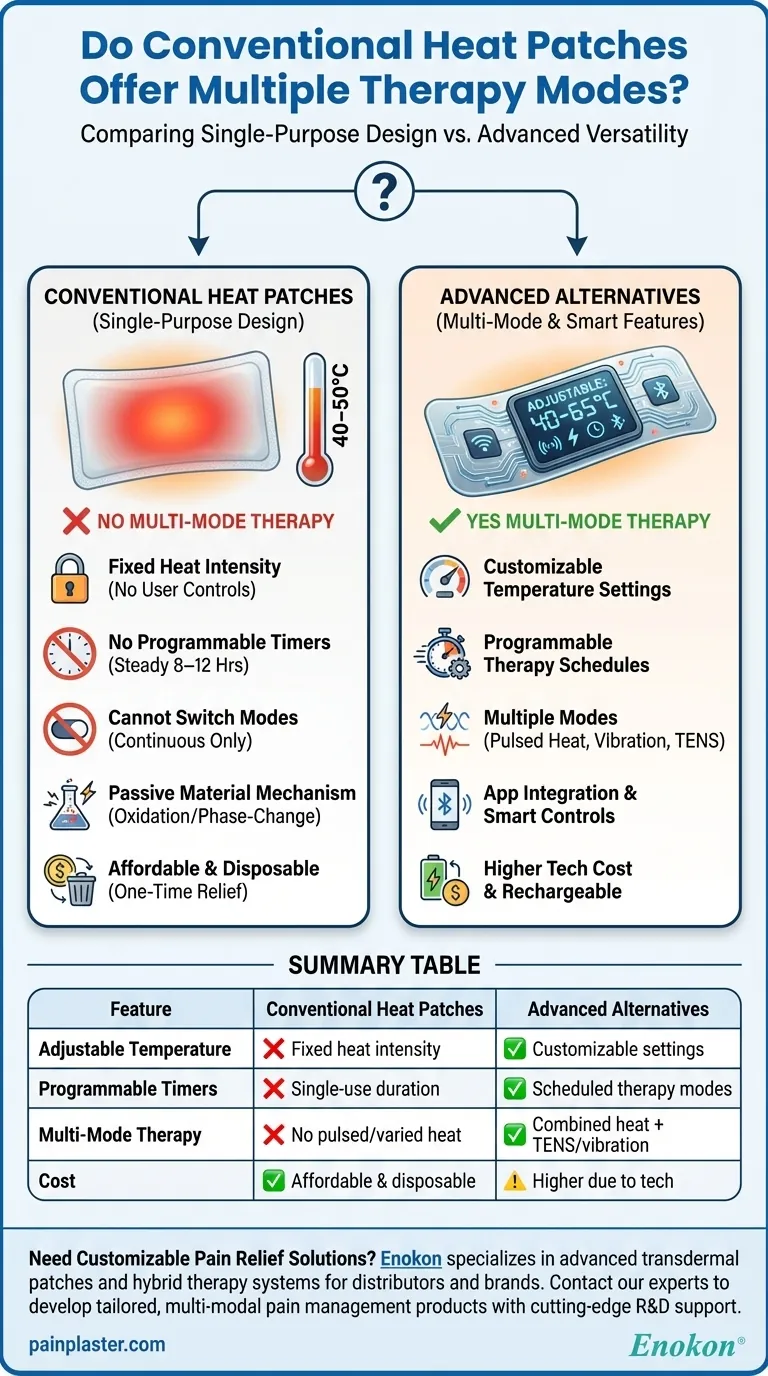
Conventional heat patches are designed primarily for single-purpose use, typically providing consistent, low-level heat therapy over a period of several hours. They lack the technological features required for multiple therapy modes, such as adjustable temperature settings, programmable timers, or varying heat patterns. Their simplicity makes them reliable for basic pain relief but limits versatility compared to advanced electrothermal or smart patches.
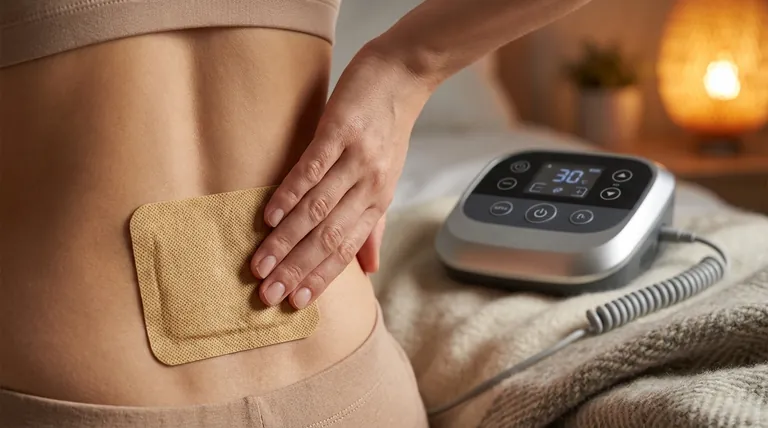
Key Points Explained:
-
Single-Purpose Design
- Conventional heat patches operate on a passive heating mechanism (often through iron powder oxidation or phase-change materials).
- They deliver steady heat at a fixed intensity (usually 40–50°C) for 8–12 hours, with no user-adjustable controls.
-
Absence of Programmable Features
- Unlike advanced alternatives (e.g., TENS-combined patches or rechargeable devices), conventional patches cannot:
- Switch between high/low heat intensities.
- Alternate between continuous and pulsed heat modes.
- Sync with apps for customized therapy schedules.
- Unlike advanced alternatives (e.g., TENS-combined patches or rechargeable devices), conventional patches cannot:
-
Material Limitations
- Most rely on adhesive layers and exothermic chemical reactions, which are inherently static in function.
- Example: Air-activated patches (like ThermaCare) generate heat through oxidation and cannot be "reset" or reprogrammed.
-
Cost vs. Complexity Trade-off
- Their affordability and disposability cater to users needing simple, one-time relief (e.g., menstrual cramps or muscle stiffness).
- Adding multi-mode capabilities would require embedded electronics, raising production costs significantly.
-
Market Alternatives for Multi-Mode Needs
- Users seeking versatility should consider:
- Electric heating patches: Allow adjustable temperature via USB/battery power.
- Hybrid devices: Combine heat with vibration or compression therapy.
- Users seeking versatility should consider:
While conventional heat patches excel in simplicity and accessibility, their design prioritizes reliability over adaptability—making them ineffective for multi-modal therapy demands. For dynamic pain management, exploring advanced alternatives is advisable.
Summary Table:
| Feature | Conventional Heat Patches | Advanced Alternatives |
|---|---|---|
| Adjustable Temperature | ❌ Fixed heat intensity | ✅ Customizable settings |
| Programmable Timers | ❌ Single-use duration | ✅ Scheduled therapy modes |
| Multi-Mode Therapy | ❌ No pulsed/varied heat | ✅ Combined heat + TENS/vibration |
| Cost | ✔️ Affordable & disposable | ❗ Higher due to tech |
Need customizable pain relief solutions? Enokon specializes in advanced transdermal patches and hybrid therapy systems for distributors and brands. Contact our experts to develop tailored, multi-modal pain management products with cutting-edge R&D support.
Visual Guide
Related Products
- Far Infrared Heat Pain Relief Patches Transdermal Patches
- Heating Pain Relief Patches for Menstrual Cramps
- Heat Relief Capsicum Patch for Lower Back Pain Relief
- Far Infrared Knee Pain Patch Heat Patches for Pain Relief
- Far Infrared Deep Heat Relief Patches Medicated Pain Relief Patches
People Also Ask
- Why is the selection of matrix materials critical when developing customized transdermal patches? Optimize Efficacy
- What role does a skin tolerance scoring system play in the safety evaluation of transdermal patches? Key Safety Metrics
- What are the physical impacts of external heat exposure on the performance and safety of transdermal patches? - Guide
- What are the clinical advantages of local transdermal delivery systems? Unlock Safer, More Effective Pain Relief Solutions
- How does high-purity far-infrared ceramic powder contribute to the efficacy of far-infrared physical therapy patches?



















