
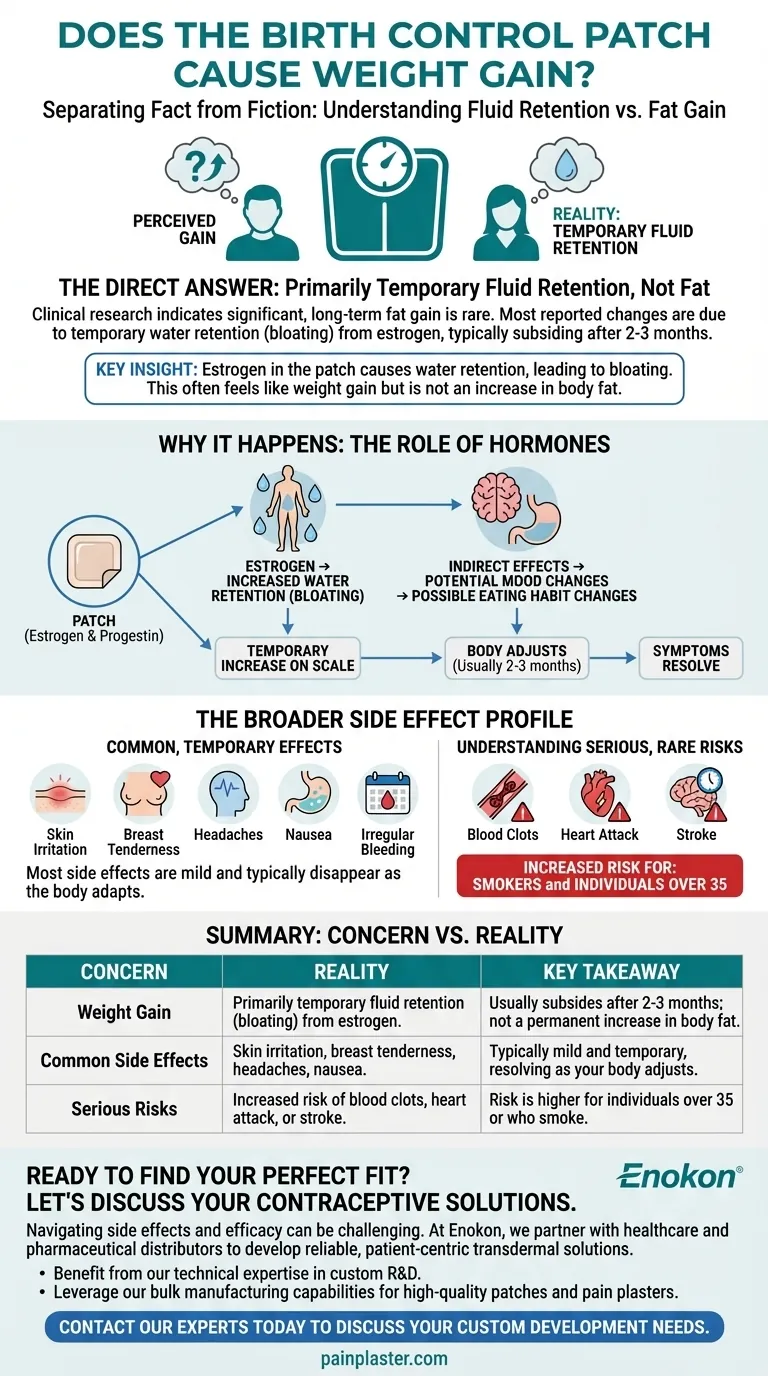
To be direct, the hormonal birth control patch is not expected to cause significant, long-term weight gain from fat. While some individuals report changes on the scale, clinical research indicates this is most often due to temporary fluid retention caused by the hormone estrogen. This bloating effect is a known side effect that typically subsides after the first two to three months as your body adjusts.
The core issue is the difference between temporary fluid retention and permanent fat gain. While scientific evidence does not support a direct link between the patch and an increase in body fat, the temporary bloating it can cause is often perceived and reported by users as "weight gain."

Why Weight Gain is a Common Concern
Understanding the mechanism of the patch helps clarify why users report changes in weight. The patch works by releasing a combination of hormones—estrogen and progestin—into your body.
The Role of Hormones
The estrogen in the patch can cause your body to hold onto more water than usual. This is known as fluid retention or bloating.
Fluid Retention vs. Fat Gain
This water retention can lead to a temporary increase on the scale, but it is not an increase in body fat. For most users, this effect is most noticeable during the first few cycles and typically resolves as the body adapts to the new hormone levels.
The Impact on Appetite and Mood
Some side effects, such as mood changes, could theoretically influence eating habits. However, this is an indirect effect and is not the primary mechanism behind weight concerns associated with the patch.
The Broader Side Effect Profile
Weight perception is just one piece of the puzzle. To make an informed decision, you must consider the full range of potential side effects, most of which are mild and temporary.
Common, Temporary Effects
Many users experience side effects that usually disappear within two to three months. These are the most frequently reported:
- Skin Irritation: Redness, itching, or a rash can occur at the application site.
- Breast Tenderness: Breasts may feel sore or sensitive.
- Headaches: Mild headaches are common, especially when first starting.
- Nausea: Some individuals report feeling nauseous or having an upset stomach.
- Irregular Bleeding: Spotting or breakthrough bleeding between periods is common as your cycle regulates.
Understanding the More Serious Risks
While most side effects are minor, the patch carries serious, though rare, risks that are critical to understand, particularly for certain individuals.
The Risk of Blood Clots
The hormones in the patch can increase the risk of developing blood clots, which can lead to a heart attack or stroke. This risk, while low for most healthy individuals, is a significant consideration.
Who Is at Higher Risk?
The risk of serious side effects is significantly higher for individuals who smoke or are over the age of 35. Some research also suggests the patch may carry a slightly higher risk of estrogen-related adverse events compared to some combination oral pills.
Making the Right Choice for Your Goal
Choosing a birth control method is a personal decision based on your health profile, lifestyle, and priorities. A conversation with your healthcare provider is the essential final step.
- If your primary focus is avoiding any change on the scale: Be prepared for the possibility of temporary bloating in the first few months, but understand it is unlikely to be permanent fat gain.
- If your primary focus is convenience: The patch is a highly effective and convenient "set-it-and-forget-it" method, provided you are comfortable with the potential side effects.
- If you are over 35 or a smoker: The patch may not be the safest option for you, and it is crucial to discuss the increased risks of blood clots with your doctor.
Ultimately, understanding the full context of the patch's effects empowers you to have a productive conversation with your doctor to select the best method for your body.
Summary Table:
| Concern | Reality | Key Takeaway |
|---|---|---|
| Weight Gain | Primarily temporary fluid retention (bloating) from estrogen. | Usually subsides after 2-3 months; not a permanent increase in body fat. |
| Common Side Effects | Skin irritation, breast tenderness, headaches, nausea. | Typically mild and temporary, resolving as your body adjusts. |
| Serious Risks | Increased risk of blood clots, heart attack, or stroke. | Risk is higher for individuals over 35 or who smoke. |
Ready to Find Your Perfect Fit? Let's Discuss Your Contraceptive Solutions.
Navigating the side effects and efficacy of different birth control methods can be challenging. At Enokon, we partner with healthcare and pharmaceutical distributors to develop reliable, patient-centric transdermal solutions.
We can help you bring effective, comfortable options to market.
-
Benefit from our technical expertise in custom R&D to develop patches tailored to specific hormonal profiles and patient needs.
-
Leverage our bulk manufacturing capabilities for high-quality, consistent transdermal patches and pain plasters that meet rigorous standards.
Have a project in mind? Let's collaborate to create a product that balances efficacy with patient comfort.
Contact our experts today to discuss your custom development needs.
Visual Guide
Related Products
- Prostate Pain Kidney Health Care Patch for Men
- Heating Pain Relief Patches for Menstrual Cramps
- Silicone Scar Sheets Patch Transdermal Drug Patch
- Menthol Gel Pain Relief Patch
- Icy Hot Menthol Medicine Pain Relief Patch
People Also Ask
- What are the key components of Chinese herbal pain patches? Discover the Science Behind Natural Pain Relief
- How can Chinese pain patches help with back pain? Natural Relief & Healing Benefits
- What role do Chinese pain patches play in arthritis relief? Discover Natural Pain Management Solutions
- What are Chinese pain patches used for? Natural Relief for Joint & Muscle Pain
- What additional practices can enhance the effectiveness of Chinese pain patches? Boost Relief with Holistic Strategies








