
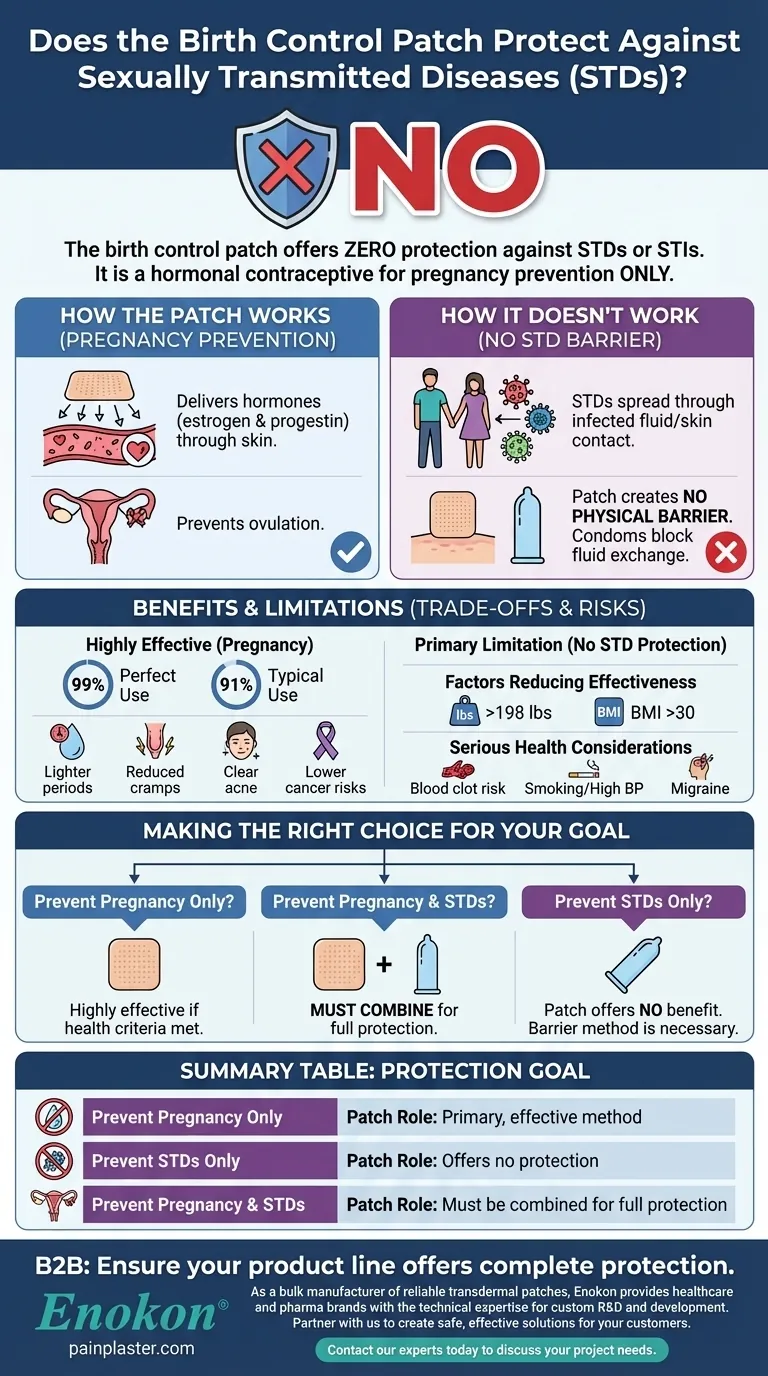
No, the birth control patch offers zero protection against sexually transmitted diseases (STDs) or infections (STIs). The patch is a hormonal contraceptive designed exclusively to prevent pregnancy by releasing hormones into your body. It does not create any physical barrier to block the transmission of viruses or bacteria during sexual contact.
The birth control patch is a highly effective tool for preventing pregnancy, but it provides no defense against STDs. To achieve comprehensive protection against both pregnancy and STDs, you must use a barrier method, such as a condom, alongside the patch.
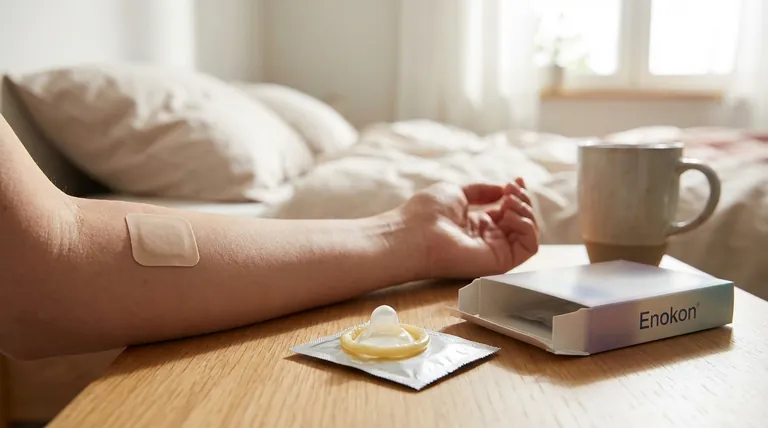
How the Patch Works (And Why It Can't Stop STDs)
A Hormonal Signal
The birth control patch works by delivering a steady dose of hormones (estrogen and progestin) through your skin into your bloodstream. These hormones primarily work by preventing your ovaries from releasing an egg (ovulation).
This hormonal mechanism is highly effective at preventing pregnancy but is completely internal. It has no effect on the external exchange of bodily fluids that transmits infections.
The Lack of a Physical Barrier
STDs are spread through contact with infected fluids or skin. The only way to prevent this transmission is to create a physical barrier between partners.
The patch offers no such barrier. Methods like male and female condoms are designed specifically for this purpose, blocking the exchange of fluids that carry infections like HIV, chlamydia, and gonorrhea.
The Patch's True Purpose: Benefits and Limitations
Highly Effective Pregnancy Prevention
When used correctly, the birth control patch is a very reliable contraceptive. It is 99% effective with perfect use.
However, with typical use, which accounts for mistakes like forgetting to change the patch on time, its effectiveness drops to about 91%. This means around 9 out of 100 users may become pregnant in a year.
Beyond Contraception: Added Health Benefits
While its main job is preventing pregnancy, the hormones in the patch can provide other benefits. These can include making periods lighter and more regular, reducing menstrual cramps, and helping to clear up acne.
Studies have also shown it can lower your risk of developing certain health issues, such as ovarian and endometrial cancers, anemia, and cysts in your breasts and ovaries.
Understanding the Trade-offs and Risks
The Primary Limitation: No STD Protection
It is critical to repeat: the most significant limitation of the patch is its complete inability to protect against STIs. Relying on it as your only method of protection leaves you vulnerable to infection.
Factors That Reduce Effectiveness
The patch may not be the right choice for everyone. Its effectiveness can be reduced in women who weigh more than 198 pounds (90 kg).
It is generally not recommended for women with a Body Mass Index (BMI) of 30 or higher due to both reduced efficacy and an increased risk of serious side effects.
Serious Health Considerations
Like many hormonal birth control methods, the patch can increase the risk of blood clots, which can be life-threatening. This risk is higher for individuals who smoke, have unmanaged high blood pressure, or have a history of certain medical conditions.
It may also be unsuitable for those who experience migraines with aura or have unexplained vaginal bleeding. Common, less severe side effects can include skin irritation where the patch is applied.
Making the Right Choice for Your Goal
To ensure you are fully protected, you must match your chosen method to your specific health goal.
- If your primary focus is preventing pregnancy only (in a mutually monogamous, tested relationship): The patch can be a highly effective and convenient standalone method, provided you meet the health criteria.
- If your primary focus is preventing both pregnancy and STDs: You must use condoms or another barrier method in addition to the birth control patch for comprehensive protection.
- If your primary focus is STD prevention only: The patch offers no benefit; a barrier method like condoms is the correct and necessary tool for this specific goal.
Understanding the specific role of each contraceptive method empowers you to make the most informed decisions for your overall sexual health.
Summary Table:
| Protection Goal | Recommended Method(s) | Patch Role |
|---|---|---|
| Prevent Pregnancy Only | Birth Control Patch | Primary, effective method |
| Prevent STDs Only | Condoms (male/female) | Offers no protection |
| Prevent Pregnancy & STDs | Patch + Condoms | Must be combined for full protection |
Ensure your product line offers complete protection. As a bulk manufacturer of reliable transdermal patches, Enokon provides healthcare and pharma brands with the technical expertise for custom R&D and development. Partner with us to create safe, effective solutions for your customers.
Contact our experts today to discuss your project needs.
Visual Guide
Related Products
- Heating Pain Relief Patches for Menstrual Cramps
- Prostate Pain Kidney Health Care Patch for Men
- Silicone Scar Sheets Patch Transdermal Drug Patch
- Cooling Fever Patches Color Change Cold Fever Patch
- Mugwort Wormwood Pain Relief Patch for Neck Pain
People Also Ask
- What are the benefits of Period Pain Heat Patches? Drug-Free, On-the-Go Relief
- What are the key benefits of heating patches for elderly individuals? Relieve Pain & Improve Mobility
- What are the different types of heat patches? Find the Right Pain Relief for Your Needs
- What are the key differences between conventional heat patches and deep heat devices? Choosing the Right Pain Relief Solution
- What percentage of people with back pain use heat patches for relief? Discover the Popular Choice for Pain Management




