
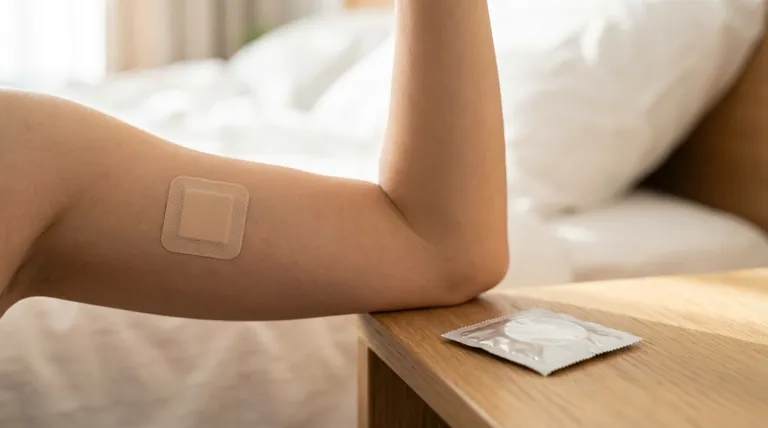
To be clear, the birth control patch offers zero protection against sexually transmitted infections (STIs). Its function is exclusively hormonal, designed only to prevent pregnancy by regulating your body's reproductive cycle. For protection against STIs like chlamydia, gonorrhea, or HIV, a separate barrier method is absolutely essential.
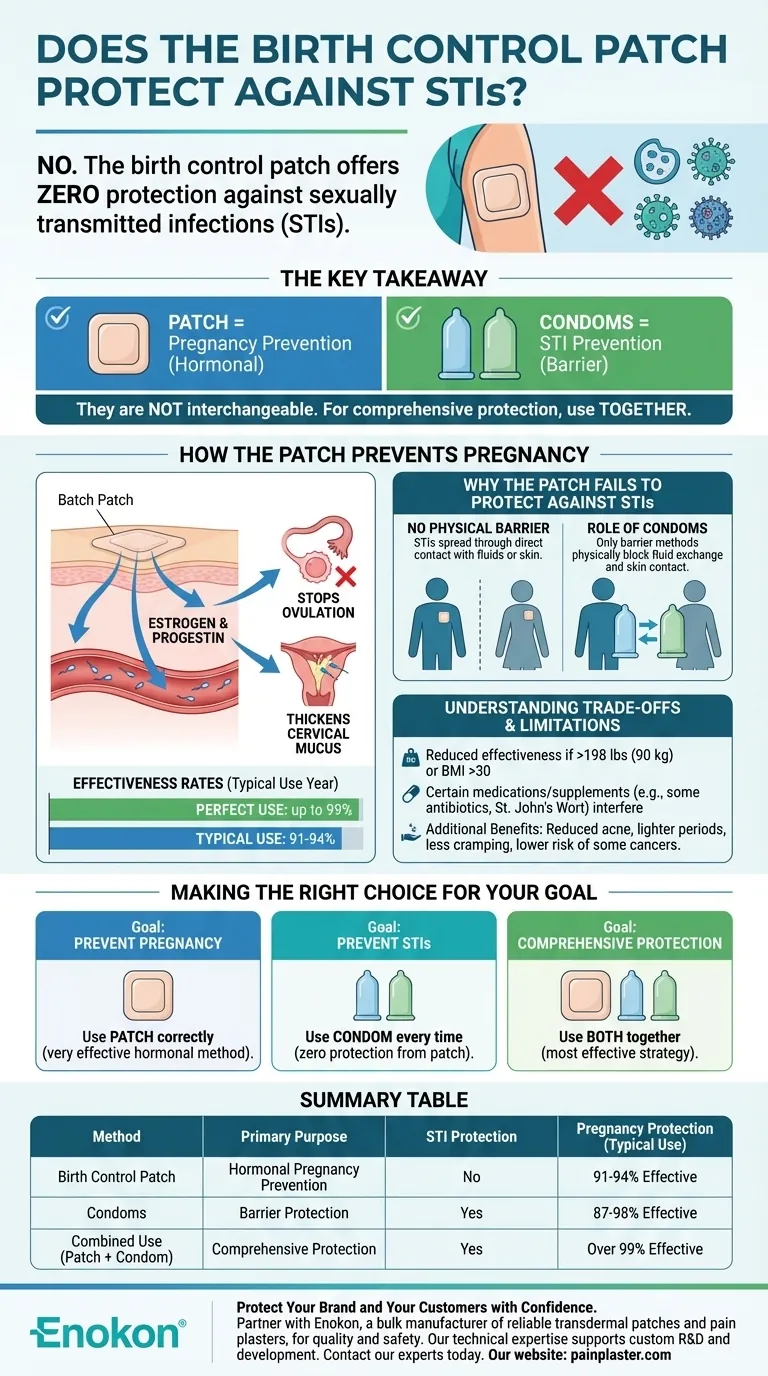
The central takeaway is this: The birth control patch and condoms serve two entirely different purposes. The patch is for pregnancy prevention, while condoms are for STI prevention. They are not interchangeable, and for comprehensive protection, they must be used together.
How the Patch Prevents Pregnancy
The birth control patch is a highly effective method of contraception when used correctly, but its mechanism is purely hormonal and has no impact on the transmission of infections.
Hormonal Mechanism
The patch works by releasing a steady dose of estrogen and progestin into your bloodstream. These hormones prevent pregnancy primarily by stopping your ovaries from releasing an egg (ovulation). They also thicken cervical mucus, making it difficult for sperm to reach an egg.
Effectiveness Rates: Perfect vs. Typical Use
With perfect use—meaning you change your patch exactly on schedule every week—it is up to 99% effective at preventing pregnancy.
However, typical use, which accounts for human error like forgetting to change a patch on time, has an effectiveness rate of around 91-94%. This means that in a typical year, between 6 and 9 out of 100 users may become pregnant.
Why the Patch Fails to Protect Against STIs
Understanding the method of transmission for both pregnancy and STIs makes it clear why the patch is not a suitable tool for infection control.
The Need for a Physical Barrier
STIs are spread through direct contact with infected bodily fluids (like semen or vaginal fluids) or skin-to-skin contact with infected sores or blisters. The patch is a small adhesive worn on the skin and provides no physical barrier between partners during sexual contact.
The Role of Condoms
Only barrier methods, like male (external) or female (internal) condoms, can physically block the exchange of fluids and prevent skin contact that transmits STIs. They are the only form of contraception that also significantly reduces the risk of contracting or spreading sexually transmitted infections.
Understanding the Trade-offs and Limitations
While convenient, the patch is not a universally perfect solution and comes with specific limitations you must consider for it to be effective.
Factors That Reduce Effectiveness
The patch's effectiveness at preventing pregnancy may be reduced for individuals weighing more than 198 pounds (90 kg) or with a BMI over 30.
Additionally, certain medications and supplements, such as some antibiotics or St. John's Wort, can interfere with the hormones and decrease the patch's efficacy. Always discuss all medications you are taking with your healthcare provider.
Additional Health Benefits
Beyond pregnancy prevention, the hormonal regulation from the patch can provide other benefits. These may include reducing acne, making periods lighter and more regular, easing menstrual cramps, and lowering the risk of certain ovarian and endometrial cancers.
Making the Right Choice for Your Goal
Selecting the right method requires clarity on what you need to protect against. Your strategy should be based on your specific health priorities.
- If your primary focus is preventing pregnancy: The patch is a very effective hormonal method, provided you use it correctly and are aware of factors that can reduce its efficacy.
- If your primary focus is preventing STIs: The patch provides zero protection; you must use a barrier method like a condom every single time.
- If your primary focus is comprehensive protection (from both pregnancy and STIs): The most effective strategy is to use both methods together—the patch for reliable pregnancy prevention and a condom for STI prevention.
Ultimately, understanding the distinct purpose of each contraceptive method is the key to confidently managing your sexual health.
Summary Table:
| Method | Primary Purpose | STI Protection | Pregnancy Protection (Typical Use) |
|---|---|---|---|
| Birth Control Patch | Hormonal Pregnancy Prevention | No | 91-94% Effective |
| Condoms | Barrier Protection | Yes | 87-98% Effective |
| Combined Use (Patch + Condom) | Comprehensive Protection | Yes | Over 99% Effective |
Protect Your Brand and Your Customers with Confidence
As a healthcare distributor or brand, providing clear, accurate information is crucial. Partner with Enokon, a bulk manufacturer of reliable transdermal patches and pain plasters, to ensure your products meet the highest standards of quality and safety.
Our technical expertise supports custom R&D and development, helping you deliver trusted solutions to the market. Let's collaborate to create products that empower informed health choices.
Contact our experts today to discuss your manufacturing needs.
Visual Guide
Related Products
- Prostate Pain Kidney Health Care Patch for Men
- Heating Pain Relief Patches for Menstrual Cramps
- Silicone Scar Sheets Patch Transdermal Drug Patch
- Menthol Gel Pain Relief Patch
- Icy Hot Menthol Medicine Pain Relief Patch
People Also Ask
- What are the key components of Chinese herbal pain patches? Discover the Science Behind Natural Pain Relief
- Are there any side effects associated with Chinese pain patches? Risks & Safety Tips
- What are Chinese pain patches used for? Natural Relief for Joint & Muscle Pain
- What role do Chinese pain patches play in arthritis relief? Discover Natural Pain Management Solutions
- How can Chinese pain patches help with back pain? Natural Relief & Healing Benefits








