
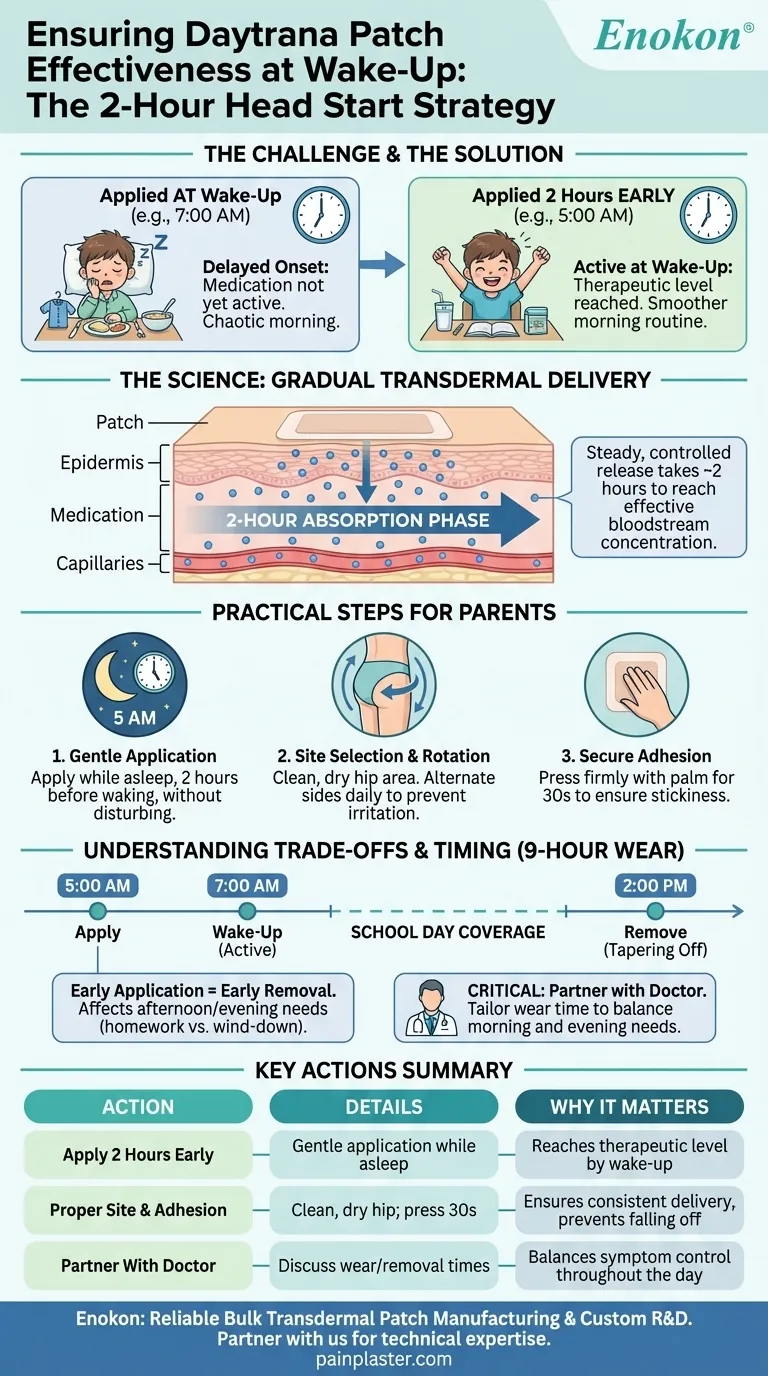
To ensure the Daytrana patch is working when your child wakes up, you must apply it approximately two hours before they need to get out of bed. This essential lead time allows the medication to be absorbed through the skin and reach an effective level in the bloodstream, aligning its onset with the start of your child's day.
The core challenge with the Daytrana patch isn't its effectiveness, but its timing. By shifting the application to be two hours before your child's wake-up time, you are proactively managing their ADHD symptoms for the most demanding part of the day: the morning routine.
The Science of the Two-Hour Head Start
The Daytrana patch is a transdermal system, meaning it delivers medication through the skin. This process is gradual and requires a clear understanding of its timing to be successful.
How Transdermal Delivery Works
Unlike an oral pill that is absorbed through the digestive system, a patch relies on the medication slowly seeping through the layers of the skin into the capillaries below. This method provides a steady, controlled release.
Reaching a Therapeutic Level
This absorption process is not instant. It takes approximately two hours for the methylphenidate from the patch to reach a high enough concentration in the bloodstream to effectively manage ADHD symptoms like inattention, impulsivity, and hyperactivity.
Aligning Action with Awakening
If you apply the patch at wake-up time, the therapeutic benefits won't begin until your child is already at school. Applying it two hours early ensures the medication is active the moment their feet hit the floor, helping to manage the often-chaotic morning tasks of getting dressed, eating, and preparing for school.
Practical Steps for a Smoother Morning
Successfully implementing this strategy involves more than just setting an early alarm. It requires a gentle and consistent approach.
The Gentle Application
The most common method is to gently apply the patch while your child is still asleep. This requires entering their room two hours before their scheduled wake-up, applying the patch, and leaving without disturbing them.
Choosing and Preparing the Site
The patch should be applied to the hip area, alternating between the right and left hip each day. This rotation is critical to prevent skin irritation. Ensure the skin is clean, dry, and free of any lotions or creams before application.
Ensuring Proper Adhesion
After applying the patch, press down firmly with the palm of your hand for about 30 seconds. This uses the warmth of your hand to help the adhesive stick securely to the skin for the rest of the day.
Understanding the Trade-offs and Timing
While the two-hour head start solves the morning challenge, it requires a conversation with your doctor about managing the medication's effects throughout the entire day.
Calculating the "Wear Time"
The Daytrana patch is typically worn for 9 hours. However, its effects can last for a few hours after removal. Applying the patch at 5 AM for a 7 AM wake-up means you will likely need to remove it around 2 PM.
Managing Afternoon and Evening Needs
Removing the patch in the early afternoon means the medication's effects will taper off in the late afternoon or early evening. This may be ideal for helping your child wind down for sleep, but it could also impact their ability to focus on homework or participate in after-school activities.
Why You Must Partner With Your Doctor
It is essential to discuss this timing strategy with your child's physician. They can help you tailor the "wear time" to fit your child's unique schedule, balancing the need for a smooth morning with coverage for homework and a calm evening. Never adjust the wear time without medical guidance.
Making the Right Choice for Your Goal
Your strategy should be based on a clear discussion with your doctor about your child's specific needs.
- If your primary focus is a calm, successful morning routine: Applying the patch two hours before your child wakes is the most effective action you can take.
- If your primary focus is consistent coverage for homework: Discuss the total wear time with your doctor to ensure the medication doesn't wear off too early in the afternoon.
- If you are concerned about skin irritation: Meticulously rotating the application site between the left and right hip each day is non-negotiable.
By proactively managing the patch's application time, you can directly address morning challenges and empower your child for a more focused and successful day.
Summary Table:
| Key Action | Details | Why It Matters |
|---|---|---|
| Apply 2 Hours Early | Gently apply the patch while the child is still asleep. | Allows medication to reach effective levels in the bloodstream by wake-up time. |
| Proper Site & Adhesion | Apply to clean, dry hip area; press firmly for 30 seconds. | Ensures consistent delivery and prevents the patch from falling off. |
| Partner With Your Doctor | Discuss total 'wear time' (typically 9 hours) and removal time. | Balances morning symptom control with afternoon/evening needs like homework. |
Struggling with consistent medication delivery for your patients? As Enokon, a bulk manufacturer of reliable transdermal patches and pain plasters, we provide healthcare and pharma distributors with the technical expertise for custom R&D and development. Let us help you create a product that delivers for your customers. Contact our experts today to discuss your needs.
Visual Guide
Related Products
- Herbal Medicated Anti Diarrhea Patch for Digestive Relief
- Menthol Gel Pain Relief Patch
- Hydra Gel Health Care Eye Patch
- Icy Hot Menthol Medicine Pain Relief Patch
- Cooling Fever Patches Color Change Cold Fever Patch
People Also Ask
- What are the pharmacological effects of multi-target herbal patches in relieving joint inflammation? Science-Backed OEM
- What activities should be avoided while using this patch? Key Precautions for Safe & Effective Use
- What should be avoided when using the patch? Key Safety Tips for Herbal Patch Users
- What should be done if a patch falls off or a dose is missed? Quick Fixes & Safety Tips
- What should be done if a patch comes loose or falls off? Ensure Continuous & Effective Treatment



















