
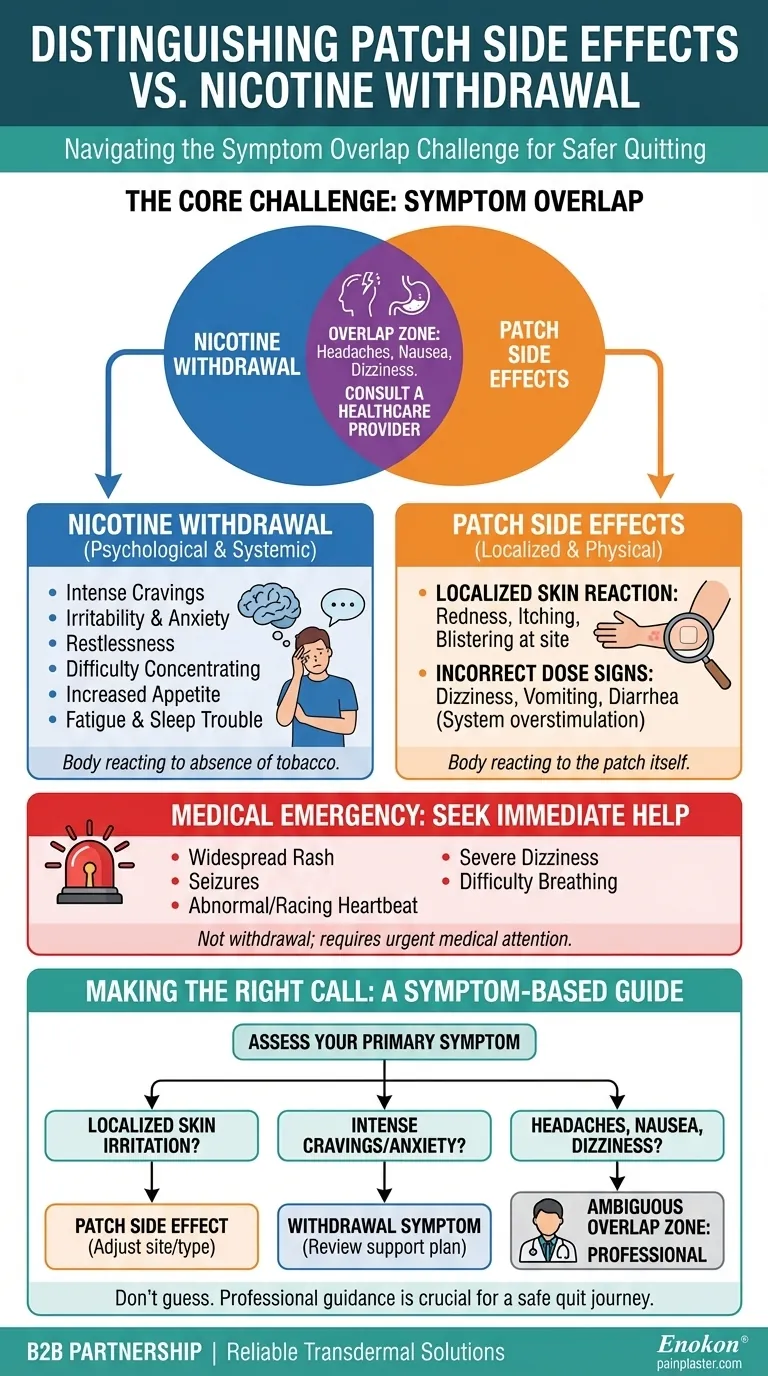
Discerning between nicotine patch side effects and withdrawal is difficult because the symptoms can significantly overlap. The most reliable approach is to identify symptoms that are unique to each cause, such as localized skin irritation from the patch or psychological symptoms like intense cravings from withdrawal. For overlapping symptoms like headaches or nausea, a definitive diagnosis requires consulting a healthcare provider.
When you stop using tobacco, your body is undergoing two major adjustments at once: reacting to the absence of inhaled cigarette chemicals (withdrawal) and adapting to a new, steady source of nicotine (the patch). This dual-process is why symptoms can be so confusing. The key is not to guess, but to systematically identify the likely source and seek guidance when the signs are ambiguous.

The Core Challenge: Symptom Overlap
Many of the uncomfortable feelings that arise when you start using the nicotine patch are not exclusive to one cause. This ambiguity is the primary reason it can be hard to know what's really going on with your body.
Headaches and Nausea
The most commonly confused symptoms are headaches and nausea. Your body may be reacting to a new, consistent delivery of nicotine from the patch, or it may be reacting to the absence of the hundreds of other chemicals it was used to receiving from cigarettes.
Why This Confusion Exists
Withdrawal is the body's response to the absence of a substance it has become dependent on. Side effects, on the other hand, are the body's reaction to a new medication. Both processes can trigger similar general discomforts like dizziness or an upset stomach.
Isolating Patch-Specific Side Effects
While some symptoms overlap, others point directly to the patch as the cause. These are often the most straightforward to identify.
The Clearest Sign: Skin Reactions
The most definitive side effect of the nicotine patch is a reaction at the application site.
This can range from mild redness, itching, and irritation to more serious reactions like blistering, swelling, or unusual pain at the site. These symptoms are caused by the patch itself, not withdrawal.
Signs of an Incorrect Dose
Symptoms like dizziness, vomiting, or diarrhea can sometimes indicate that the nicotine dose in your patch is too high for your body to handle. Your system is being overstimulated by nicotine.
When to Seek Immediate Medical Help
Certain severe side effects are a clear signal of an adverse reaction and require urgent medical attention.
These include a widespread rash, seizures, an abnormal or racing heartbeat, severe dizziness, or difficulty breathing. These are not withdrawal symptoms and should be treated as a medical emergency.
Isolating Nicotine Withdrawal Symptoms
Withdrawal symptoms tend to involve a stronger psychological and emotional component, which can help differentiate them from the purely physical side effects of the patch.
The Psychological Component
The hallmarks of nicotine withdrawal are often mental and emotional. These include intense cravings for tobacco, irritability, anxiety, restlessness, and difficulty concentrating. These are driven by the brain's craving for the substance, not a reaction to the patch.
Other Common Withdrawal Signs
While physical symptoms can occur, they often manifest differently. You might experience increased appetite, fatigue, or trouble sleeping as your body's metabolism and sleep cycles regulate without the constant influence of inhaled tobacco.
Understanding the Trade-offs: The Need for Professional Guidance
Incorrectly identifying the cause of your symptoms can undermine your attempt to quit and, in some cases, pose a health risk. This is why self-diagnosis is not recommended when symptoms overlap.
The Risk of Misdiagnosis
If you mistake withdrawal symptoms for patch side effects, you might be tempted to lower your patch dosage or stop using it altogether. This can intensify cravings and significantly increase your risk of relapsing.
The Danger of Ignoring Side Effects
Conversely, dismissing a genuine side effect—especially a severe one—as "just withdrawal" can be dangerous. It's crucial to listen to your body and recognize the signs of an adverse reaction to the medication.
The Role of a Healthcare Provider
A healthcare professional is your most valuable resource. They can assess your symptoms in the context of your health history and smoking habits to determine the true cause. They can then make critical adjustments, such as changing your patch dosage, recommending a different patch location to reduce irritation, or prescribing a different form of nicotine replacement therapy (NRT).
Making the Right Call: A Symptom-Based Guide
Use this framework to assess what you are feeling and determine the right course of action.
- If your primary symptom is localized skin irritation, itching, or redness: This is almost certainly a direct side effect of the patch adhesive or nicotine delivery.
- If your primary feelings are intense cravings, irritability, or anxiety: These are classic psychological symptoms of nicotine withdrawal.
- If you are experiencing headaches, nausea, or general dizziness: This is an ambiguous overlap zone that requires a professional evaluation to determine if the cause is withdrawal or an incorrect patch dosage.
- If you develop a widespread rash, have trouble breathing, or feel your heart racing: Treat this as a potential emergency and seek immediate medical attention.
By learning to interpret your body's signals, you can navigate the challenges of quitting and use tools like the nicotine patch safely and effectively.
Summary Table:
| Symptom Type | Likely Cause | Key Characteristics |
|---|---|---|
| Patch Side Effects | Reaction to the patch | Localized skin redness, itching, or blistering; dizziness/vomiting from high dose. |
| Nicotine Withdrawal | Absence of tobacco | Intense cravings, irritability, anxiety, restlessness, increased appetite. |
| Overlap Zone (Requires Professional Advice) | Could be either | Headaches, nausea, general dizziness, trouble sleeping. |
| Medical Emergency | Severe patch reaction | Widespread rash, racing heartbeat, seizures, difficulty breathing. |
Don't Navigate Your Quit Journey Alone
Distinguishing between side effects and withdrawal is critical for a safe and successful quit attempt. Guessing wrong can lead to relapse or ignoring a serious health issue.
Let Enokon's Expertise Guide You
As a bulk manufacturer of reliable transdermal patches, including nicotine replacement therapy systems, we understand the precise formulation and delivery mechanisms that can minimize side effects. Our technical expertise in custom R&D ensures that healthcare brands and distributors can offer safer, more effective solutions to their patients.
If you are a healthcare distributor or brand looking to provide high-quality, well-tolerated transdermal patches, partner with Enokon. Let us help you develop products that support a smoother quit journey.
Contact our specialists today to discuss your custom transdermal patch needs.
Visual Guide
Related Products
- Menthol Gel Pain Relief Patch
- Capsaicin Chili Medicated Pain Relief Patches
- Icy Hot Menthol Medicine Pain Relief Patch
- Lidocaine Hydrogel Pain Relief Patch for Pain Relief
- Mugwort Wormwood Pain Relief Patch for Neck Pain
People Also Ask
- How do pain relief patches compare to other pain relief methods? Discover Targeted, Long-Lasting Relief
- How effective are pain relief patches for muscle pain? Target Localized Pain with Transdermal Delivery
- Who should consult a healthcare professional before using pain relief patches? Ensure Your Safety with Medical Advice
- What are some common applications of pain relief patches? Effective Relief for Muscle & Joint Pain
- What are pain relief patches and how do they work? Discover Non-Invasive Pain Management

















