
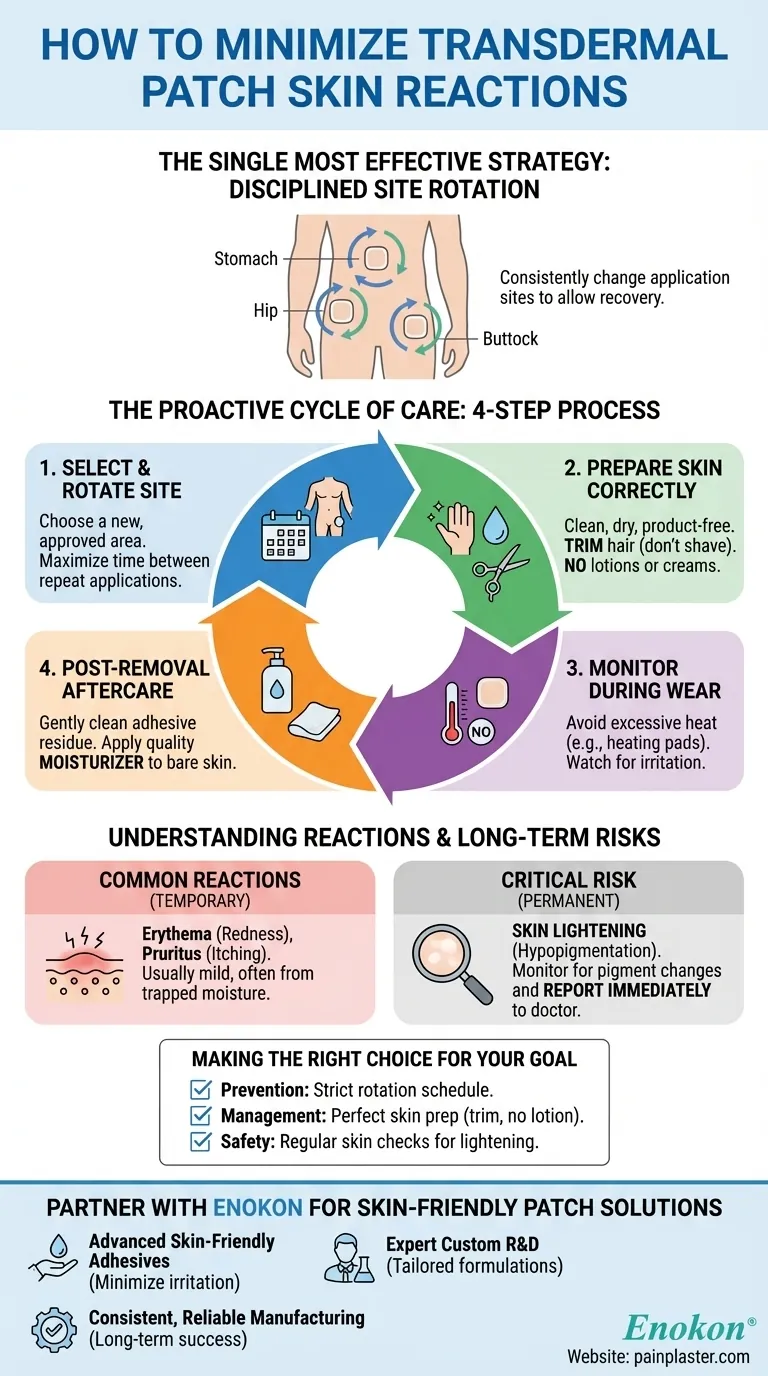
The single most effective strategy to minimize skin reactions from a transdermal patch is a disciplined site rotation schedule. By consistently changing the application site between approved areas like the stomach, hip, and buttocks, you allow the skin's natural barrier to fully recover before it is covered again.
The key to preventing patch-related skin irritation is not just reacting to it, but implementing a proactive cycle of care: careful site selection, proper skin preparation, and dedicated aftercare for the exposed skin.
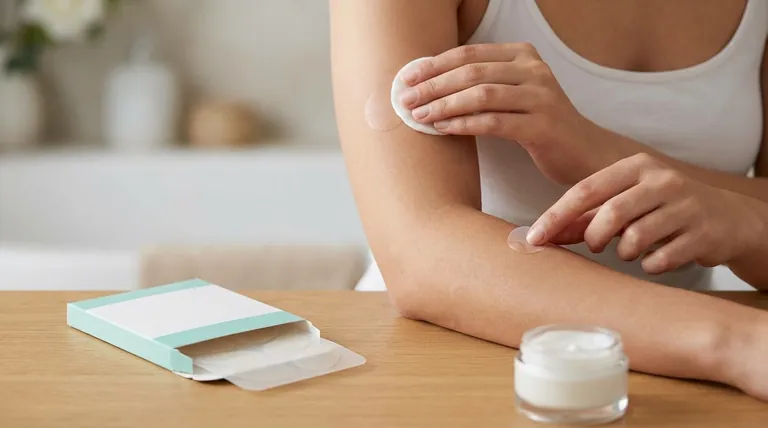
Understanding Common Skin Reactions
The most frequent reactions at a patch application site are a form of irritant contact dermatitis. This is not typically an allergic reaction but rather the skin's response to being covered.
Erythema and Pruritus
The most common symptoms are erythema (redness) and pruritus (itching). These occur because the patch can trap moisture and disrupt the skin's outermost protective layer.
For most users, these reactions are mild and manageable. In one study, after two weeks of use, over 93% of application sites showed no redness and over 89% had no swelling.
Sensation Changes
Concerns about nerve effects are minimal. Studies show that sensation to light touch and pinprick was maintained in 96% and 98% of patients, respectively, indicating the patch has little effect on local nerve function.
The Core Strategy: A Proactive Cycle of Care
Think of managing your skin not as a single action, but as a four-step cycle for each patch application.
Step 1: Select and Rotate the Site
The foundation of prevention is site rotation. Consistently using a new spot for each patch gives the previously used area maximum time to heal.
Focus on approved areas such as the stomach, hip, or buttocks. Create a simple schedule or mental map to ensure you don't re-use a spot too soon.
Step 2: Prepare the Skin Correctly
Proper preparation ensures good adhesion and minimizes irritation. The skin should be clean, dry, and free of any products.
Do not apply lotions, creams, or ointments to the area before applying the patch, as this can interfere with the adhesive and trap substances against your skin.
If hair is present, trim it closely with scissors. Do not shave the area, as shaving creates microscopic abrasions that can become irritated under the patch.
Step 3: Monitor During Wear
Once the patch is on, avoid external factors that can worsen irritation.
Specifically, avoid exposing the patch to excessive heat from sources like heating pads or electric blankets, as this can increase both drug delivery and the potential for skin reaction.
Step 4: Post-Removal Aftercare
After removing the patch, give the skin attention. Gently clean the area to remove any adhesive residue.
Applying a quality moisturizer to the uncovered skin can help restore its natural barrier, making it more resilient for future patch applications.
A Critical Long-Term Effect to Monitor
While most reactions are temporary, it is crucial to be aware of a less common but more significant side effect.
The Risk of Permanent Skin Lightening
Over time, some individuals may experience permanent skin lightening (hypopigmentation) in the areas where the patch has been applied.
When to Consult Your Doctor
You must monitor your skin for any new areas of lighter skin. Report any pigment changes to your doctor immediately.
You should also seek medical advice if you experience severe redness, swelling, or itching that does not resolve after implementing the strategies above. For severe cases, your doctor may recommend antihistamines or topical treatments.
Making the Right Choice for Your Goal
Adopting the right habits from the start is the most effective way to ensure your treatment is both effective and comfortable.
- If your primary focus is prevention: Establish a strict site rotation schedule immediately and never deviate from it.
- If your primary focus is managing current, mild irritation: Double down on proper skin preparation, ensuring the site is trimmed (not shaved) and completely free of lotions before application.
- If your primary focus is long-term safety: Conduct regular skin checks for any signs of pigmentation change and report them to your healthcare provider without delay.
By taking deliberate, proactive control of this process, you can effectively manage your skin's health and minimize disruptions to your therapy.
Summary Table:
| Strategy | Key Action | Purpose |
|---|---|---|
| Site Rotation | Apply each new patch to a different, approved area (stomach, hip, buttock). | Allows skin to recover fully between applications. |
| Skin Preparation | Clean, dry skin; trim hair (don't shave); no lotions/creams. | Ensures good adhesion and prevents trapped irritants. |
| Monitoring During Wear | Avoid applying excessive heat (heating pads) to the patch. | Prevents increased drug delivery and irritation. |
| Post-Removal Aftercare | Gently clean area and apply a moisturizer. | Restores the skin's natural barrier for resilience. |
Need Reliable, Skin-Friendly Transdermal Patches?
Partner with Enokon, a trusted bulk manufacturer of high-quality transdermal patches and pain plasters. We understand that patient comfort and adherence are paramount.
We help healthcare and pharmaceutical distributors and brands by:
- Developing patches with advanced, skin-friendly adhesives to minimize the risk of irritation.
- Providing expert custom R&D to tailor formulations and materials for specific patient needs.
- Ensuring consistent, reliable manufacturing for products that support long-term therapy success.
Let's collaborate to create a better patient experience. Contact our experts today to discuss your project requirements.
Visual Guide
Related Products
- Far Infrared Heat Pain Relief Patches Transdermal Patches
- Silicone Scar Sheets Patch Transdermal Drug Patch
- Icy Hot Menthol Medicine Pain Relief Patch
- Menthol Gel Pain Relief Patch
- Mugwort Wormwood Pain Relief Patch for Neck Pain
People Also Ask
- Why is the selection of matrix materials critical when developing customized transdermal patches? Optimize Efficacy
- What are the physical impacts of external heat exposure on the performance and safety of transdermal patches? - Guide
- What role does a skin tolerance scoring system play in the safety evaluation of transdermal patches? Key Safety Metrics
- What are the clinical advantages of local transdermal delivery systems? Unlock Safer, More Effective Pain Relief Solutions
- How does high-purity far-infrared ceramic powder contribute to the efficacy of far-infrared physical therapy patches?



















