
Transdermal patches reduce dosing risks by fundamentally changing how a drug enters the body. Unlike pills that cause sharp spikes in medication levels, patches deliver a slow, controlled, and consistent dose directly through the skin over an extended period. This steady release minimizes the risks of both underdosing and overdosing.
The core principle is simple: by avoiding the "peak and trough" cycle of oral medication, transdermal patches maintain a drug's concentration within its optimal therapeutic window, enhancing effectiveness while significantly reducing the potential for adverse side effects.
The Problem with Traditional Dosing: Peaks and Troughs
To understand the value of a patch, we first must recognize the inherent challenge of oral medications like pills and capsules.
The Pill-Taking Cycle
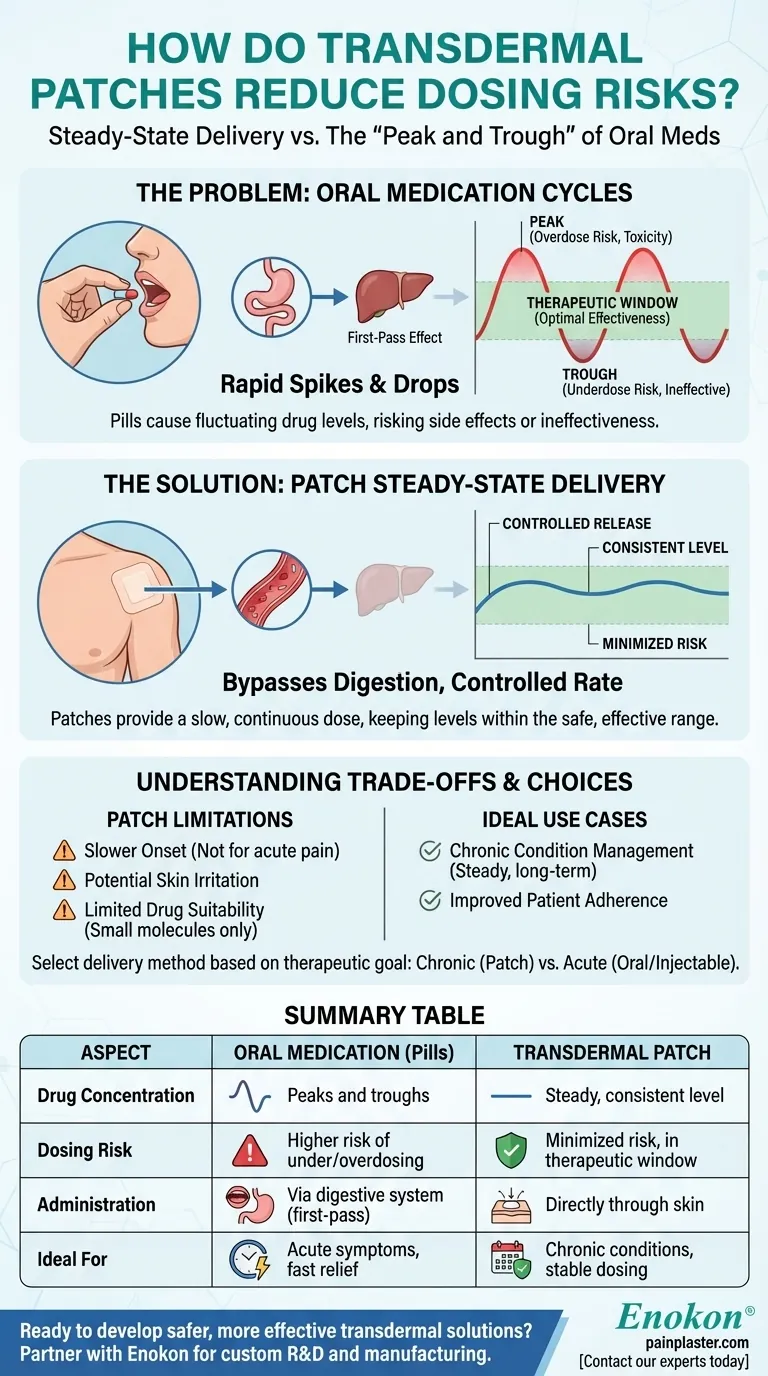
When you take a pill, the drug is absorbed through your digestive system, causing a rapid increase—or peak—in its concentration in your bloodstream.
As your body metabolizes the drug, its concentration declines, eventually reaching a trough, which is the lowest level before the next dose is due. This cycle of peaks and troughs is an unavoidable part of oral dosing.
The Therapeutic Window
Every drug has a therapeutic window, which is the concentration range where it is most effective and has the fewest side effects.
Concentrations above this window increase the risk of toxicity and adverse reactions (overdosing). Concentrations below it can render the drug ineffective (underdosing). The goal of any dosing regimen is to keep the drug level within this specific window.
How Patches Achieve Steady-State Delivery
Transdermal patches are engineered to overcome the peak-and-trough problem by creating a stable, steady-state concentration of the drug in the body.
Bypassing the Digestive System
A patch delivers its active pharmaceutical ingredient (API) directly through the skin into the bloodstream.
This method completely bypasses the digestive system and avoids the first-pass effect, where a significant portion of a drug is metabolized by the liver before it can ever reach the rest of the body. This makes dosing more predictable and efficient.
Consistent Drug Release
Patches are designed with special membranes and adhesives that control the rate at which the drug migrates from the patch into the skin.
This creates a slow, continuous, and predictable release over many hours or even days, effectively eliminating the drastic peaks and troughs associated with pills. The result is a stable drug concentration that remains squarely within the therapeutic window.
Understanding the Trade-offs
While highly effective for consistent dosing, transdermal patches are not a universal solution. Understanding their limitations is key to making an informed decision.
Slower Onset of Action
Because the drug is released slowly, patches are not suitable for situations requiring immediate relief, such as acute pain. The therapeutic effect can take several hours to begin.
Potential for Skin Irritation
The adhesive and the drug itself can cause local skin irritation, redness, or itching at the application site for some individuals.
Not All Drugs are Suitable
Only certain types of drugs can be delivered via a patch. The drug's molecules must be small enough to pass through the skin barrier, and the required dose must be low enough to be delivered from a reasonably sized patch.
Making the Right Choice for Your Goal
Selecting a drug delivery method depends entirely on the therapeutic goal and the nature of the condition being treated.
- If your primary focus is managing a chronic condition: A patch is often superior due to its ability to provide steady, long-term drug levels, improve patient adherence, and minimize side effects.
- If your primary focus is treating acute symptoms: Oral or injectable medications are typically necessary for their rapid onset of action and ability to provide immediate relief.
Ultimately, by maintaining consistent drug delivery, patches offer a safer and more effective way to manage conditions that require stable, long-term medication.
Summary Table:
| Aspect | Oral Medication (Pills) | Transdermal Patch |
|---|---|---|
| Drug Concentration | Peaks and troughs | Steady, consistent level |
| Dosing Risk | Higher risk of under/overdosing | Minimized risk, stays in therapeutic window |
| Administration | Via digestive system (first-pass effect) | Directly through skin |
| Ideal For | Acute symptoms requiring fast relief | Chronic conditions requiring stable dosing |
Ready to develop safer, more effective transdermal drug delivery solutions?
At Enokon, we are a bulk manufacturer of reliable transdermal patches and pain plasters. We partner with healthcare and pharmaceutical distributors and brands to bring their products to market.
Benefit from our technical expertise for your custom R&D and development needs. Let us help you create patches that minimize dosing risks and improve patient outcomes.
Contact our experts today to discuss your project requirements.
Visual Guide
Related Products
- Far Infrared Heat Pain Relief Patches Transdermal Patches
- Silicone Scar Sheets Patch Transdermal Drug Patch
- Icy Hot Menthol Medicine Pain Relief Patch
- Menthol Gel Pain Relief Patch
- Mugwort Wormwood Pain Relief Patch for Neck Pain
People Also Ask
- Why is the selection of matrix materials critical when developing customized transdermal patches? Optimize Efficacy
- What are the physical impacts of external heat exposure on the performance and safety of transdermal patches? - Guide
- What role does a skin tolerance scoring system play in the safety evaluation of transdermal patches? Key Safety Metrics
- What are the clinical advantages of local transdermal delivery systems? Unlock Safer, More Effective Pain Relief Solutions
- How does high-purity far-infrared ceramic powder contribute to the efficacy of far-infrared physical therapy patches?



















