
At its core, a capsicum plaster reduces inflammation by using its active ingredient, capsaicin, to interfere with the chemical signals that your body uses to create and sustain an inflammatory response. This process works directly at the site of application, calming overactive nerve endings.
The primary function of a capsicum plaster is not to mask pain, but to actively deplete the specific neurochemicals that transmit pain signals and promote localized inflammation, leading to genuine relief.
The Core Mechanism: How Capsaicin Works
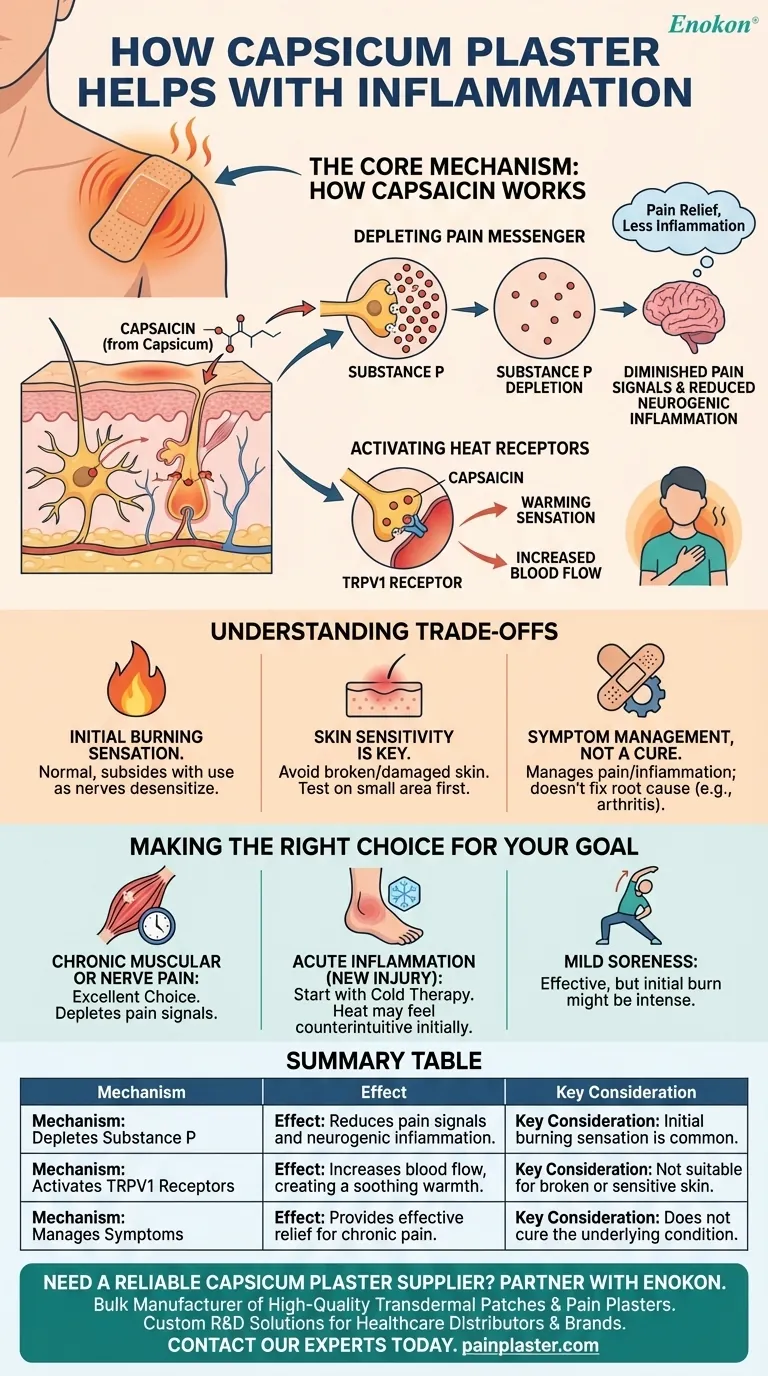
To understand how a capsicum plaster helps, you need to look at its active ingredient, capsaicin. This is the same compound that gives chili peppers their heat, and it interacts with your body's nervous system in a very specific way.
Depleting Your Pain Messenger
Your nerve cells use a chemical called Substance P to send pain signals to your brain. Capsaicin forces these nerve cells to release so much Substance P that they eventually run out.
With diminished Substance P, the nerves in the affected area are simply unable to send pain messages effectively. This process is known as depletion.
Creating a Sensation of Heat
Capsaicin binds to a specific receptor on your nerve endings called TRPV1. This is the same receptor your body uses to detect actual heat from sources like fire or hot water.
By activating these receptors, capsaicin tricks your brain into feeling a warming sensation, which increases blood flow and can feel soothing to sore muscles.
Reducing Pro-Inflammatory Signals
The depletion of Substance P has a dual effect. Not only does it reduce pain, but it also helps reduce neurogenic inflammation—inflammation driven by the nervous system.
Substance P is one of the compounds that triggers the body to release other inflammatory molecules. By suppressing it, the plaster helps break the chemical cycle that keeps an area swollen and irritated.
Understanding the Trade-offs
While effective, the mechanism of capsaicin comes with important considerations. Understanding these ensures you use the plaster correctly and safely.
The Initial Burning Sensation
When you first apply the plaster, the massive release of Substance P and activation of heat receptors can cause a significant burning or stinging sensation.
This is a normal part of the process and typically subsides with continued use as the nerve endings become desensitized.
Skin Sensitivity is Key
Capsicum plasters are not suitable for everyone. They should never be applied to broken, damaged, or irritated skin.
Individuals with sensitive skin may experience redness or blistering. It is always wise to test the plaster on a small area first.
Symptom Management, Not a Cure
It's crucial to recognize that a capsicum plaster manages the symptoms of pain and inflammation. It does not cure the underlying condition, such as arthritis or a muscle tear.
It is a tool for making a condition more tolerable, not for resolving the root cause of the issue.
Making the Right Choice for Your Goal
To use a capsicum plaster effectively, align its function with your specific therapeutic goal.
- If your primary focus is chronic muscular or nerve-related pain: A capsicum plaster is an excellent choice, as its mechanism is perfectly suited to depleting the pain signals common in these conditions.
- If your primary focus is acute inflammation from a new injury: You may want to start with cold therapy (ice) to constrict blood vessels first, as the heat from the plaster can sometimes feel counterintuitive on a fresh, swollen injury.
- If your primary focus is mild soreness with no significant pain: The plaster will likely be effective, but the initial burning sensation might be more intense than the relief you are seeking.
Understanding how capsaicin interacts with your nervous system empowers you to use it as a precise tool for targeted relief.
Summary Table:
| Mechanism | Effect on Inflammation | Key Consideration |
|---|---|---|
| Depletes Substance P | Reduces pain signals and neurogenic inflammation. | Initial burning sensation is common. |
| Activates TRPV1 Receptors | Increases blood flow, creating a soothing warmth. | Not suitable for broken or sensitive skin. |
| Manages Symptoms | Provides effective relief for chronic pain. | Does not cure the underlying condition. |
Need a reliable capsicum plaster supplier? Partner with Enokon, a bulk manufacturer of high-quality transdermal patches and pain plasters. We specialize in custom R&D to develop effective solutions for healthcare distributors and brands. Contact our experts today to discuss your product development needs and benefit from our technical expertise.
Visual Guide
Related Products
- Heat Relief Capsicum Patch for Lower Back Pain Relief
- Capsaicin Chili Medicated Pain Relief Patches
- Natural Herbal Wormwood Patch Pain Plaster
People Also Ask
- What were the inclusion criteria for the study on capsicum plaster for back pain? Key Requirements Explained
- What is Capsicum Plaster used for? Targeted Pain Relief for Musculoskeletal Discomfort
- What are some alternatives to lidocaine patches for lower back pain? Explore 5 Effective Options
- How does the active ingredient Capsicum in the Heat Patch work? A Dual-Action Path to Pain Relief
- What conditions can capsicum plasters be used for? Natural Pain Relief for Muscles & Joints


