
Fentanyl transdermal patches interact with a wide range of substances, including other central nervous system (CNS) depressants, certain medications that alter its absorption, and a class of drugs known as MAO inhibitors. These interactions can dangerously increase fentanyl's effects, leading to severe respiratory depression, or decrease its effectiveness, resulting in uncontrolled pain.
The primary danger of fentanyl patch interactions is the unpredictable amplification of its effects, particularly respiratory depression. Because the patch delivers a potent drug slowly over 72 hours, any substance that alters its absorption rate or adds to its sedative effects creates a significant and prolonged risk of overdose.
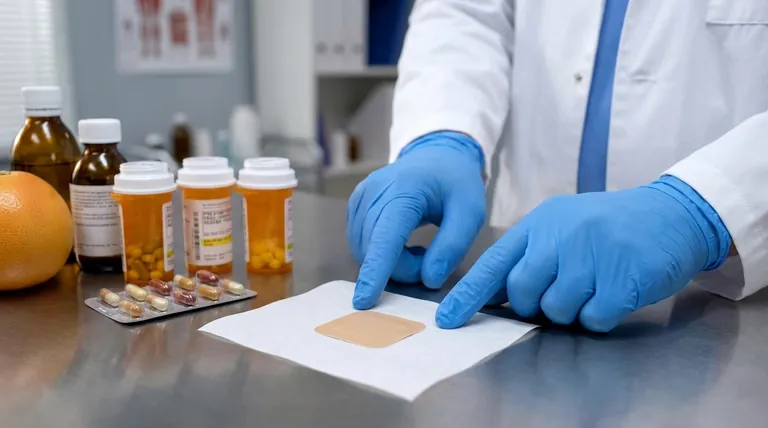
How the Fentanyl Patch Works
To understand its interactions, we must first understand its mechanism. The fentanyl patch is not like a pill; its design dictates its risks.
The Principle of Transdermal Delivery
A transdermal patch delivers medication directly through the skin into the bloodstream. It provides a slow, controlled release of fentanyl over a long period, typically 72 hours.
Fentanyl is well-suited for this method due to its high potency, low molecular weight, and lipid solubility, which allow it to pass through the skin barrier effectively.
Targeting Opioid Receptors
Once in the bloodstream, fentanyl travels to the central nervous system. It works by attaching to opioid receptors in the brain and spinal cord, which reduces pain signals and alters your perception of pain.
Key Interaction Categories and Their Mechanisms
Interactions fall into several distinct categories, each with a different mechanism and level of risk. A substance can either change how fentanyl works in your body or change how much of it gets into your body.
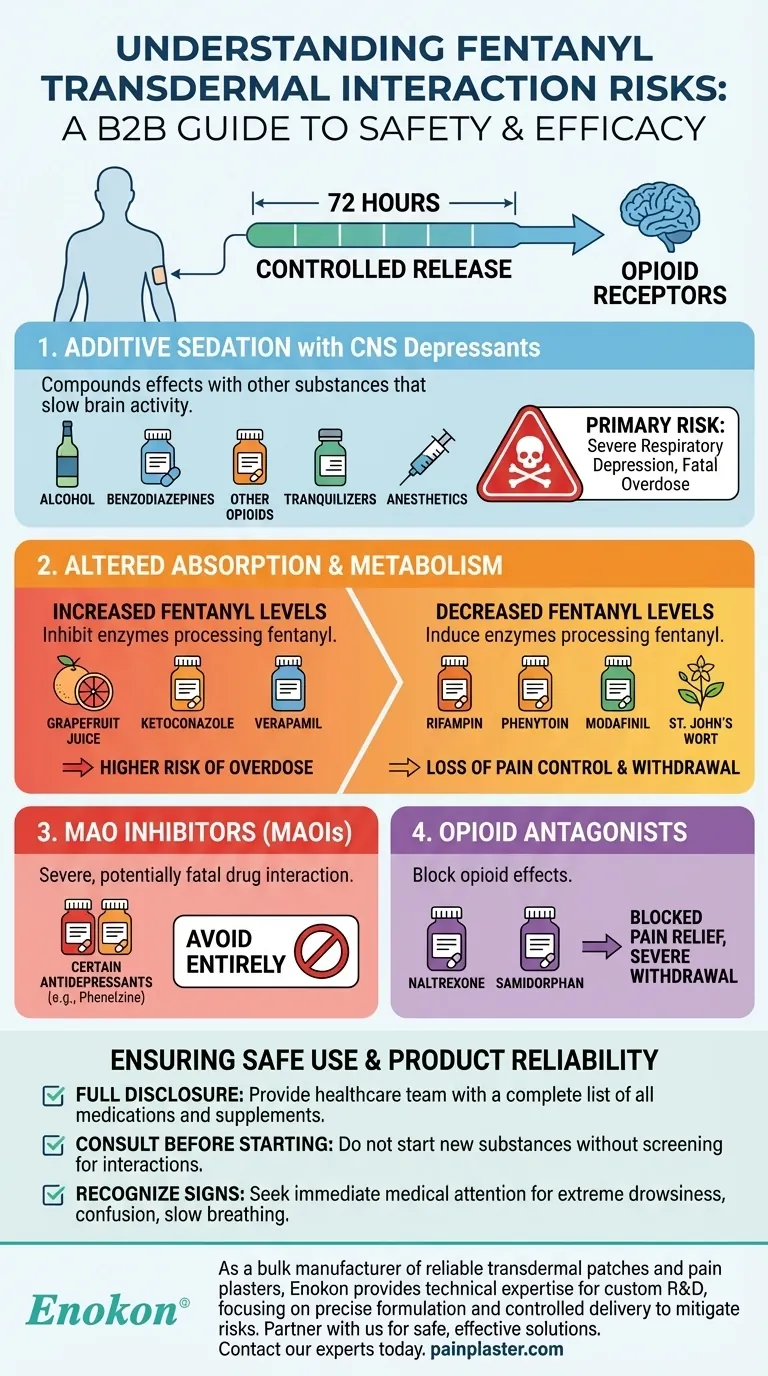
Additive Sedation with CNS Depressants
This is the most common and dangerous interaction. When fentanyl is combined with other substances that also slow down brain activity, their effects are compounded.
This can lead to severe drowsiness, confusion, and critically, respiratory depression—dangerously slow and shallow breathing that can be fatal.
Common CNS depressants include:
- Other narcotics or opioid pain medications
- Barbiturates
- Tranquilizers and benzodiazepines
- General anesthetics
- Alcohol
Altered Absorption and Metabolism
Some substances interfere with the enzymes in your body that process fentanyl. This can drastically change the amount of medication in your bloodstream, even if you use the patch exactly as prescribed.
Substances that can increase fentanyl levels, leading to a higher risk of overdose, include:
- Grapefruit and grapefruit juice
- Ketoconazole (an antifungal)
- Verapamil (a blood pressure medication)
Substances that can decrease fentanyl levels, leading to a loss of pain control and potential withdrawal, include:
- Rifampin (an antibiotic)
- Phenytoin (an anti-seizure medication)
- St. John's wort (an herbal supplement)
- Modafinil (a wakefulness-promoting agent)
The Critical Risk with MAOIs
Combining fentanyl with Monoamine Oxidase Inhibitors (MAOIs), a class of antidepressants, can cause a severe, potentially fatal drug interaction. This combination should be avoided entirely.
Opioid Antagonists
Medications like naltrexone or samidorphan are designed to block the effects of opioids. Taking them with a fentanyl patch will negate the pain-relieving effects and can trigger sudden and severe withdrawal symptoms.
Understanding the Inherent Risks
The slow-release nature of the patch creates unique challenges that are crucial to understand for safe use.
The Danger of a Slow-Release System
Because the patch releases fentanyl continuously, an interaction is not a brief event. The increased or decreased effect can last for days, making it difficult to manage.
Think of it like trying to stop a large, heavy truck; you cannot instantly halt the drug's delivery once a dangerous interaction begins. This is why preventing interactions is paramount.
The Importance of Full Disclosure
Many interactions involve common medications, supplements, or even foods. It is essential to provide your doctor and pharmacist with a complete and honest list of everything you take, no matter how insignificant it seems.
Accidental vs. Intentional Overdose
While misuse—such as changing patches too frequently—is a known cause of overdose, a life-threatening overdose can also occur accidentally. Simply starting a new medication or supplement that interacts with the patch can be just as dangerous.
How to Ensure Safe Use
Your active participation is the most critical factor in preventing a harmful interaction. The following guidelines are essential for anyone using a fentanyl transdermal patch.
- If you are starting fentanyl therapy: Provide your healthcare team with a complete list of all medications, over-the-counter drugs, and supplements you take, including St. John's wort.
- If you are currently using a fentanyl patch: Do not start any new medication or supplement, including herbal remedies, without first consulting your doctor or pharmacist to screen for interactions.
- If you experience unexpected side effects: Seek immediate medical attention if you notice extreme drowsiness, confusion, pinpoint pupils, or slow and shallow breathing, as these are signs of an overdose.
Proactive communication with your healthcare provider is the single most effective strategy for preventing harmful drug interactions and ensuring your safety.
Summary Table:
| Interaction Category | Common Substances | Primary Risk |
|---|---|---|
| Additive Sedation (CNS Depressants) | Alcohol, Benzodiazepines, Other Opioids | Severe respiratory depression, fatal overdose |
| Altered Metabolism | Grapefruit juice, Ketoconazole, Rifampin, St. John's wort | Unpredictable fentanyl levels (overdose or loss of pain control) |
| MAO Inhibitors (MAOIs) | Certain Antidepressants (e.g., Phenelzine) | Severe, potentially fatal drug reaction |
| Opioid Antagonists | Naltrexone, Samidorphan | Blocked pain relief, severe withdrawal symptoms |
Ensure the safety and efficacy of your transdermal pain management products.
As a bulk manufacturer of reliable transdermal patches and pain plasters, Enokon provides healthcare and pharmaceutical distributors and brands with the technical expertise needed for custom R&D and development. Our focus on precise formulation and controlled delivery systems helps mitigate risks associated with drug interactions.
Partner with us to develop safe, effective transdermal solutions. Contact our experts today to discuss your specific requirements.
Visual Guide
Related Products
- Menthol Gel Pain Relief Patch
- Icy Hot Menthol Medicine Pain Relief Patch
- Far Infrared Heat Pain Relief Patches Transdermal Patches
- Silicone Scar Sheets Patch Transdermal Drug Patch
- Mugwort Wormwood Pain Relief Patch for Neck Pain
People Also Ask
- How do pain relief patches compare to other pain relief methods? Discover Targeted, Long-Lasting Relief
- How effective are pain relief patches for muscle pain? Target Localized Pain with Transdermal Delivery
- Who should consult a healthcare professional before using pain relief patches? Ensure Your Safety with Medical Advice
- What are the potential side effects of pain relief patches? A Guide to Safe Use & Key Risks
- What are some common applications of pain relief patches? Effective Relief for Muscle & Joint Pain
















