
At its core, the contraceptive patch prevents pregnancy by delivering a steady dose of hormones through your skin. These hormones, estrogen and progestin, are the same types found in many combination birth control pills. They work systematically to create three distinct barriers that make conception highly unlikely.
The patch functions as a multi-layered defense system. Its primary role is to stop your ovaries from releasing an egg, but it also creates secondary physical barriers within the cervix and uterus as powerful backup measures.
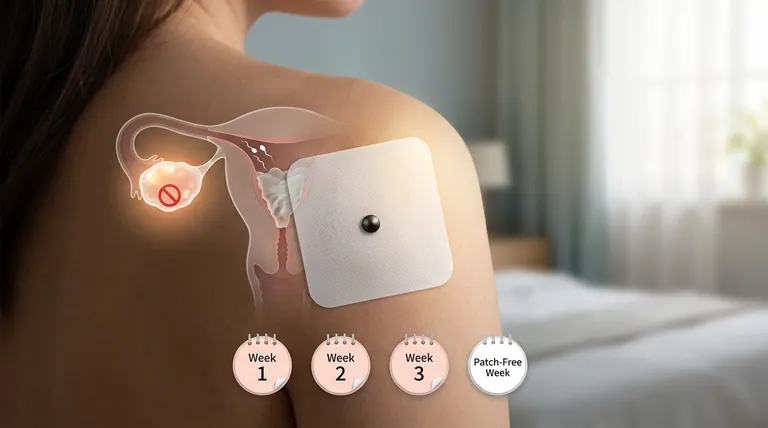
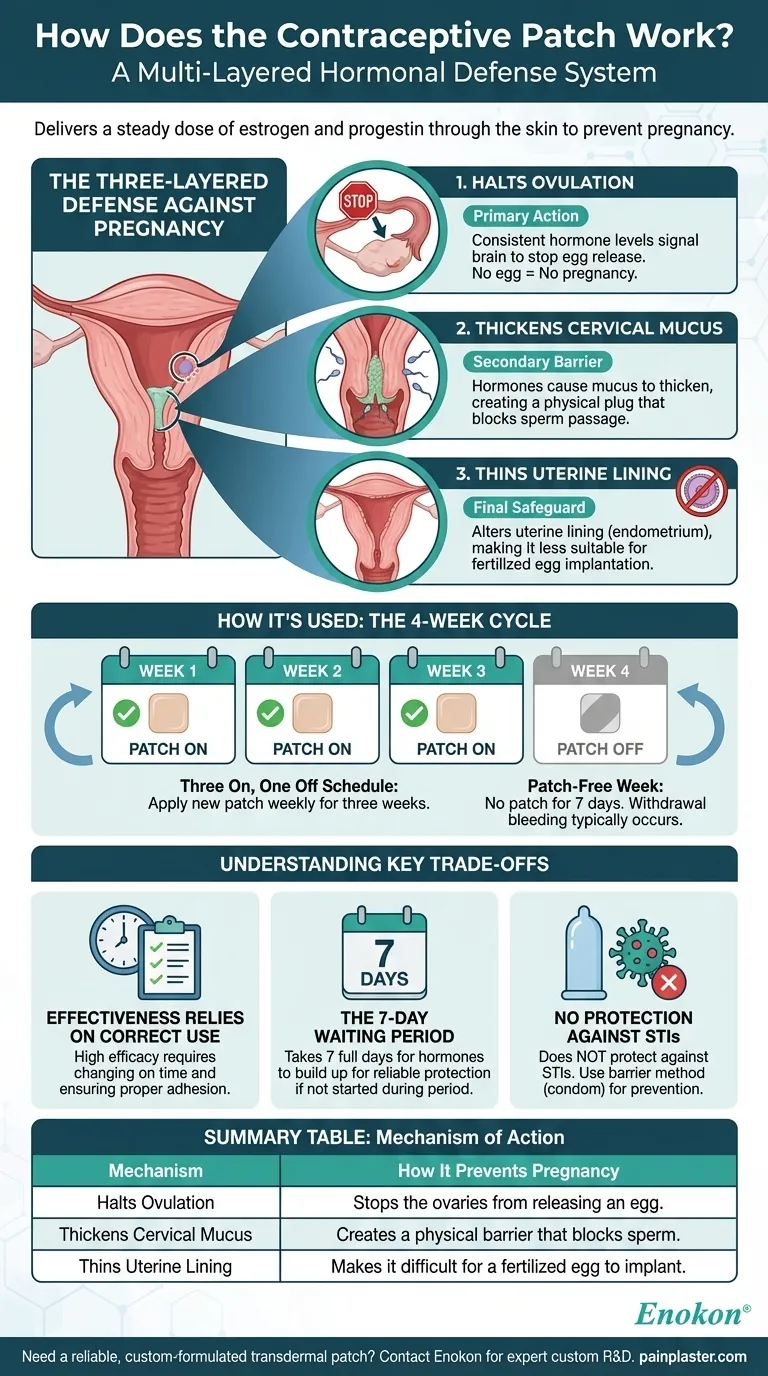
The Three-Layered Defense Against Pregnancy
The hormones absorbed from the patch—estrogen and progestin—work in concert to disrupt the normal menstrual cycle and prevent pregnancy. This is not a single action, but a coordinated, three-pronged strategy.
Primary Action: Halting Ovulation
The most critical function of the patch is to prevent ovulation. The consistent level of hormones in your bloodstream signals to your brain to stop the monthly release of an egg from the ovaries.
If no egg is released, there is nothing for sperm to fertilize, making pregnancy impossible. This is the patch's main and most effective mechanism.
Secondary Barrier: Thickening Cervical Mucus
As a second line of defense, the hormones cause the mucus around your cervix to thicken considerably.
This thickened mucus acts as a physical plug, making it extremely difficult for sperm to travel through the cervix and into the uterus to reach an egg, had one been released.
Final Safeguard: Thinning the Uterine Lining
Finally, the hormones alter the lining of your uterus (the endometrium), making it thinner and less suitable for a fertilized egg to implant.
Even in the highly improbable event that ovulation occurred and an egg was fertilized, this altered uterine environment makes it very unlikely that a pregnancy could successfully begin.
How It's Used: The 4-Week Cycle
The patch is designed for simplicity and convenience, operating on a predictable four-week cycle. It is a small, 5cm by 5cm square that adheres to the skin.
The "Three On, One Off" Schedule
You apply a new patch and wear it for seven days (one week). On Day 8, you remove the old patch and immediately apply a new one.
This process is repeated for three consecutive weeks, meaning you will use three patches in total.
The Patch-Free Week
After the third week, you have a seven-day "patch-free" interval. During this week, you do not wear a patch, and this is typically when you will experience withdrawal bleeding, which is similar to a period.
After exactly seven patch-free days, you apply a new patch to begin the entire four-week cycle again, regardless of whether you are still bleeding.
Understanding the Key Trade-offs
While the patch is a highly effective method of birth control, it's crucial to understand its operational requirements and limitations to ensure it works as intended.
Effectiveness Relies on Correct Use
The patch's high efficacy rate is dependent on perfect use. This means changing it on the correct day each week and ensuring it remains properly adhered to the skin.
The 7-Day Waiting Period
The patch is not immediately effective. Unless you start it within the first five days of your period, it takes seven full days for the hormones to build up to a level that provides reliable protection against pregnancy.
No Protection Against STIs
It is essential to remember that hormonal contraceptives like the patch offer no protection against sexually transmitted infections (STIs), including HIV. A barrier method, such as a condom, is still necessary for STI prevention.
Making the Right Choice for Your Goal
- If your primary focus is convenience: The patch offers a reliable "wear-and-forget" method for a full week, eliminating the need to remember a daily pill.
- If your primary focus is effective hormonal control: The patch provides a steady, transdermal dose of hormones to reliably prevent pregnancy through multiple mechanisms.
- If your primary focus includes STI prevention: The patch is highly effective for contraception but must be used with a barrier method like condoms to protect against infections.
Understanding that the patch provides multi-layered protection is the first step in deciding if its convenience and efficacy align with your personal health needs.
Summary Table:
| Mechanism of Action | How It Prevents Pregnancy |
|---|---|
| Halts Ovulation | Stops the ovaries from releasing an egg. |
| Thickens Cervical Mucus | Creates a physical barrier that blocks sperm. |
| Thins Uterine Lining | Makes it difficult for a fertilized egg to implant. |
Need a reliable, custom-formulated transdermal patch? As Enokon, a bulk manufacturer of high-quality transdermal patches and pain plasters, we provide expert custom R&D and development for healthcare and pharma distributors and brands. Let our technical expertise bring your product vision to life. Contact our team today to discuss your project!
Visual Guide
Related Products
- Heating Pain Relief Patches for Menstrual Cramps
- Prostate Pain Kidney Health Care Patch for Men
- Silicone Scar Sheets Patch Transdermal Drug Patch
- Lidocaine Hydrogel Pain Relief Patch for Pain Relief
- Menthol Gel Pain Relief Patch
People Also Ask
- What are the benefits of Period Pain Heat Patches? Drug-Free, On-the-Go Relief
- What are the key benefits of heating patches for elderly individuals? Relieve Pain & Improve Mobility
- What are the different types of heat patches? Find the Right Pain Relief for Your Needs
- What are the key differences between conventional heat patches and deep heat devices? Choosing the Right Pain Relief Solution
- What percentage of people with back pain use heat patches for relief? Discover the Popular Choice for Pain Management













