
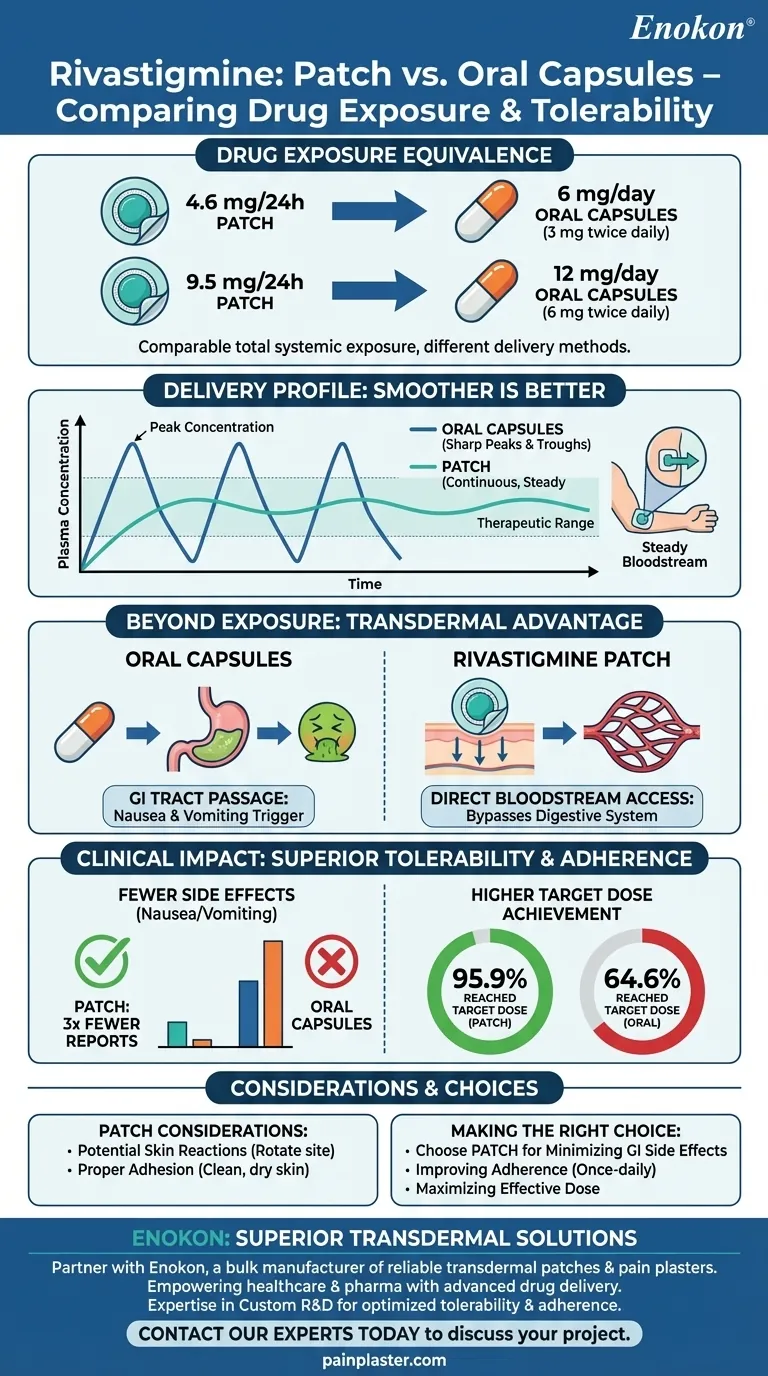
In terms of drug exposure, the 4.6 mg/24h rivastigmine patch is directly comparable to taking 6 mg/day in oral capsules. Similarly, the higher-strength 9.5 mg/24h patch provides the same systemic exposure as the highest recommended oral dose of 12 mg/day.
The core difference is not the total amount of drug the body receives, but how it is delivered. The patch provides a continuous, steady administration that avoids the sharp peaks and troughs of oral dosing, leading to similar efficacy with significantly better tolerability.
Beyond Exposure: The Advantage of Transdermal Delivery
While total drug exposure determines therapeutic effect, the method of delivery dictates the patient experience. The transdermal patch fundamentally changes how rivastigmine interacts with the body on its way to the bloodstream.
Smoother Plasma Concentrations
Oral capsules release their full dose at once, causing a rapid spike (peak concentration) in the blood, followed by a decline (trough) before the next dose.
The patch, in contrast, delivers the medication slowly and continuously through the skin. This results in much lower, more stable plasma fluctuations over a 24-hour period.
Bypassing the Digestive System
By absorbing directly into the bloodstream through the skin, the patch completely bypasses the gastrointestinal (GI) tract. This avoids the initial digestive process that is a primary trigger for nausea and vomiting associated with the oral form.
The Clinical Impact: Tolerability and Adherence
The technical advantages of the patch translate directly into significant, measurable benefits for the patient, primarily concerning side effects and the ability to stay on treatment.
A Dramatic Reduction in Side Effects
The steady delivery and avoidance of the GI tract mean patients experience far fewer side effects. Clinical trials have shown that the rivastigmine patch is associated with three times fewer reports of nausea and vomiting compared to oral capsules.
Higher Achievement of Target Doses
Fewer side effects mean more patients can reach and maintain the most effective therapeutic dose. Studies show that 95.9% of patients on the patch successfully reached their target dose, compared to only 64.6% of patients taking oral capsules.
Understanding the Trade-offs
While the patch offers clear advantages in tolerability, it is essential to consider the unique aspects of transdermal delivery.
Potential for Skin Reactions
As with any adhesive patch, there is a potential for local skin reactions at the application site. This can include redness, itching, or irritation. Rotating the application site is critical to minimize this risk.
Adhesion and Application
Proper application is key to ensuring the correct dose is delivered. The skin must be clean, dry, and free of lotions. In rare cases, the patch may loosen due to excessive sweating or improper application, which could impact its effectiveness.
Making the Right Choice for Patient Care
Choosing between the patch and oral capsules depends on balancing efficacy with the individual patient's needs and sensitivities.
- If the primary focus is minimizing side effects: The patch is the superior option, especially for patients with a history of GI sensitivity or those who have previously failed oral therapy due to nausea.
- If the primary focus is ensuring treatment adherence: The simple, once-daily application of a patch can be easier for patients and caregivers to manage than a twice-daily oral regimen.
- If the primary focus is reaching the highest effective dose: The patch allows a significantly higher percentage of patients to achieve and maintain the target therapeutic dose without being limited by side effects.
Ultimately, the rivastigmine patch refines drug delivery to improve the patient experience without compromising on therapeutic exposure.
Summary Table:
| Aspect | Rivastigmine Patch | Oral Capsules |
|---|---|---|
| Drug Exposure (4.6 mg/24h) | Equivalent to 6 mg/day oral | 6 mg/day (3 mg twice daily) |
| Drug Exposure (9.5 mg/24h) | Equivalent to 12 mg/day oral | 12 mg/day (6 mg twice daily) |
| Delivery Profile | Continuous, steady release | Sharp peaks and troughs |
| GI Side Effects (Nausea/Vomiting) | Three times fewer reports | More common |
| Patients Reaching Target Dose | 95.9% | 64.6% |
| Dosing Frequency | Once-daily application | Twice-daily dosing |
Partner with Enokon for Superior Transdermal Solutions
As a bulk manufacturer of reliable transdermal patches and pain plasters, Enokon empowers healthcare and pharma distributors and brands with advanced drug delivery technologies. Our technical expertise in custom R&D and development ensures you can offer products with optimized tolerability and patient adherence, just like the rivastigmine patch.
Let's develop your next-generation transdermal product. Contact our experts today to discuss your project requirements.
Visual Guide
Related Products
- Lidocaine Hydrogel Pain Relief Patch for Pain Relief
- Menthol Gel Pain Relief Patch
- Icy Hot Menthol Medicine Pain Relief Patch
- Far Infrared Pain Patch Relief Pain Reliever for Back
- Capsaicin Chili Medicated Pain Relief Patches
People Also Ask
- How does the aqueous base in a lidocaine patch contribute to drug delivery? Unlocking Sustained Pain Relief Technology
- What are the advantages of topical anesthetics over invasive Lidocaine infiltration? Discover Safer, Scalable Relief
- Which pain patch is most effective for arthritis? Find the Best Relief for Your Joint Pain
- Why are lidocaine patches preferred over oral medications? Targeted Relief & Scale Your Brand with OEM R&D Solutions
- Will a GP routinely continue prescribing lidocaine patches after the initial period? Understanding Short-Term Pain Relief



















