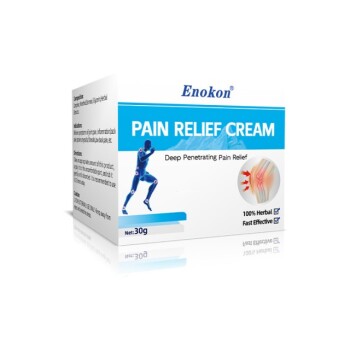
A digital viscometer is the essential tool for quantifying the rheological behavior of transdermal gels, ensuring they meet the precise physical standards required for clinical efficacy and consumer acceptance. By measuring internal friction and flow resistance, these devices allow manufacturers to guarantee that a gel will extrude easily from its packaging, spread uniformly across the skin, and release active pharmaceutical ingredients (APIs) at a controlled, predictable rate.
Digital viscometers transform qualitative "feel" into quantitative data, allowing high-volume manufacturers to maintain batch-to-batch consistency and ensure that every unit delivered to the market performs exactly as intended in a clinical setting.
Precision Control in Enterprise-Scale Manufacturing
Ensuring Batch-to-Batch Consistency
In large-scale GMP-certified facilities, maintaining a uniform product across thousands of liters is a significant technical challenge. A digital viscometer acts as a gatekeeper, verifying that the cross-linking degree of the gel matrix remains identical across every production cycle.
This quantitative verification prevents the costly "drift" in product texture that can occur due to slight variations in raw materials or processing temperatures. For brand owners, this translates to minimized waste and a protected brand reputation for quality.
Optimizing Extrudability and Packaging Compatibility
The viscosity of a gel dictates how it behaves under pressure within a tube or pump dispenser. Precise measurements ensure the formulation is thin enough to be easily extruded by the end-user but thick enough to prevent leakage or "runny" behavior.
Testing at specific rotational speeds allows engineers to select the ideal packaging materials. This technical synergy between formulation and container is vital for ensuring a seamless user experience and reducing mechanical failure in the field.
Enhancing Clinical Efficacy and Drug Release
Governing Drug Release Kinetics
The viscosity of the gel matrix directly influences the diffusion rate of active ingredients as they move toward the skin surface. A matrix that is too dense may trap the medication, while one that is too fluid may release it too rapidly, potentially causing irritation or sub-optimal absorption.
By using digital viscometry to map the internal friction of the gel, R&D teams can optimize the drug reservoir film. This ensures a steady, sustained release of the API, which is critical for the therapeutic success of transdermal treatments.
Maximizing Bioadhesion and Residence Time
For a transdermal gel to be effective, it must remain in contact with the skin for an extended period. Digital viscometers help determine the bioadhesion strength, ensuring the gel forms a stable film that resists being rubbed off by clothing or movement.
Maintaining the correct viscosity prevents "fluidity-driven loss," where the product migrates away from the application site. This high level of physical stability is a hallmark of premium formulations produced by world-class OEM/ODM partners.
Mastering Application Dynamics (Thixotropy)
Achieving Ideal Spreadability
A high-quality transdermal gel should exhibit pseudoplastic (shear-thinning) characteristics. This means the gel becomes less viscous when rubbed (sheared) onto the skin, allowing for easy, effortless spreading without a sticky residue.
Digital viscometers measure this relationship between viscosity and shear rate. This data allows formulators to create products that feel light during application but quickly regain their structure once stationary to stay firmly in place.
Predicting Performance through Thixotropic Recovery
The ability of a gel to recover its original viscosity after application is known as thixotropy. Using a digital rotary viscometer, technical teams can verify that a formulation "sets" correctly on the skin surface.
This recovery is essential for creating a consistent drug reservoir. Without proper thixotropic control, a gel may continue to flow after application, leading to uneven dosing and a poor user experience.
Understanding the Trade-offs
Temperature Sensitivity in Testing
Viscosity is highly dependent on temperature; even a one-degree Celsius fluctuation can significantly alter results. While digital viscometers are highly accurate, they require strict environmental controls during testing to provide meaningful data for global distribution standards.
The Complexity of Spindle Selection
Using the wrong spindle or rotational speed can yield misleading data that does not reflect real-world usage. Technical experts must carefully calibrate their testing protocols to match the specific rheological profile of the gel, whether it is a microemulsion or a traditional nanoemulsion.
How to Apply This to Your Project
Making the Right Choice for Your Goal
- If your primary focus is Scalable Production: Prioritize digital viscometers with high-throughput capabilities to ensure that every high-volume batch meets your established QC benchmarks.
- If your primary focus is Custom R&D/Formulation: Utilize advanced rheological mapping to fine-tune the shear-thinning properties of your gel, creating a unique "signature feel" for your brand.
- If your primary focus is Global Clinical Compliance: Ensure your manufacturing partner uses GMP-certified testing protocols that include comprehensive viscosity documentation for regulatory filings.
By integrating rigorous digital viscometry into the quality assessment process, brand owners can deliver high-performance transdermal products that combine clinical precision with an exceptional user experience.
Summary Table:
| Key Quality Parameter | Role of Digital Viscometry | Impact on Final Product |
|---|---|---|
| Batch Consistency | Verifies gel matrix cross-linking | Prevents texture drift & minimizes waste |
| Extrudability | Measures flow under pressure | Ensures easy dispensing from packaging |
| Release Kinetics | Maps internal friction | Controls API diffusion for steady absorption |
| Spreadability | Monitors shear-thinning (Thixotropy) | Provides a light feel with stable film recovery |
| Bioadhesion | Evaluates residence time | Increases skin contact for therapeutic success |
Scale Your Brand with Enokon’s Precision Manufacturing
Are you looking for a manufacturing partner that combines scientific rigor with massive production scale? Enokon is a trusted brand and GMP-certified manufacturer specializing in high-performance transdermal drug delivery solutions. We help brand owners, distributors, and B2B resellers bring premium products to market through turnkey contract R&D and reliable high-volume delivery.
Our Expertise Includes:
- Pain Relief: Lidocaine, Menthol, Capsicum, Herbal, and Far Infrared patches.
- Specialty Care: Eye Protection, Detox, and Medical Cooling Gel patches.
- Custom Solutions: Advanced R&D and custom formulations for transdermal gels and patches (excluding microneedle technology).
Why Partner with Enokon?
- R&D Prowess: Precise rheological testing and custom formulation services.
- Certified Quality: GMP-certified facilities with comprehensive global certifications.
- Reliable Supply: Large-scale manufacturing capacity to meet high-volume demand with stringent quality control.
Ready to elevate your product line with a trusted OEM/ODM partner?
Contact Enokon Today for a Custom Solution
References
- Mr.B.D.Tiwari Mr.B.D.Tiwari, Mr.Shashank Ligade Mr.Shashank Ligade. Formulation And Evaluation of Pain Reliving Gel. DOI: 10.35629/4494-1003975982
This article is also based on technical information from Enokon Knowledge Base .
Related Products
- Menthol Gel Pain Relief Patch
- Icy Hot Menthol Medicine Pain Relief Patch
- Far Infrared Heat Pain Relief Patches Transdermal Patches
- Silicone Scar Sheets Patch Transdermal Drug Patch
- Mugwort Wormwood Pain Relief Patch for Neck Pain
People Also Ask
- How effective are pain relief patches for muscle pain? Target Localized Pain with Transdermal Delivery
- How do pain relief patches compare to other pain relief methods? Discover Targeted, Long-Lasting Relief
- Who should consult a healthcare professional before using pain relief patches? Ensure Your Safety with Medical Advice
- What are some common applications of pain relief patches? Effective Relief for Muscle & Joint Pain
- How do drug loading and permeation enhancers ensure patch efficacy? Achieve Superior Clinical-Grade Pain Relief.