
At its core, transdermal diclofenac delivers a potent anti-inflammatory drug directly through your skin to the site of pain. It works by blocking the production of specific chemicals in your body, called prostaglandins, which are responsible for signaling pain and causing inflammation. This method allows the medication to bypass your digestive system entirely.
The crucial advantage of the transdermal patch is its ability to provide targeted pain relief that is as effective as the oral pill, while significantly reducing the risk of the stomach-related side effects commonly associated with traditional anti-inflammatory drugs.
The Two-Part Mechanism: Delivery and Action
To understand how the patch works, it's best to break it down into two distinct processes: how the drug gets into your body and what it does once it's there.
Part 1: Bypassing the Digestive System (The "Transdermal" Advantage)
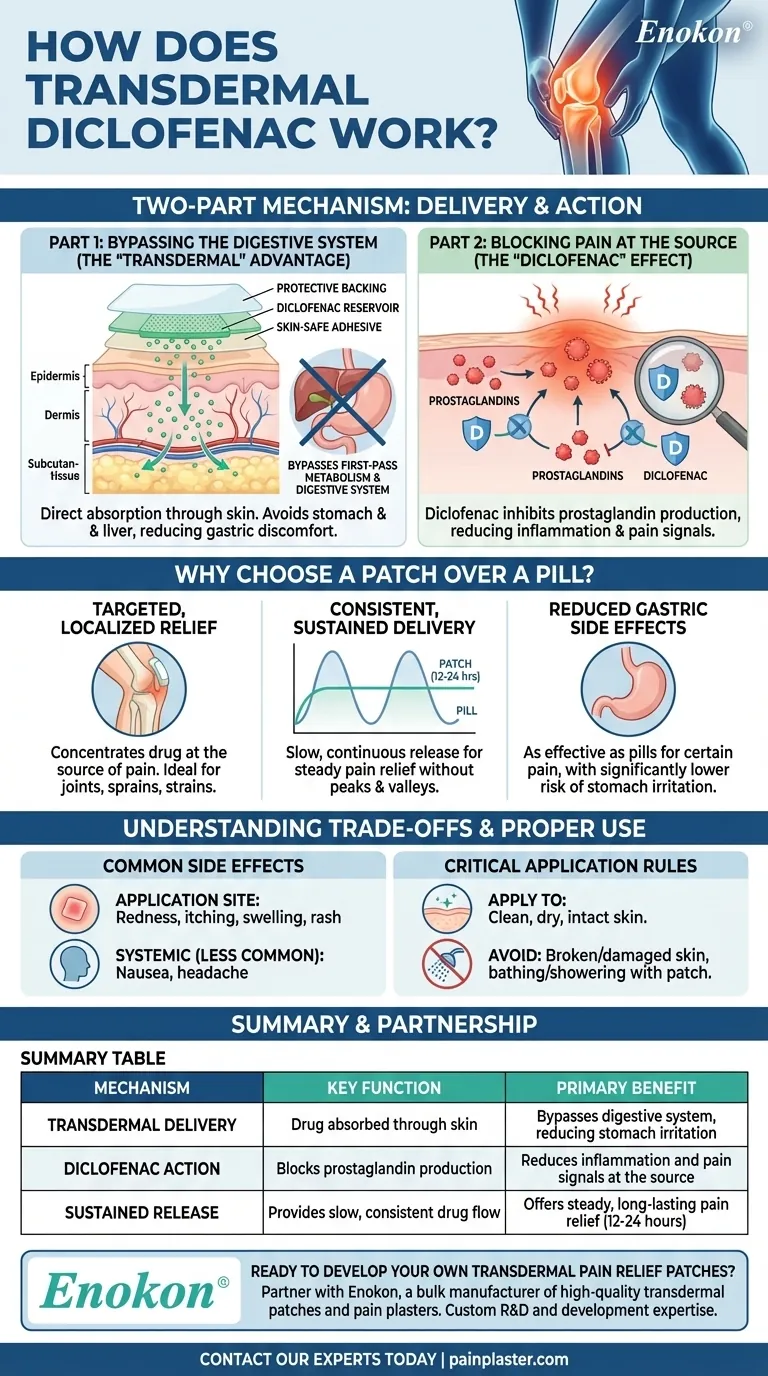
A transdermal patch is a sophisticated, multi-layered medical device. It typically consists of a protective backing, a reservoir holding the diclofenac, and a skin-safe adhesive.
When you apply the patch, the adhesive holds the drug reservoir firmly against your skin. The medication is then slowly and consistently absorbed through the skin, entering the local tissues and bloodstream directly at the site of pain.
This delivery method is the key difference from a pill. It avoids the stomach and liver, a process known as "first-pass metabolism," which can cause gastric discomfort and reduce the amount of active drug that reaches its target.
Part 2: Blocking Pain at the Source (The "Diclofenac" Effect)
Diclofenac is a nonsteroidal anti-inflammatory drug (NSAID). Its sole function is to inhibit the body's production of prostaglandins.
Prostaglandins are hormone-like substances that your body releases in response to injury or illness. They are a primary cause of inflammation, swelling, and the sensation of pain.
By blocking the enzymes that create prostaglandins, diclofenac effectively turns down the volume on your body's pain and inflammation signals, providing relief.
Why Choose a Patch Over a Pill?
While the end result—pain relief—is similar, the transdermal patch offers distinct benefits that make it a better choice in specific situations.
Targeted, Localized Relief
Because the medication is absorbed directly where you apply the patch, it concentrates the drug at the source of your pain. This is especially effective for localized conditions like joint pain, sprains, or strains.
Consistent, Sustained Delivery
Unlike a pill, which can create peaks and valleys in medication levels, the patch is designed for slow, continuous release. This ensures a steady, consistent level of pain relief over the entire time it is worn, which is typically 12 or 24 hours.
Reduced Gastric Side Effects
This is often the most critical benefit. Oral NSAIDs are well-known for irritating the stomach lining. Studies have shown the transdermal patch is as effective as oral diclofenac for certain types of pain, making it an excellent alternative for patients with sensitive stomachs or a history of gastric issues.
Understanding the Trade-offs and Proper Use
While highly effective, the transdermal patch is a serious medication that requires careful use and has its own set of considerations.
Common Side Effects
The most frequently reported side effects occur at the application site. You may experience redness, itching, swelling, or a rash where the patch is worn.
Although it largely bypasses the digestive system, some of the drug does enter the bloodstream, so systemic side effects like nausea or headache are also possible.
Critical Application Rules
To ensure safety and effectiveness, the patch must be applied correctly. Always apply it to clean, dry, and intact skin.
Never apply a patch to skin that is broken, damaged, infected, or covered in a rash. You should also avoid wearing the patch while bathing or showering, as this can affect its adhesion and drug delivery.
It's Not a Simple Bandage
The U.S. FDA classifies transdermal patches as combination products because they merge a medical device (the patch) with a drug (the diclofenac). This underscores that it is a complex delivery system that requires a prescription and adherence to medical advice.
How to Apply This to Your Condition
Choosing the right form of medication depends on your specific pain, medical history, and treatment goals.
- If your primary focus is treating localized pain (like an arthritic knee or a sprained wrist): The patch offers a powerful way to deliver medication directly to the source.
- If your primary focus is avoiding stomach irritation from oral NSAIDs: Transdermal diclofenac is a highly effective alternative that protects your digestive system.
- If your primary focus is steady, long-lasting pain management: The patch provides consistent drug delivery, removing the need to remember multiple daily pills.
Understanding this dual mechanism of targeted delivery and chemical action empowers you to have a more informed discussion with your healthcare provider about managing your pain effectively and safely.
Summary Table:
| Mechanism | Key Function | Primary Benefit |
|---|---|---|
| Transdermal Delivery | Drug is absorbed through the skin | Bypasses the digestive system, reducing stomach irritation |
| Diclofenac Action | Blocks prostaglandin production | Reduces inflammation and pain signals at the source |
| Sustained Release | Provides a slow, consistent drug flow | Offers steady, long-lasting pain relief (12-24 hours) |
Ready to develop your own reliable, effective transdermal pain relief patches?
Partner with Enokon, a bulk manufacturer of high-quality transdermal patches and pain plasters. We provide custom R&D and development expertise to healthcare and pharmaceutical distributors and brands.
Contact our experts today to discuss how we can help you create a superior product that delivers targeted relief with enhanced patient safety.
Visual Guide
Related Products
- Far Infrared Heat Pain Relief Patches Transdermal Patches
- Menthol Gel Pain Relief Patch
- Icy Hot Menthol Medicine Pain Relief Patch
- Silicone Scar Sheets Patch Transdermal Drug Patch
- Mugwort Wormwood Pain Relief Patch for Neck Pain
People Also Ask
- Why is the selection of matrix materials critical when developing customized transdermal patches? Optimize Efficacy
- What are the clinical advantages of local transdermal delivery systems? Unlock Safer, More Effective Pain Relief Solutions
- What are the physical impacts of external heat exposure on the performance and safety of transdermal patches? - Guide
- What role does a skin tolerance scoring system play in the safety evaluation of transdermal patches? Key Safety Metrics
- How does high-purity far-infrared ceramic powder contribute to the efficacy of far-infrared physical therapy patches?

















