
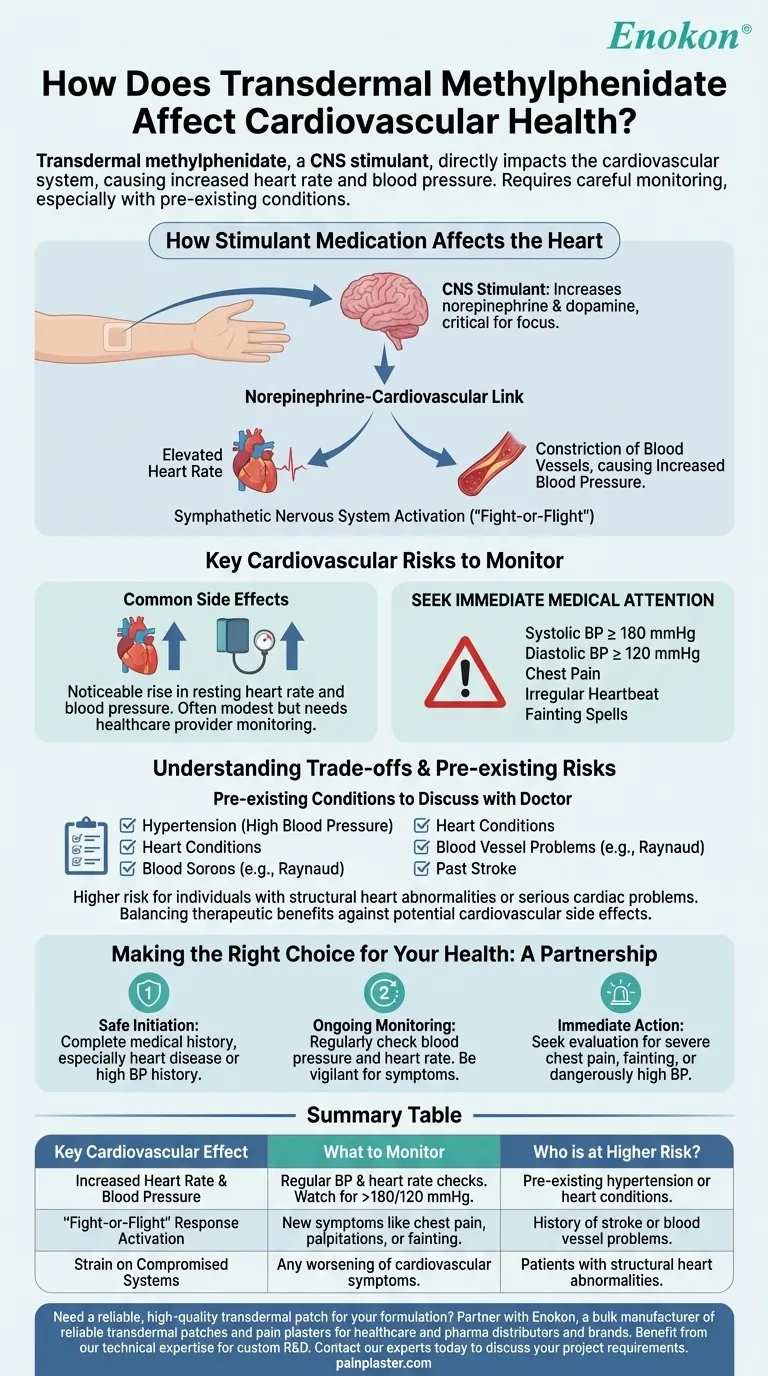
Transdermal methylphenidate directly impacts the cardiovascular system because it is a central nervous system stimulant. The medication is known to cause increases in both heart rate and blood pressure. While these changes are often manageable, they require careful monitoring, especially in individuals with pre-existing health conditions.
The core issue is that methylphenidate increases levels of norepinephrine, a natural chemical that primes the body for "fight-or-flight" responses. This activation inherently raises cardiovascular metrics, making proactive monitoring and a thorough medical history essential for safe use.
How Stimulant Medication Affects the Heart
A Central Nervous System Stimulant
Transdermal methylphenidate works by increasing the levels of certain natural chemicals in the brain, primarily norepinephrine and dopamine. These neurotransmitters are crucial for regulating attention, focus, and impulse control, which is why the medication is effective for treating ADHD.
The Norepinephrine-Cardiovascular Link
Norepinephrine plays a key role in the sympathetic nervous system, which controls the body's automatic "fight-or-flight" response. When its levels increase, the body prepares for action. This process naturally and predictably leads to an elevated heart rate and the constriction of blood vessels, which in turn causes an increase in blood pressure.
Key Cardiovascular Risks to Monitor
Increased Blood Pressure and Heart Rate
The most common cardiovascular side effects are a noticeable rise in both resting heart rate and blood pressure. For most healthy individuals, these increases are modest, but they must be monitored by a healthcare provider.
When to Seek Immediate Medical Attention
Certain symptoms indicate a potentially dangerous cardiovascular event and require urgent medical care. These are clear red flags that should not be ignored.
Pay close attention to systolic blood pressure reaching 180 mmHg or higher, or diastolic blood pressure reaching 120 mmHg or higher. Other critical warning signs include chest pain, an irregular heartbeat, or fainting spells.
Understanding the Trade-offs and Pre-existing Risks
The Importance of a Full Medical History
This medication is not suitable for everyone. Its cardiovascular effects can worsen pre-existing conditions. It is critical to discuss any history of hypertension (high blood pressure), heart conditions, blood vessel problems (like Raynaud phenomenon), or a past stroke with your doctor before starting treatment.
Who is at Higher Risk?
Individuals with structural heart abnormalities or other serious cardiac problems are at a higher risk for complications. The stimulant effect can place additional strain on a compromised cardiovascular system.
Balancing Benefit Against Risk
The goal of treatment is to use this medication as one part of a comprehensive program that includes social and psychological therapy. The decision to use it always involves weighing the therapeutic benefits for attention and focus against the potential side effects, especially cardiovascular risks.
Making the Right Choice for Your Health
A transparent partnership with your healthcare provider is the cornerstone of using this medication safely and effectively.
- If your primary focus is safe initiation of treatment: Ensure your doctor has a complete medical history, especially regarding any personal or family history of heart disease or high blood pressure.
- If your primary focus is ongoing monitoring: Regularly check your blood pressure and heart rate as advised by your doctor and be vigilant for any new or worsening cardiovascular symptoms.
- If you experience a potential warning sign: Your priority must be to seek immediate medical evaluation for symptoms like severe chest pain, fainting, or a dangerously high blood pressure reading.
Ultimately, proactive monitoring and open communication with your physician are the keys to managing the cardiovascular effects of transdermal methylphenidate.
Summary Table:
| Key Cardiovascular Effect | What to Monitor | Who is at Higher Risk? |
|---|---|---|
| Increased Heart Rate & Blood Pressure | Regular BP and heart rate checks. Watch for readings >180/120 mmHg. | Individuals with pre-existing hypertension or heart conditions. |
| "Fight-or-Flight" Response Activation | New symptoms like chest pain, palpitations, or fainting. | Those with a history of stroke or blood vessel problems. |
| Strain on Compromised Systems | Any worsening of cardiovascular symptoms. | Patients with structural heart abnormalities. |
Need a reliable, high-quality transdermal patch for your formulation? Partner with Enokon, a bulk manufacturer of reliable transdermal patches and pain plasters for healthcare and pharma distributors and brands. Benefit from our technical expertise for custom R&D and development to create safe and effective delivery systems. Contact our experts today to discuss your project requirements.
Visual Guide
Related Products
- Menthol Gel Pain Relief Patch
- Silicone Scar Sheets Patch Transdermal Drug Patch
- Far Infrared Heat Pain Relief Patches Transdermal Patches
- Icy Hot Menthol Medicine Pain Relief Patch
- Cooling Fever Patches Color Change Cold Fever Patch
People Also Ask
- How effective are pain relief patches for muscle pain? Target Localized Pain with Transdermal Delivery
- How do pain relief patches compare to other pain relief methods? Discover Targeted, Long-Lasting Relief
- Who should consult a healthcare professional before using pain relief patches? Ensure Your Safety with Medical Advice
- What are pain relief patches and how do they work? Discover Non-Invasive Pain Management
- Can pregnant women use pain relief patches? Your Essential Guide to Safe Pain Management




