
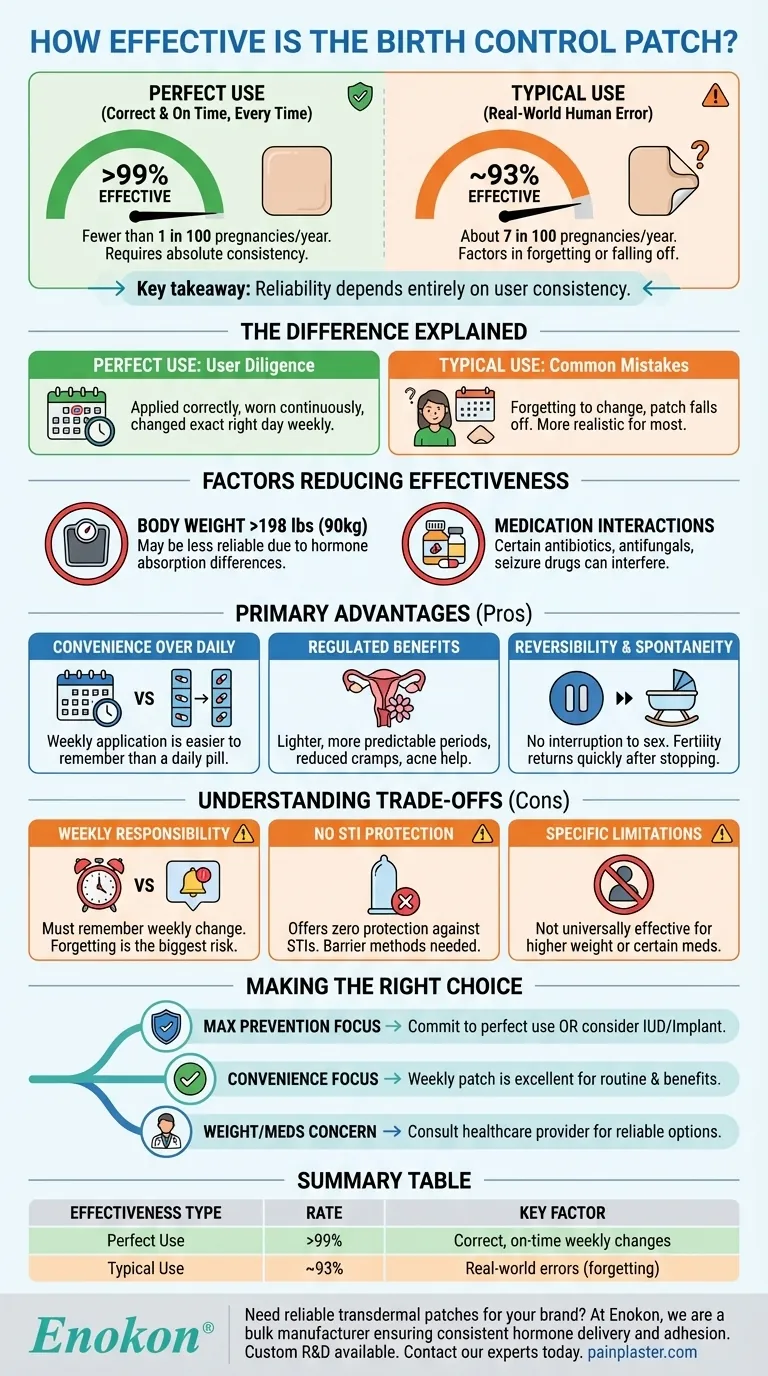
To be precise, the birth control patch has two different effectiveness rates. With "perfect use"—meaning you change it correctly and on time, every single time—it is over 99% effective at preventing pregnancy. However, with "typical use," which accounts for real-world human error like forgetting a change, its effectiveness is about 93%.
The key takeaway is that the patch's reliability depends entirely on user consistency. While highly effective in theory, its practical effectiveness is lower than methods that eliminate the possibility of user error, such as an IUD or implant.
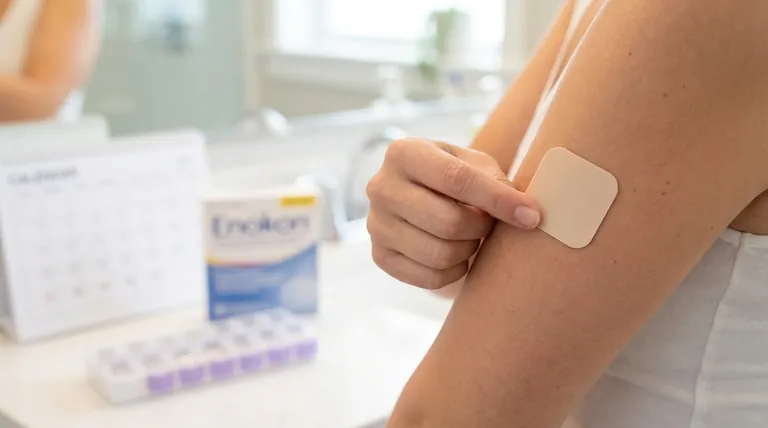
The Difference Between Perfect and Typical Use
Understanding the two effectiveness rates is crucial for deciding if the patch is right for you. The gap between them highlights the importance of user diligence.
Defining "Perfect Use" Effectiveness
With perfect use, fewer than 1 out of 100 people using the patch will become pregnant in a year. This assumes the patch is applied correctly, worn continuously, and changed on the exact right day, every single week, without exception.
Understanding "Typical Use" Effectiveness
With typical use, about 7 out of 100 people using the patch will become pregnant in a year. This 93% effectiveness rate is the more realistic number for most individuals, as it factors in common mistakes like forgetting to change the patch or it accidentally falling off.
Factors That Can Reduce Effectiveness
Beyond simple user error, a few specific biological and medical factors can make the birth control patch a less reliable option for some individuals.
Body Weight
Several studies indicate that the patch may be less effective for individuals who weigh 198 pounds (90 kg) or more. The precise mechanism isn't fully understood, but it may relate to hormone absorption and metabolism.
Medication Interactions
Certain medications can interfere with the hormones in the patch, reducing its ability to prevent pregnancy. These include some antibiotics, specific antifungal medications, and drugs used to treat seizures. It is critical to discuss all current medications with your doctor.
The Primary Advantages of the Patch
Despite the need for consistency, the patch offers significant benefits that make it a popular choice for many.
Convenience Over Daily Methods
The primary appeal is its weekly schedule. Applying a patch once a week is often far easier to remember than taking a pill every single day, reducing the daily burden of contraception.
Regulated Hormonal Benefits
Like many hormonal methods, the patch can provide additional benefits. Users often report lighter, more predictable periods, reduced menstrual cramps, and fewer premenstrual syndrome (PMS) symptoms. It can also help with acne.
Reversibility and Spontaneity
The patch does not require you to interrupt sex for contraception. Because it provides a steady, continuous dose of hormones, it can also lead to less spotting between periods compared to daily pills. Fertility typically returns quickly once you stop using it.
Understanding the Trade-offs
To make an informed decision, you must weigh the convenience of the patch against its potential downsides and responsibilities.
The Responsibility of Weekly Changes
While easier than a daily pill, the patch still requires consistent action from the user. Forgetting to change it on the correct day is the single biggest reason for its lower "typical use" effectiveness rate.
No Protection Against STIs
It is essential to remember that the patch, like all hormonal contraceptives, offers zero protection against sexually transmitted infections (STIs). Barrier methods, like condoms, are still necessary for STI prevention.
Specific User Limitations
The reduced effectiveness for individuals over 198 pounds and those on certain medications is a significant trade-off. It is not a universally effective solution for everyone.
Making the Right Choice for Your Goal
Your personal priorities will determine if the patch is the best method for your needs.
- If your primary focus is maximum pregnancy prevention: You must commit to perfect use without fail, or consider a long-acting method like an IUD or implant, which removes the risk of user error.
- If your primary focus is convenience over a daily pill: The weekly patch is an excellent choice that simplifies your routine while providing positive side effects like lighter periods.
- If you weigh 198 lbs (90 kg) or more, or take interfering medications: You must have a direct conversation with a healthcare provider, as the patch is likely not the most reliable option for you.
Ultimately, understanding how your own habits and health profile align with the patch's requirements is the key to using it successfully.
Summary Table:
| Effectiveness Type | Rate | Key Factor |
|---|---|---|
| Perfect Use | >99% | Changing patch correctly and on time, every week |
| Typical Use | ~93% | Accounts for real-world errors like forgetting a change |
Need a reliable, high-quality transdermal patch for your healthcare or pharmaceutical brand?
At Enokon, we are a bulk manufacturer of dependable transdermal patches and pain plasters. Our technical expertise ensures consistent hormone delivery and adhesion, critical for product effectiveness. We offer custom R&D and development to meet your specific needs, from contraceptive patches to therapeutic applications.
Partner with us to enhance your product line. Contact our experts today to discuss your requirements.
Visual Guide
Related Products
- Heating Pain Relief Patches for Menstrual Cramps
- Prostate Pain Kidney Health Care Patch for Men
- Silicone Scar Sheets Patch Transdermal Drug Patch
- Cooling Fever Patches Color Change Cold Fever Patch
- Mugwort Wormwood Pain Relief Patch for Neck Pain
People Also Ask
- What are the benefits of Period Pain Heat Patches? Drug-Free, On-the-Go Relief
- What are the key benefits of heating patches for elderly individuals? Relieve Pain & Improve Mobility
- What are the different types of heat patches? Find the Right Pain Relief for Your Needs
- Can heat patches be used for fresh injuries? Avoid This Common Mistake for Faster Recovery
- What are the key differences between conventional heat patches and deep heat devices? Choosing the Right Pain Relief Solution




