
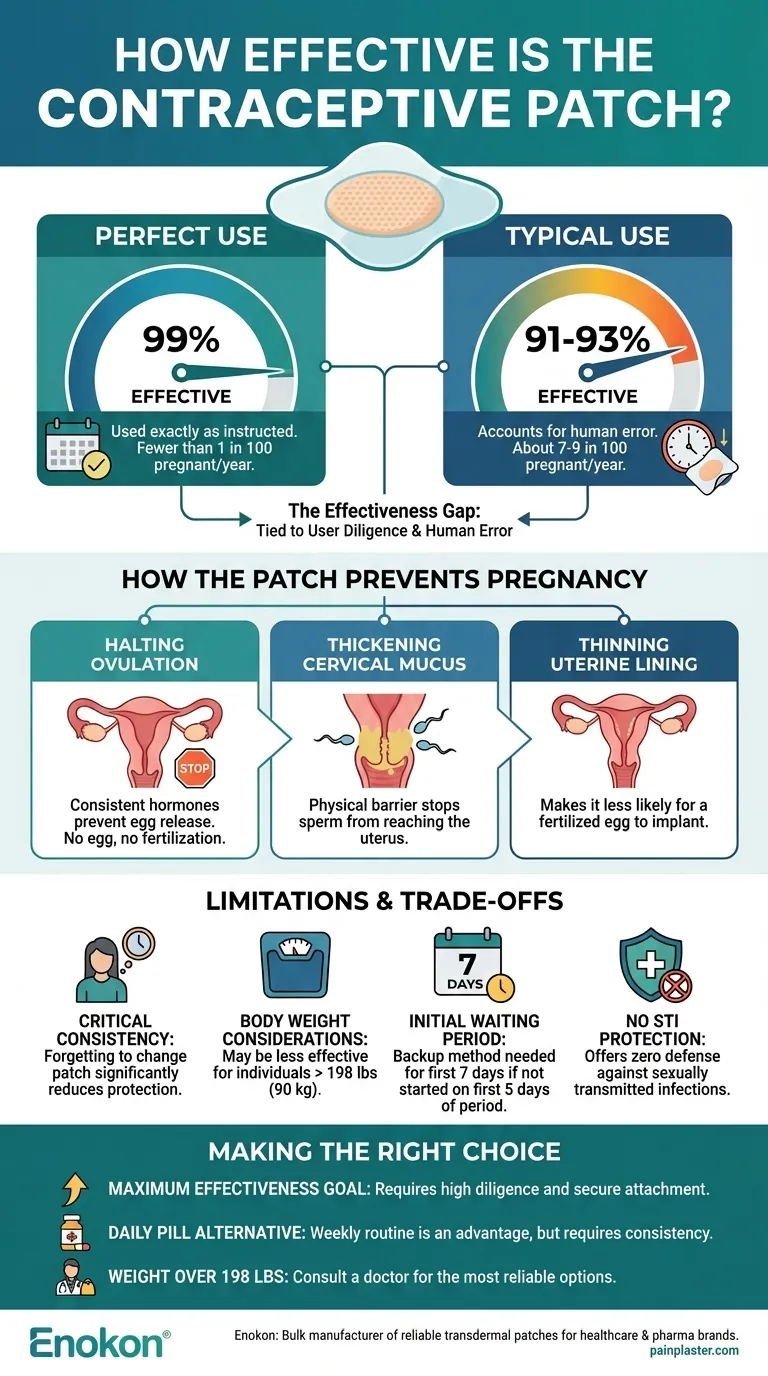
To be clear, the contraceptive patch is highly effective when used correctly, but its real-world effectiveness depends entirely on consistent and proper application. With perfect use, the patch is 99% effective, meaning fewer than 1 in 100 individuals will become pregnant in a year. However, with typical, real-world use that accounts for human error, that number drops to around 91-93%, with about 7 to 9 in 100 individuals experiencing an unintended pregnancy.
The key takeaway is that the contraceptive patch's high potential effectiveness is directly tied to user diligence. The gap between "perfect" and "typical" effectiveness stems from simple, common mistakes like forgetting to change the patch on time.

How the Patch Prevents Pregnancy
The contraceptive patch works by releasing a steady, controlled dose of two hormones—estrogen and progestin—directly through the skin into the bloodstream. This hormonal combination prevents pregnancy through a multi-layered defense system.
Halting Ovulation
The primary way the patch works is by preventing ovulation. The consistent level of hormones signals your body not to release an egg from the ovaries each month. If no egg is released, fertilization cannot occur.
Thickening Cervical Mucus
The hormones also cause the mucus around the cervix to thicken significantly. This thickened mucus acts as a physical barrier, making it extremely difficult for sperm to travel through the cervix and reach the uterus.
Thinning the Uterine Lining
Finally, the hormones alter the lining of the uterus (the endometrium), making it thinner. In the unlikely event that an egg is released and fertilized, this thinned lining makes it much less likely that the fertilized egg can implant and begin to grow.
"Perfect Use" vs. "Typical Use": The Effectiveness Gap
The difference between 99% and 93% effectiveness is significant, and it is almost entirely due to the difference between theory and reality.
The 99% "Perfect Use" Scenario
Perfect use refers to following the instructions for the patch exactly, without any errors, for an entire year. This means changing the patch on the same day each week, never letting it fall off unnoticed, and starting the new patch on time after the patch-free week.
The 93% "Typical Use" Scenario
Typical use reflects how people use contraception in the real world. This rate accounts for common mistakes that reduce effectiveness, such as forgetting to change the patch on schedule or the patch accidentally becoming loose or falling off without being replaced promptly.
Understanding the Limitations and Trade-offs
To rely on the patch effectively, you must be aware of the factors that can compromise its performance. This objectivity is critical for making an informed choice.
The Critical Role of Consistency
The most common reason for failure is human error. Forgetting to apply a new patch on the correct day or delaying the start of a new cycle significantly reduces its protective effects.
Body Weight Considerations
The patch may be less effective for individuals who weigh more than 198 pounds (90 kg). If this applies to you, it is essential to discuss alternative or supplementary methods with your healthcare provider.
The Initial Waiting Period
The patch is not immediately effective. Unless you apply your first patch within the first 5 days of your period starting, you must use a backup method of contraception, like condoms, for the first 7 days.
No Protection Against STIs
It is crucial to remember that while the patch is effective at preventing pregnancy, it offers zero protection against sexually transmitted infections (STIs).
Making the Right Choice for Your Goal
Deciding on a contraceptive method requires aligning its characteristics with your personal needs and lifestyle.
- If your primary focus is maximum effectiveness: You must be highly diligent about changing the patch on the exact same day each week and regularly checking that it is securely attached.
- If you are concerned about remembering a daily pill: The weekly nature of the patch may be a significant advantage, but it still requires a consistent weekly routine.
- If you weigh over 198 pounds: You should consult a doctor to discuss whether the patch is the most reliable option for you or if another method would offer better protection.
Ultimately, the contraceptive patch is a powerful and reliable tool when you commit to using it correctly and consistently.
Summary Table:
| Scenario | Effectiveness Rate | Key Factor |
|---|---|---|
| Perfect Use | 99% | Patch changed on the same day every week, no errors. |
| Typical Use | 91-93% | Accounts for common mistakes like forgetting to change the patch. |
Need a reliable, high-quality transdermal contraceptive patch? As Enokon, a bulk manufacturer of reliable transdermal patches for healthcare and pharma brands, we combine technical expertise with rigorous quality control. Benefit from our custom R&D to develop a patch that meets your specific needs and ensures consistent hormone delivery for your end-users.
Contact our experts today to discuss your project and explore how we can support your brand.
Visual Guide
Related Products
- Heating Pain Relief Patches for Menstrual Cramps
- Prostate Pain Kidney Health Care Patch for Men
- Silicone Scar Sheets Patch Transdermal Drug Patch
- Lidocaine Hydrogel Pain Relief Patch for Pain Relief
- Menthol Gel Pain Relief Patch
People Also Ask
- What are the benefits of Period Pain Heat Patches? Drug-Free, On-the-Go Relief
- What are the key benefits of heating patches for elderly individuals? Relieve Pain & Improve Mobility
- What percentage of people with back pain use heat patches for relief? Discover the Popular Choice for Pain Management
- Can heat patches be used for fresh injuries? Avoid This Common Mistake for Faster Recovery
- What are the common uses of heat patches? Soothe Muscle Pain, Joint Stiffness & More












