The digital torque meter is a vital diagnostic tool used to quantify the gel strength and cohesive force of a hydrogel matrix. In a professional manufacturing environment, this device ensures the gel possesses sufficient internal integrity to maintain its shape during application while remaining adhesive to the skin. This specific measurement acts as a quality guarantee that the patch will peel away cleanly in one piece, preventing the common consumer complaint of sticky gel residue.
For brand owners and distributors, the digital torque meter represents a critical "fail-safe" in quality control, ensuring that every batch of hydrogel patches balances structural stability with a premium, residue-free user experience.
Ensuring Structural Integrity at Scale
Quantifying Cohesive Force
The primary role of the torque meter is to measure the internal bond strength of the hydrogel network. This measurement ensures that the matrix does not "flow" or lose its shape when subjected to body heat or physical movement.
Guaranteeing a Clean Peel
By establishing a high cohesive force via torque testing, production teams can ensure the gel's internal strength exceeds its adhesion to the skin. This technical threshold is what allows for one-piece removal, a non-negotiable requirement for high-end medical and cosmetic brands.
Consistency in Mass Production
In GMP-certified facilities, torque meters provide a repeatable, objective data point that replaces subjective "feel" tests. This allows for rigorous quality control (QC) across millions of units, ensuring that a patch produced today performs identically to one produced a year from now.
The Broader R&D Testing Ecosystem
Integration with Rheological Analysis
While the torque meter measures strength, dynamic rheometers are used in the R&D phase to evaluate viscoelasticity. By confirming that the storage modulus (G') consistently exceeds the loss modulus (G''), researchers ensure the gel behaves as a stable solid under stress.
Durability and Biomechanical Compliance
Advanced partners use Dynamic Mechanical Analyzers (DMA) and tensile testers to measure elongation at break and Young’s modulus. These tests ensure the patch can stretch over joints and active body parts without tearing or losing contact.
Clinical Applicability through Peel Testing
Beyond internal strength, universal testing machines are equipped with high-sensitivity sensors to perform peel tests. These quantify the exact force required to remove the patch from skin-simulated surfaces, verifying that the product is both effective and comfortable.
Understanding the Trade-offs
The Strength vs. Adhesion Paradox
Increasing the gel strength (high torque value) can sometimes lead to a decrease in initial tack or skin conformability. If a matrix is too rigid, it may not follow the micro-contours of the skin, leading to reduced efficacy in transdermal delivery.
Cost vs. Precision in QC
Relying solely on torque meters provides a high-level view of batch consistency but may miss subtle viscoelastic shifts. Leading OEM/ODM partners mitigate this by combining torque testing with comprehensive stress-strain curves to provide a complete mechanical profile of the patch.
How to Leverage This for Your Brand
Selecting the Right Standard for Your Product
When partnering with a contract manufacturer, your technical requirements should be dictated by your specific market positioning and end-user needs.
- If your primary focus is Medical-Grade Reliability: Prioritize partners who provide full DMA and rheological reports to ensure the patch remains stable under extreme clinical conditions.
- If your primary focus is Consumer Cosmetic Experience: Focus on cohesive force and peel test data to ensure a luxurious, residue-free removal that protects the brand's reputation.
- If your primary focus is High-Volume Retail: Ensure your manufacturer uses automated torque testing within their GMP process to guarantee consistency across massive production runs.
By utilizing these precise mechanical evaluations, brand owners can confidently deliver high-performance hydrogel products that meet the world's most stringent quality standards.
Summary Table:
| Testing Method | Key Metric Measured | Brand Benefit |
|---|---|---|
| Digital Torque Meter | Cohesive Force & Gel Strength | Prevents sticky residue; ensures a clean, one-piece peel. |
| Rheological Analysis | Viscoelasticity (G' vs. G'') | Ensures the gel remains a stable solid under physical stress. |
| DMA / Tensile Testing | Elongation at Break | Guarantees patch durability when applied to joints or moving parts. |
| Peel Testing | Adhesion Force | Verifies the perfect balance between effective stick and comfort. |
Elevate Your Brand with Enokon’s Manufacturing Excellence
Partner with Enokon, a trusted manufacturer and leader in transdermal technology, to bring high-performance hydrogel products to market. We provide brand owners, distributors, and wholesalers with massive production capacity and turnkey R&D solutions within our GMP-certified facilities.
Our Expertise Includes:
- Comprehensive Product Range: Wholesale Lidocaine, Menthol, Capsicum, Herbal, and Far Infrared pain relief patches, plus Eye Protection, Detox, and Medical Cooling Gel solutions (excluding microneedle technology).
- Rigorous Quality Control: We utilize advanced torque testing and rheological analysis to ensure every patch meets the highest standards for structural integrity and consumer experience.
- Scalable OEM/ODM Solutions: From custom formulations to high-volume delivery, we help you maintain superior profit margins and supply reliability.
Ready to secure a reliable partner for your next product launch?
Contact Enokon Today to Request a Quote or Custom R&D Consultation!
References
- Weize Li, Ze Liang. An Optimized and Feasible Preparation Technique for the Industrial Production of Hydrogel Patches. DOI: 10.1208/s12249-017-0914-y
This article is also based on technical information from Enokon Knowledge Base .
Related Products
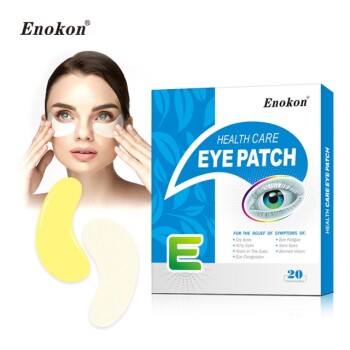
- Hydra Gel Health Care Eye Patch
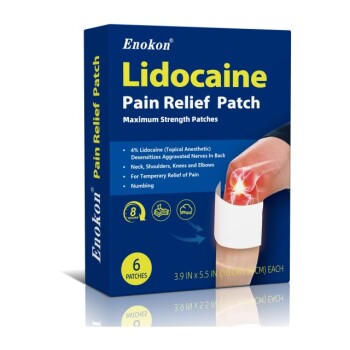
- Lidocaine Hydrogel Pain Relief Patch for Pain Relief
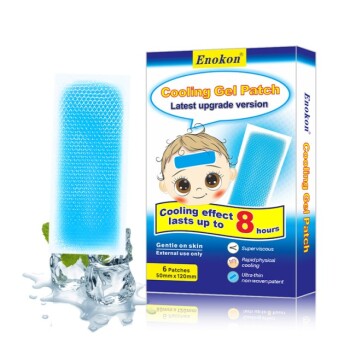
- Medical Cooling Gel Patches for Fever Cooling Patches
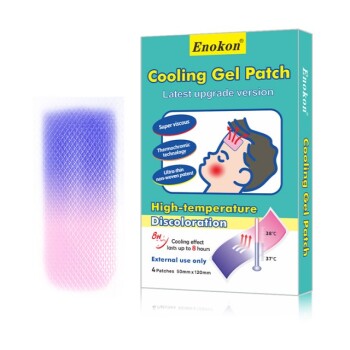
- Cooling Fever Patches Color Change Cold Fever Patch
- Icy Hot Menthol Medicine Pain Relief Patch
People Also Ask
- How do environmental temperature and humidity synergize with eye protection? Master Ocular Care with Advanced R&D
- Why is gelatin incorporated as a functional component in the synthesis of hydrogel patch matrices? Enhance Bio-Synergy
- What is the core function of calcium chloride (CaCl2) in hydrogel patches? Ensuring Precision & Manufacturing Scale
- Why is a high-precision probe tack tester used in the quality control of hydrogel patches? Ensure Consistent Adhesion
- How does the addition of Gelatin improve the performance of hydrogel patches? Enhance Adhesion & Delivery Efficiency