
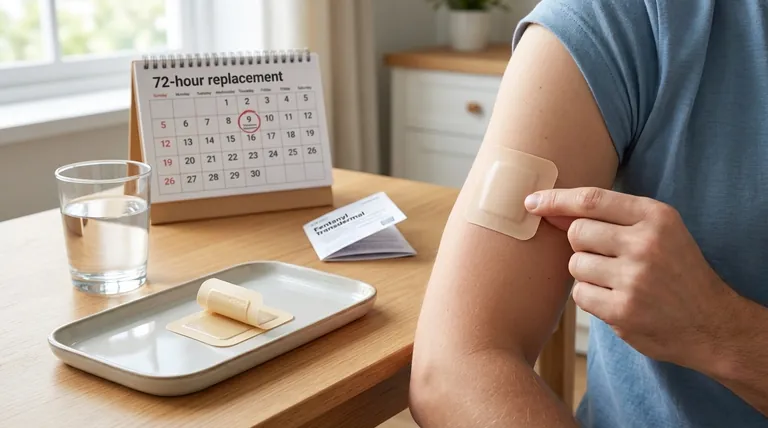
To be clear, a fentanyl transdermal patch is a medication delivery system applied directly to the skin. It is designed to provide continuous pain relief and must be replaced with a new patch every 72 hours, or exactly 3 days.
The core principle of the fentanyl patch is slow, continuous drug delivery. Adhering to the strict 72-hour replacement schedule and proper application protocol is not just a suggestion—it is critical for ensuring both safety and consistent pain management.
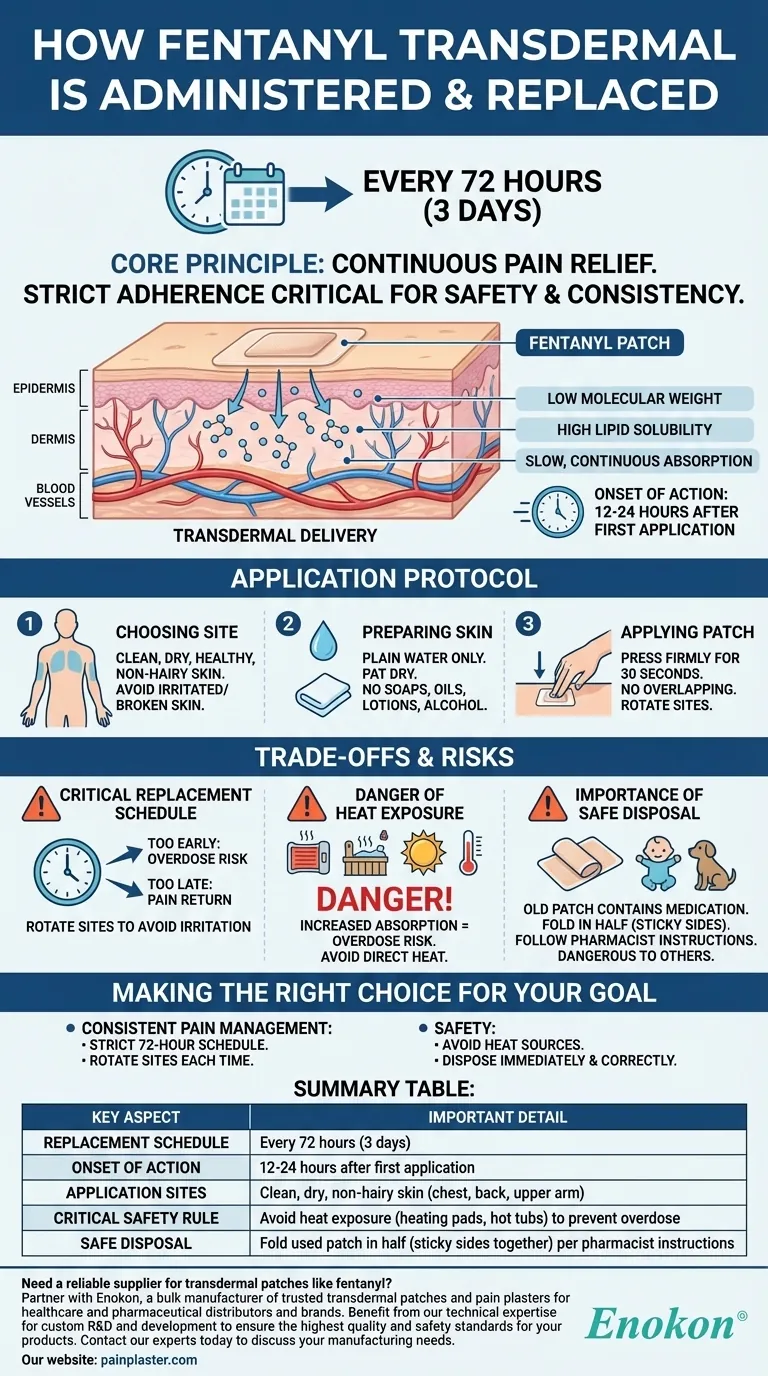
How Transdermal Delivery Works
The Principle of Absorption
Fentanyl is uniquely suited for a transdermal patch system because of its chemical properties.
Its low molecular weight and high lipid (fat) solubility allow the medication to pass from the patch, through the outer layers of the skin, and into the body's network of tiny blood vessels.
The Onset of Action
This process is not immediate. After applying the first patch, it can take 12 to 24 hours for enough medication to be absorbed to provide effective pain relief.
This initial delay is a crucial factor that must be managed, often with other pain medications, when starting treatment.
The Correct Application Protocol
Choosing the Application Site
The patch must be applied to skin that is clean, dry, and healthy. Avoid skin that is irritated, broken, scarred, or has been exposed to radiation.
Ideal locations are flat, non-hairy areas on the upper body, such as the chest, back, or upper arms.
Preparing the Skin
Before application, clean the selected area with plain water only and pat it completely dry with a soft cloth.
Do not use soaps, oils, lotions, or alcohol, as they can irritate the skin or affect how the medication is absorbed.
Applying the New Patch
Press the patch firmly onto the prepared skin with the palm of your hand for at least 30 seconds to ensure the edges are securely sealed.
If more than one patch is prescribed, they must never overlap. Always apply the new patch to a different location than the one you just removed.
Understanding the Trade-offs and Risks
The Critical Replacement Schedule
The 72-hour replacement cycle is the most important rule. Replacing a patch too early can risk overdose, while waiting too long can lead to a return of severe pain.
It is essential to rotate application sites. Using the same spot consecutively can cause skin irritation and may affect the consistency of drug absorption.
The Danger of Heat Exposure
Heat can significantly increase the rate at which fentanyl is absorbed from the patch, potentially leading to a life-threatening overdose.
Patients must avoid direct heat sources like heating pads, electric blankets, saunas, hot tubs, or prolonged sunbathing while wearing a patch.
The Importance of Safe Disposal
An old patch still contains a significant amount of powerful medication. Accidental exposure can be extremely dangerous, especially for children or pets.
Always follow the specific disposal instructions provided by your pharmacist, which typically involve folding the patch in half so the sticky sides adhere to each other.
Making the Right Choice for Your Goal
- If your primary focus is consistent pain management: The most critical action is to create and follow a strict 72-hour replacement schedule, rotating the patch site each time.
- If your primary focus is safety: The most important rule is to avoid any heat source on or near the patch and to ensure used patches are disposed of immediately and correctly.
Ultimately, the safe and effective use of a fentanyl transdermal patch depends on meticulous adherence to the prescribed protocol.
Summary Table:
| Key Aspect | Important Detail |
|---|---|
| Replacement Schedule | Every 72 hours (3 days) |
| Onset of Action | 12-24 hours after first application |
| Application Sites | Clean, dry, non-hairy skin on chest, back, or upper arm |
| Critical Safety Rule | Avoid heat exposure (heating pads, hot tubs) to prevent overdose |
| Safe Disposal | Fold used patch in half (sticky sides together) per pharmacist instructions |
Need a reliable supplier for transdermal patches like fentanyl? Partner with Enokon, a bulk manufacturer of trusted transdermal patches and pain plasters for healthcare and pharmaceutical distributors and brands. Benefit from our technical expertise for custom R&D and development to ensure the highest quality and safety standards for your products. Contact our experts today to discuss your manufacturing needs.
Visual Guide
Related Products
- Menthol Gel Pain Relief Patch
- Icy Hot Menthol Medicine Pain Relief Patch
- Far Infrared Heat Pain Relief Patches Transdermal Patches
- Silicone Scar Sheets Patch Transdermal Drug Patch
- Mugwort Wormwood Pain Relief Patch for Neck Pain
People Also Ask
- How do pain relief patches compare to other pain relief methods? Discover Targeted, Long-Lasting Relief
- How effective are pain relief patches for muscle pain? Target Localized Pain with Transdermal Delivery
- Who should consult a healthcare professional before using pain relief patches? Ensure Your Safety with Medical Advice
- What are the potential side effects of pain relief patches? A Guide to Safe Use & Key Risks
- What are some common applications of pain relief patches? Effective Relief for Muscle & Joint Pain
















