
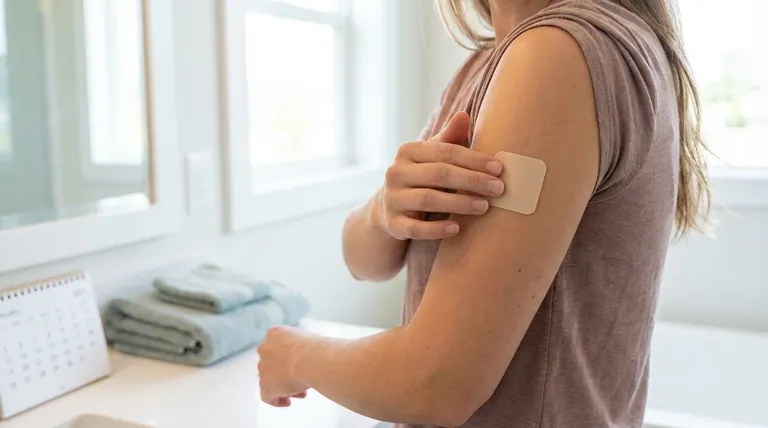
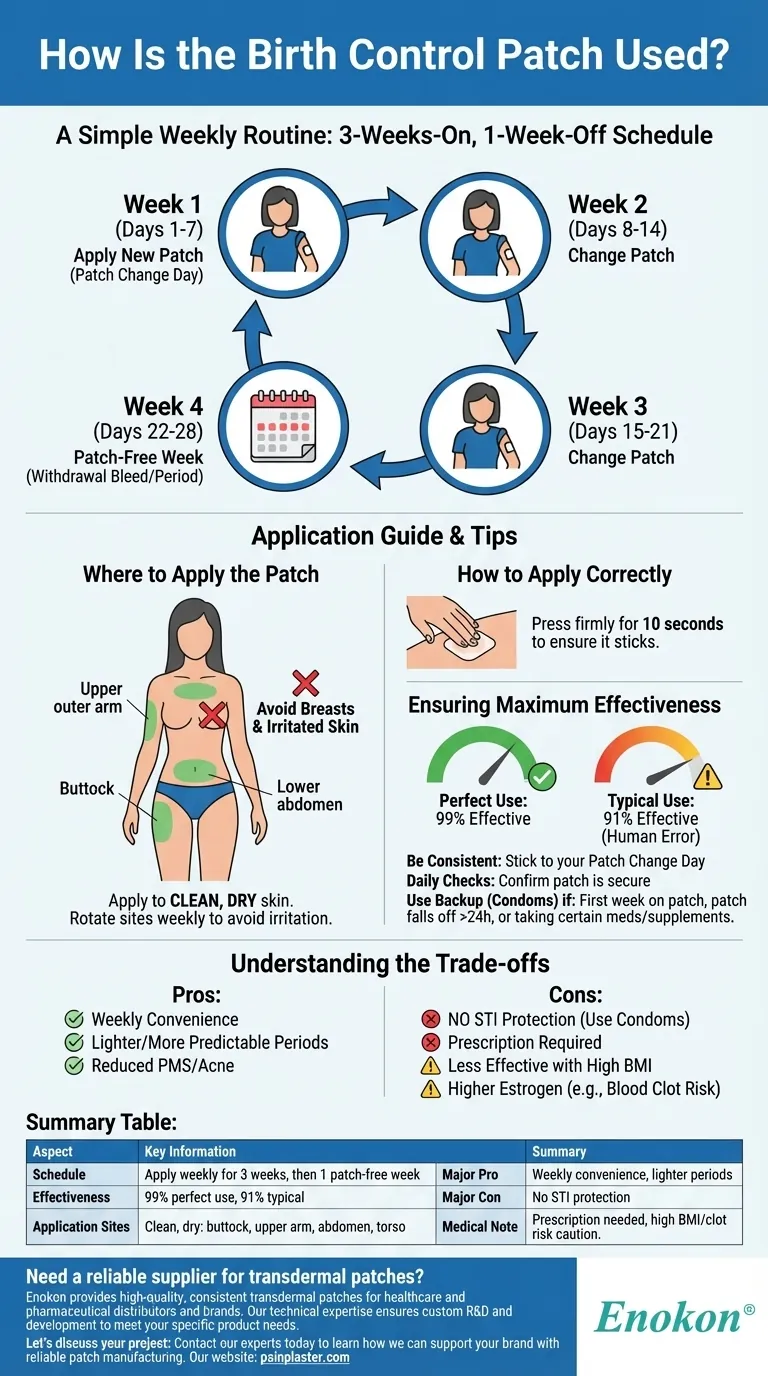
Using the birth control patch is a simple weekly routine. You apply a new patch to your skin once a week for three consecutive weeks. During the fourth week, you do not wear a patch, which allows for a withdrawal bleed, similar to a period. This cycle is then repeated.
The birth control patch offers the convenience of a weekly application rather than a daily pill, but its effectiveness depends entirely on correct, consistent use and understanding its specific medical considerations.
The Weekly Application Cycle: A Step-by-Step Guide
The core of using the patch effectively is adhering to a consistent weekly schedule. This routine ensures your body receives a steady dose of hormones to prevent pregnancy.
The 3-Weeks-On, 1-Week-Off Schedule
The patch works on a 28-day (or 4-week) cycle. You wear a patch for the first three weeks, changing it on the same designated "patch change day" each week.
Week four is your patch-free week. You do not wear a patch during these seven days, and this is when you will typically have your period. After seven patch-free days, you apply a new patch to begin the cycle again.
Where to Apply the Patch
The patch should be placed on skin that is clean, dry, and not irritated.
Approved locations include the buttock, upper outer arm, lower abdomen, or upper torso. You should avoid placing it on your breasts or in a spot where it could be rubbed by tight clothing.
How to Apply It Correctly
To ensure the patch sticks properly, press it down firmly with the palm of your hand for about 10 seconds. It's also a good practice to rotate the application site each week to avoid skin irritation.
Ensuring Maximum Effectiveness
With perfect use, the patch is 99% effective at preventing pregnancy. However, "typical use," which accounts for human error, brings the effectiveness down to around 91%. The following practices are critical.
The Importance of Consistency
Your "patch change day" is the anchor of your routine. Applying your new patch on the same day each week is essential for maintaining the correct hormone levels in your body.
Daily Checks and Maintenance
Make it a habit to check your patch daily, perhaps while showering or dressing, to ensure it is sticking firmly to your skin. If the patch becomes loose or falls off, you may need to use a backup contraceptive method.
When to Use a Backup Method
Always use a backup method like condoms during your first week on the patch. You should also use a backup method if a patch falls off for more than 24 hours or if you are taking any medications or supplements that could interfere with its effectiveness.
Understanding the Trade-offs: Pros and Cons
The patch is a highly effective contraceptive method, but it's important to weigh its advantages against its limitations to determine if it's the right fit for you.
The Primary Advantage: Weekly Convenience
For many, the biggest benefit is not having to remember a daily pill. The patch provides a "set it and forget it" convenience for an entire week, which can be easier to manage and doesn't require interrupting sex.
Significant Menstrual Benefits
The patch delivers a steady dose of hormones, which can lead to lighter, more predictable, and less painful periods. It can also reduce symptoms of PMS, lower the risk of anemia, and potentially improve acne.
The Major Drawback: No STI Protection
The birth control patch does not offer any protection against sexually transmitted infections (STIs). To protect against STIs, you must use condoms in addition to the patch.
Key Medical Considerations
The patch requires a prescription and is not suitable for everyone. It may be less effective for individuals with a high body mass index (BMI). It also delivers a higher dose of estrogen than many birth control pills, which can increase the risk of certain health complications like blood clots.
Is the Patch the Right Choice for You?
Choosing a birth control method is a personal decision based on your health, lifestyle, and priorities.
- If your primary focus is convenience and you struggle with daily pills: The patch's weekly schedule is a significant advantage.
- If your primary focus is managing painful or heavy periods: The patch is highly effective at making periods lighter and more predictable.
- If you have a high BMI or a history of blood clots: You must consult a doctor, as the patch may not be a safe option for you.
- If your primary focus is STI prevention: The patch offers no protection, and you must use condoms consistently.
Understanding this balance of convenience and medical responsibility is the key to successfully using the birth control patch.
Summary Table:
| Aspect | Key Information |
|---|---|
| Schedule | Apply a new patch once a week for 3 weeks, then have 1 patch-free week. |
| Effectiveness | Over 99% with perfect use; around 91% with typical use. |
| Application Sites | Clean, dry skin on buttock, upper arm, abdomen, or torso (not breasts). |
| Major Pro | Weekly convenience; lighter, more predictable periods. |
| Major Con | No protection against sexually transmitted infections (STIs). |
| Medical Note | Requires a prescription; not suitable for everyone (e.g., high BMI, history of blood clots). |
Need a reliable supplier for transdermal patches?
As a trusted bulk manufacturer, Enokon provides high-quality, consistent transdermal patches for healthcare and pharmaceutical distributors and brands. Our technical expertise ensures custom R&D and development to meet your specific product needs.
Let's discuss your project: Contact our experts today to learn how we can support your brand with reliable patch manufacturing.
Visual Guide
Related Products
- Prostate Pain Kidney Health Care Patch for Men
- Heating Pain Relief Patches for Menstrual Cramps
- Silicone Scar Sheets Patch Transdermal Drug Patch
- Menthol Gel Pain Relief Patch
- Icy Hot Menthol Medicine Pain Relief Patch
People Also Ask
- What are the key components of Chinese herbal pain patches? Discover the Science Behind Natural Pain Relief
- What complementary practices enhance the effectiveness of Chinese pain patches? Boost Relief with Holistic Care
- What are Chinese pain patches used for? Natural Relief for Joint & Muscle Pain
- What role do Chinese pain patches play in arthritis relief? Discover Natural Pain Management Solutions
- What additional practices can enhance the effectiveness of Chinese pain patches? Boost Relief with Holistic Strategies








