
To use the birth control patch, you follow a four-week cycle. A new patch is applied to the skin once a week for three consecutive weeks, totaling 21 days of use. During the fourth week, you do not wear a patch, which allows for a withdrawal bleed, similar to a period.
The core principle of the birth control patch is consistency. It delivers a steady dose of hormones for three weeks, and its effectiveness depends entirely on changing the patch on the same day each week and starting the next cycle on time.
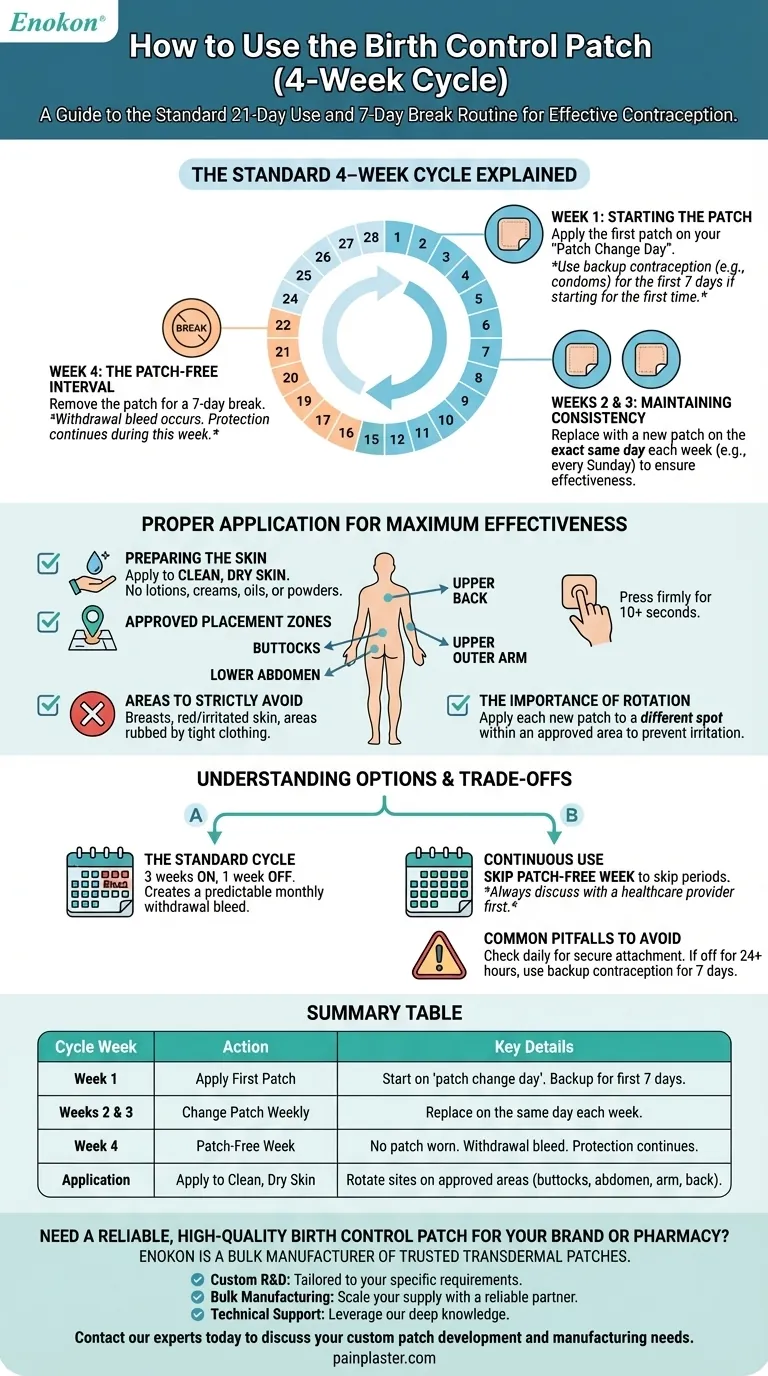
The Standard 4-Week Cycle Explained
Understanding the rhythm of the patch cycle is the first step to using it effectively. The entire process is designed to be a predictable 28-day loop.
Week 1: Starting the Patch
The first patch of a new cycle is applied on your designated "patch change day."
If you are starting the patch for the very first time, it is critical to use a backup method of birth control, like condoms, for at least the first seven days.
Weeks 2 & 3: Maintaining Consistency
You will replace your patch with a new one on the exact same day of the week for the next two weeks. For example, if you start on a Sunday, you will change your patch every Sunday.
This weekly consistency is non-negotiable for maintaining the correct hormone levels required to prevent pregnancy.
Week 4: The Patch-Free Interval
After 21 days (three weeks of wearing patches), you will enter a seven-day patch-free week.
During this time, you should experience a withdrawal bleed. This is not a true menstrual period but is the body's response to the pause in hormones. You are still protected from pregnancy during this week.
Proper Application for Maximum Effectiveness
Where and how you apply the patch directly impacts its adhesion and hormone delivery. Proper technique prevents accidental detachment and ensures the medication is absorbed correctly.
Preparing the Skin
The patch must be applied to clean, dry skin. Do not use any lotions, creams, oils, or powders on the area where you plan to place the patch, as this can prevent it from sticking properly.
Approved Placement Zones
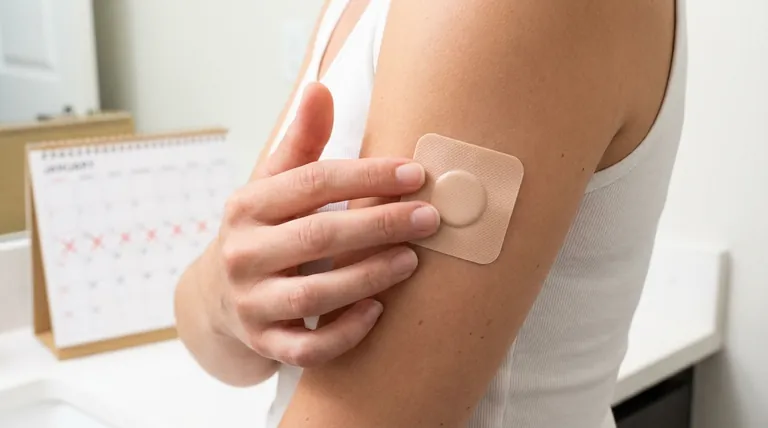
The patch can be placed on the buttocks, lower abdomen, upper outer arm, or upper back.
Press the patch firmly onto your skin with the palm of your hand for at least 10 seconds to ensure the edges are sealed.
Areas to Strictly Avoid
Never apply the patch to your breasts or to skin that is red, irritated, or broken.
Also, avoid placing it in areas where it might be rubbed by tight clothing, such as under a bra strap or waistband.
The Importance of Rotation
You should apply each new patch to a different spot within an approved area. Applying it to the exact same place every time can lead to skin irritation.
Understanding the Options and Trade-offs
While the standard cycle is most common, it's important to understand your options and be aware of potential issues.
The Standard Cycle with a Withdrawal Bleed
Following the "three weeks on, one week off" schedule is the standard, FDA-approved method. This creates a predictable monthly bleed for most users.
Continuous Use to Skip Periods
Some users choose to skip the patch-free week and immediately start a new cycle of three patches. This can be used to skip a withdrawal bleed. This method should always be discussed with a healthcare provider first.
Common Pitfalls to Avoid
The primary risk is a patch becoming loose or falling off completely. It is wise to check your patch daily to ensure it is securely attached.
If a patch is off for more than 24 hours, you may not be protected from pregnancy and should use backup contraception until you have had a new patch on for seven consecutive days. Always consult the specific instructions that come with your prescription.
Making the Right Choice for Your Goal
Your personal priorities will guide how you manage your patch schedule.
- If your primary focus is maximum contraceptive effectiveness: Adhere strictly to your weekly "patch change day," use backup protection for the first seven days of your very first cycle, and check daily that the patch is secure.
- If your primary focus is managing or skipping your period: Discuss continuous use (skipping the patch-free week) with your doctor to ensure it is a safe and appropriate option for you.
- If your primary focus is ease of use: Set a recurring weekly alarm for your change day and make rotating the application site part of your routine to avoid skin irritation.
Mastering this simple, consistent routine is the key to using the birth control patch confidently and effectively.
Summary Table:
| Cycle Week | Action | Key Details |
|---|---|---|
| Week 1 | Apply First Patch | Start on your "patch change day". Use backup contraception for the first 7 days if starting for the first time. |
| Weeks 2 & 3 | Change Patch Weekly | Replace with a new patch on the same day each week to maintain hormone levels. |
| Week 4 | Patch-Free Week | No patch is worn. A withdrawal bleed occurs. Protection continues during this week. |
| Application | Apply to Clean, Dry Skin | Place on buttocks, abdomen, upper arm, or back. Rotate sites to avoid irritation. |
Need a reliable, high-quality birth control patch for your brand or pharmacy?
Enokon is a bulk manufacturer of trusted transdermal patches, including contraceptive solutions. We partner with healthcare and pharmaceutical distributors and brands to deliver consistent, effective products.
Benefit from our expertise:
- Custom R&D: We can develop patches tailored to your specific requirements.
- Bulk Manufacturing: Scale your supply with a reliable production partner.
- Technical Support: Leverage our deep knowledge of transdermal technology.
Contact our experts today to discuss your custom patch development and manufacturing needs.
Visual Guide
Related Products
- Heating Pain Relief Patches for Menstrual Cramps
- Prostate Pain Kidney Health Care Patch for Men
- Silicone Scar Sheets Patch Transdermal Drug Patch
- Cooling Fever Patches Color Change Cold Fever Patch
- Mugwort Wormwood Pain Relief Patch for Neck Pain
People Also Ask
- What are the benefits of Period Pain Heat Patches? Drug-Free, On-the-Go Relief
- What are the key benefits of heating patches for elderly individuals? Relieve Pain & Improve Mobility
- What are the different types of heat patches? Find the Right Pain Relief for Your Needs
- What are the key differences between conventional heat patches and deep heat devices? Choosing the Right Pain Relief Solution
- What percentage of people with back pain use heat patches for relief? Discover the Popular Choice for Pain Management




