
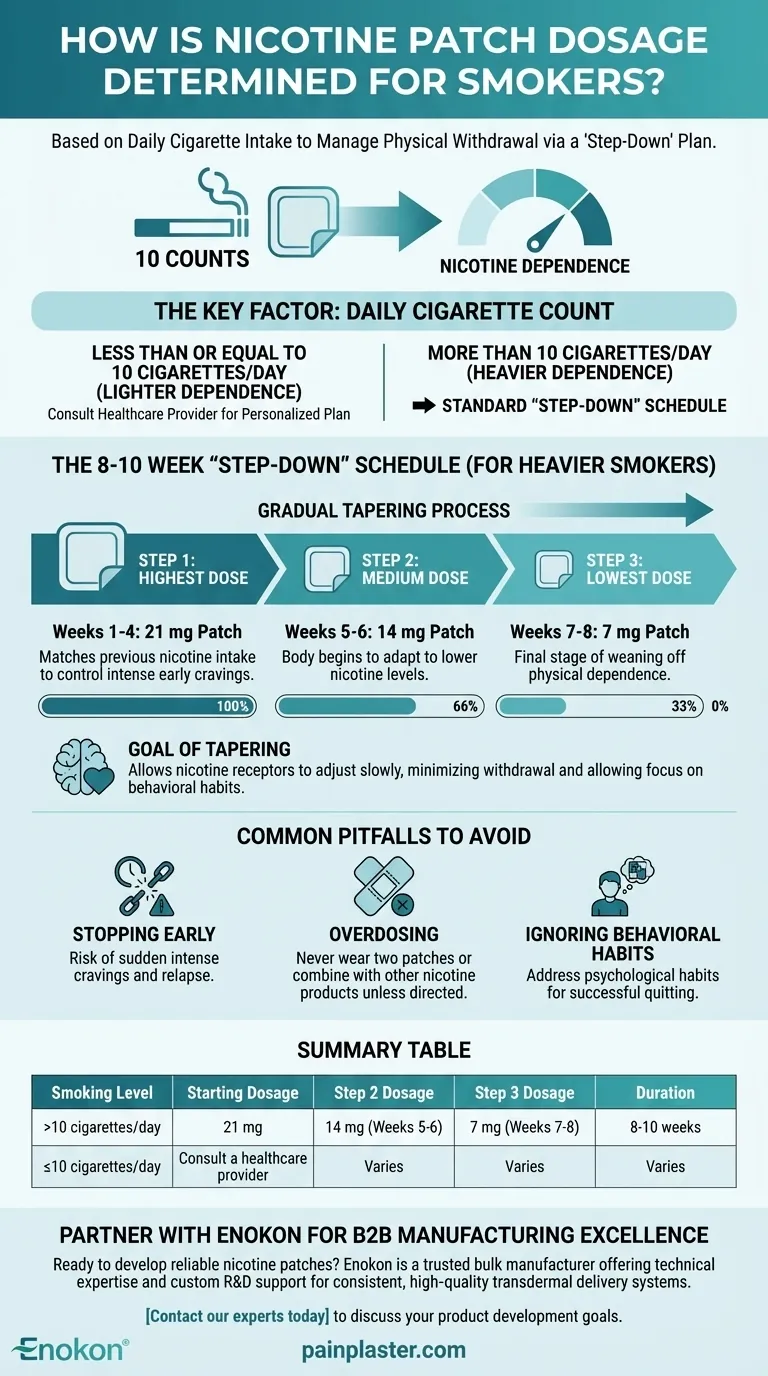
Determining the right nicotine patch dosage is a straightforward process based on a single, critical factor: the number of cigarettes you smoke per day. This metric is used to match the initial patch strength to your current level of nicotine dependence. For individuals who smoke more than 10 cigarettes daily, therapy typically begins with the highest dose patch and gradually steps down over several weeks.
The core strategy of nicotine patch therapy is to manage physical withdrawal symptoms by replacing the nicotine from cigarettes. It uses a structured, multi-week "step-down" plan that systematically weans your body off nicotine, significantly increasing your chances of quitting successfully.

The Core Principle: Matching Dose to Habit
The fundamental goal of a nicotine patch is to deliver a steady, controlled amount of nicotine through your skin. This stabilizes the levels of nicotine in your blood, which helps to reduce the severe cravings and withdrawal symptoms that often derail attempts to quit.
Why the "10 Cigarettes a Day" Threshold Matters
This number serves as the standard clinical dividing line between a lighter and a heavier nicotine dependence. It's a simple way to estimate the amount of nicotine your body is accustomed to.
Starting a lighter smoker on too high a dose could deliver more nicotine than they normally get, leading to side effects like nausea or dizziness. Conversely, starting a heavier smoker on too low a dose won't be sufficient to manage their withdrawal, making the therapy ineffective.
The Standard "Step-Down" Schedule
Nicotine replacement therapy is not about replacing one nicotine source with another indefinitely. The "step-down" method is a tapering process designed to gradually free you from physical dependence over a defined period.
For Heavier Smokers (More than 10 cigarettes per day)
This is the most common and well-defined treatment plan. The therapy is typically structured in three steps over 8 to 10 weeks.
- Step 1 (e.g., Weeks 1-4): Start with the highest strength patch, typically 21 mg. This initial dose is meant to closely match your previous nicotine intake and control the most intense, early-stage cravings.
- Step 2 (e.g., Weeks 5-6): Reduce the dosage to a medium-strength patch, typically 14 mg. Your body will have begun to adapt to lower nicotine levels.
- Step 3 (e.g., Weeks 7-8): Transition to the lowest dose patch, typically 7 mg. This is the final stage of weaning your body off its physical dependence before stopping completely.
The Goal of Tapering
This gradual reduction is the key to the entire process. It allows your brain's nicotine receptors to slowly adjust and return to a non-dependent state without the shock of abrupt cessation. This methodical approach minimizes withdrawal symptoms and gives you the stability to focus on breaking the behavioral habits of smoking.
Common Pitfalls to Avoid
While the patch is a powerful tool, its effectiveness depends on proper use. Understanding the common mistakes can help you avoid them and ensure your quit attempt is successful.
Sticking to the Schedule
It is crucial to follow the full step-down schedule as directed. Some people feel confident after a few weeks and stop the therapy early, which can lead to a sudden return of intense cravings and a higher risk of relapse.
Never Use More Than Prescribed
You should not wear two patches at once or combine them with other nicotine products unless specifically directed by a healthcare provider. Doing so can lead to a nicotine overdose, which can be dangerous.
Viewing the Patch as a Magic Bullet
The patch is designed to manage the physical addiction to nicotine. However, successful quitting also requires addressing the psychological and behavioral habits tied to smoking. It is most effective when combined with a broader support plan.
Making the Right Choice for Your Quit Plan
Using a nicotine patch is a clear, evidence-based strategy. To apply it correctly, align your approach with your specific smoking history.
- If your primary focus is starting correctly: Use your daily cigarette count as your guide. If you smoke more than 10 cigarettes a day, the 21 mg patch is the standard starting point.
- If your primary focus is completing the therapy: Commit to the full 8-to-10-week step-down schedule, reducing the patch strength as recommended by the manufacturer.
- If your primary focus is safety and personalization: Always consult with a pharmacist or healthcare provider to confirm the right dosage and create a quit plan tailored to you.
Following this structured approach allows you to systematically dismantle your physical dependence on nicotine, giving you a powerful advantage in your journey to quit smoking for good.
Summary Table:
| Smoking Level | Starting Dosage | Step 2 Dosage | Step 3 Dosage | Duration |
|---|---|---|---|---|
| >10 cigarettes/day | 21 mg | 14 mg (Weeks 5-6) | 7 mg (Weeks 7-8) | 8-10 weeks |
| ≤10 cigarettes/day | Consult a healthcare provider for a personalized plan | Varies |
Ready to develop your own reliable nicotine patches or pain relief plasters?
As a trusted bulk manufacturer for healthcare and pharmaceutical distributors, Enokon provides the technical expertise and custom R&D support you need. We ensure consistent, high-quality transdermal delivery systems that meet your specific requirements.
Contact our experts today to discuss your product development goals and benefit from our manufacturing excellence.
Visual Guide
Related Products
- Menthol Gel Pain Relief Patch
- Capsaicin Chili Medicated Pain Relief Patches
- Icy Hot Menthol Medicine Pain Relief Patch
- Lidocaine Hydrogel Pain Relief Patch for Pain Relief
- Mugwort Wormwood Pain Relief Patch for Neck Pain
People Also Ask
- How effective are pain relief patches for muscle pain? Target Localized Pain with Transdermal Delivery
- How do pain relief patches compare to other pain relief methods? Discover Targeted, Long-Lasting Relief
- Who should consult a healthcare professional before using pain relief patches? Ensure Your Safety with Medical Advice
- What are the potential side effects of pain relief patches? A Guide to Safe Use & Key Risks
- How do drug loading and permeation enhancers ensure patch efficacy? Achieve Superior Clinical-Grade Pain Relief.

















