
Applying an oxybutynin transdermal patch correctly is a simple process centered on proper skin preparation and placement. The patch should be applied to a clean, dry, and intact area of skin on the abdomen, hip, or buttock. You will replace it every 3 to 4 days, making sure to choose a different spot with each new patch to prevent skin irritation.
The effectiveness of a transdermal patch depends entirely on proper skin contact and consistent use. The most critical factors for success are choosing the right application site and diligently rotating locations to maintain healthy skin.
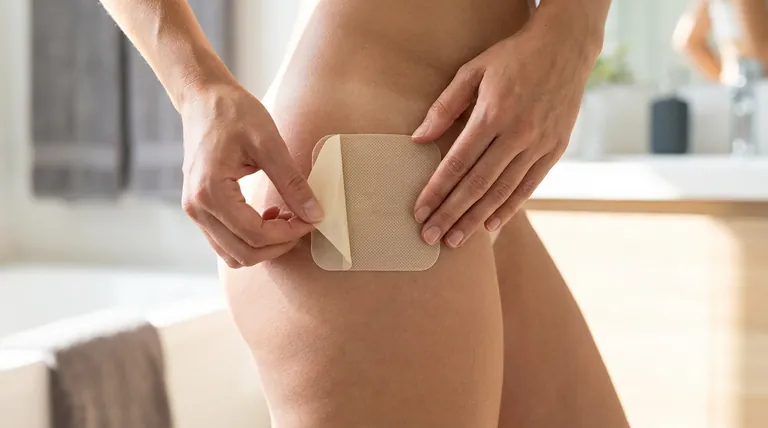
The Step-by-Step Application Process
Follow these steps precisely to ensure the patch adheres properly and delivers a consistent dose of medication.
1. Prepare the Application Site
The first step is to choose and prepare the area. The patch should only be applied to the abdomen, hip, or buttock.
Ensure the chosen spot is clean, dry, and cool. Do not apply the patch to skin that is oily, recently shaved, or has any lotions, creams, or powders on it. The skin must also be intact—avoid areas with cuts, sores, or irritation.
2. Open the Pouch and Handle the Patch
Wash and dry your hands thoroughly before you begin.
Carefully tear open the sealed pouch and remove the patch. Avoid using scissors to prevent accidentally cutting the patch itself. Hold the patch with the protective liner facing you.
3. Apply the Patch to Your Skin
Peel off half of the protective liner, being careful not to touch the sticky adhesive surface with your fingers.
Immediately place the sticky side of the patch onto the prepared area of your skin. Peel away the second half of the liner and press the rest of the patch down.
Using the palm of your hand, press the entire patch down firmly for at least 10 to 30 seconds. Make sure the edges are sealed securely to the skin.
4. After Application
Once the patch is secure, wash your hands again to remove any medication that may have gotten on them. You do not need to remove the patch for activities like bathing, swimming, or exercising.
Managing Your Patch Schedule and Site
Consistency is key to effective treatment. Understanding the timing and placement strategy is just as important as the application itself.
The 3-to-4-Day Cycle
The oxybutynin patch is designed to release medication steadily over a period of 3 to 4 days. Follow the replacement schedule prescribed by your doctor. Changing it on the same days each week can help you remember.
The Critical Role of Site Rotation
You must apply each new patch to a different location. This practice is essential for preventing skin irritation, redness, and itching.
To allow the skin to fully recover, wait at least one week before applying a new patch to a previously used spot.
If a Patch Falls Off
If a patch comes loose or falls off, first try to press it back into place. If it does not stick securely, you may apply a new patch.
When you apply this replacement patch, do not alter your schedule. Remove it and apply the next one on your original, regularly scheduled day.
Common Pitfalls to Avoid
Being aware of potential issues can help you prevent them and ensure your treatment is not interrupted.
Skin Irritation is the Primary Concern
The most common issue with any transdermal patch is localized skin irritation. This is almost always caused by reapplying a patch to the same site too soon. Diligent site rotation is the best way to prevent this.
Poor Adhesion
A patch may not stick properly if the skin was not completely clean and dry at the time of application. Lotions and oils are the primary culprits. Additionally, avoid placing the patch along the waistline where tight clothing could rub it loose.
Improper Disposal
When you remove an old patch, fold it in half with the sticky sides pressed together. Dispose of it in a trash can where it cannot be reached by children or pets. This prevents accidental exposure to any residual medication.
How to Apply This to Your Goal
To ensure your treatment is effective and comfortable, keep these core principles in mind.
- If your primary focus is consistent medication delivery: Always change your patch on schedule and press it firmly for at least 30 seconds to ensure a secure seal.
- If your primary focus is preventing skin irritation: Never apply a new patch to the same spot twice in a row, and allow at least one week before reusing a site.
- If your primary focus is maintaining your lifestyle: Remember the patch is waterproof and designed to be worn during daily activities like showering, swimming, and exercising.
Proper application technique is the key to getting the full therapeutic benefit from your oxybutynin patch with minimal inconvenience.
Summary Table:
| Step | Key Action | Important Note |
|---|---|---|
| 1. Prepare | Clean & dry skin on abdomen, hip, or buttock. | Avoid oily, irritated, or recently shaved skin. |
| 2. Handle | Open pouch, remove patch, peel half the liner. | Do not touch the adhesive or use scissors. |
| 3. Apply | Place patch, remove remaining liner, press firmly for 30s. | Ensure edges are sealed securely. |
| 4. Manage | Replace every 3-4 days; rotate application sites. | Wait at least 1 week before reusing a spot. |
Need a reliable supplier for oxybutynin patches or other transdermal solutions?
As Enokon, a bulk manufacturer of reliable transdermal patches and pain plasters, we provide healthcare and pharmaceutical distributors and brands with high-quality products and expert technical support for custom R&D and development. Benefit from our expertise to ensure your patients receive effective and user-friendly medication.
Contact our experts today to discuss your manufacturing needs.
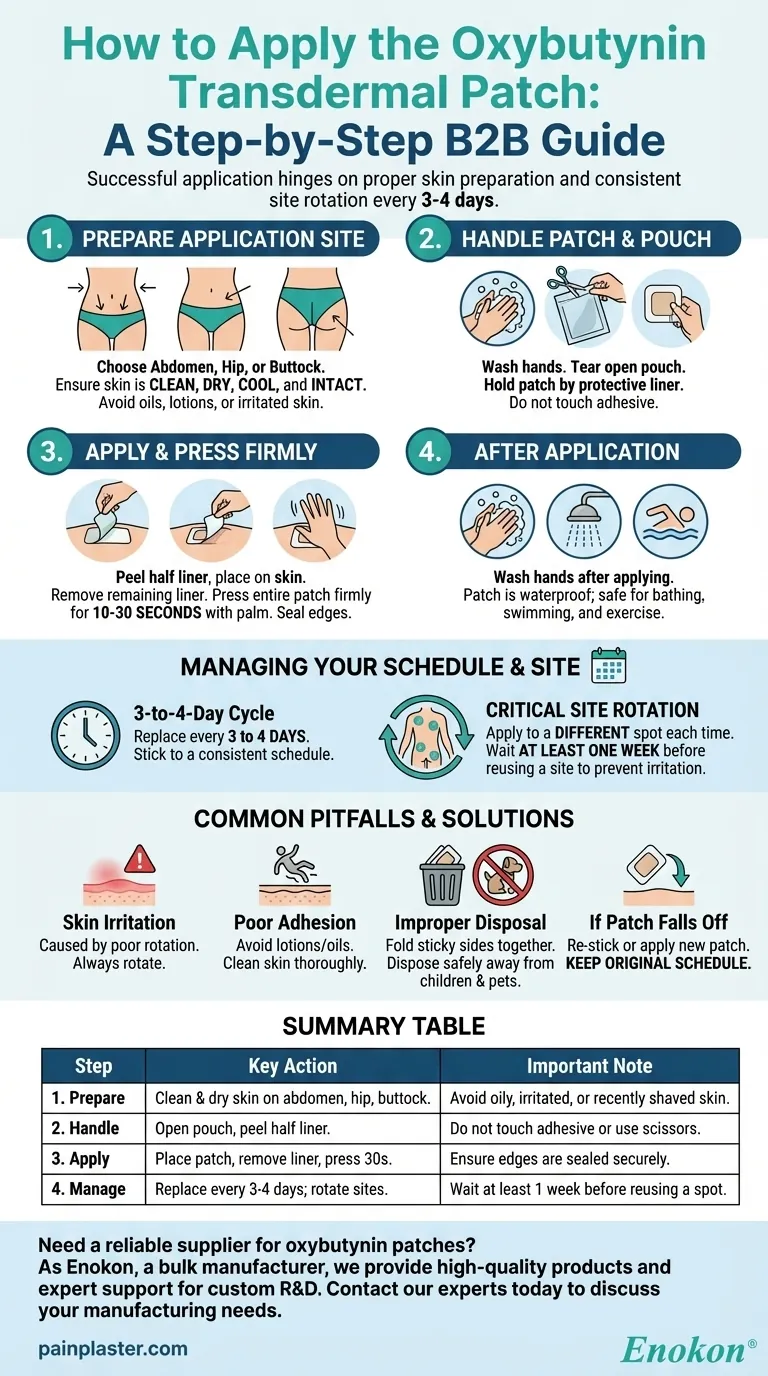
Visual Guide
Related Products
- Silicone Scar Sheets Patch Transdermal Drug Patch
- Far Infrared Heat Pain Relief Patches Transdermal Patches
- Menthol Gel Pain Relief Patch
- Icy Hot Menthol Medicine Pain Relief Patch
- Mugwort Wormwood Pain Relief Patch for Neck Pain
People Also Ask
- What role does a silicone-based transdermal delivery system play in Parkinson's? Enhancing Early-Stage Patient Care
- How is the long-term skin tolerance of silicone-based transdermal patches evaluated in clinical settings? R&D and Safety
- Why is a polarizing microscope used to evaluate the long-term stability of transdermal drug patches? Ensure Efficacy.
- What are common adverse effects of transdermal drug delivery? Risks & Prevention Tips
- What are the advantages of transdermal drug patches? Optimize Medication Delivery with Patches














