
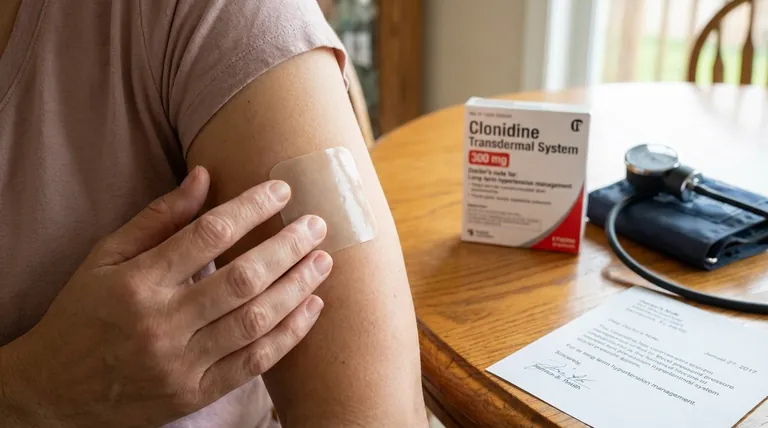
For many individuals, the clonidine transdermal patch is a long-term treatment used to manage a chronic condition. Because high blood pressure often has no symptoms, you will likely need to use clonidine or another blood pressure medication for the rest of your life to maintain control and prevent serious health complications.
The duration of clonidine therapy is not about "curing" high blood pressure but about continuously managing it. Therefore, treatment is typically indefinite and should only be stopped under the direct supervision of a healthcare professional.
Why Clonidine is a Long-Term Solution
Clonidine is prescribed to manage conditions that do not resolve on their own. Understanding its function clarifies why consistent, long-term use is essential.
Managing a Chronic Condition
High blood pressure (hypertension) is a persistent state that requires ongoing management. Clonidine does not eliminate the underlying cause of hypertension; it controls its effects.
Consistent use is vital, even when you feel perfectly well, to prevent the risks associated with uncontrolled high blood pressure, such as stroke or heart attack.
How the Medication Works
Clonidine belongs to a class of drugs called centrally acting alpha-agonist hypotensive agents.
It works by decreasing your heart rate and relaxing blood vessels. This allows blood to flow more easily, thereby lowering your blood pressure. This effect is only present while the medication is active in your system.
The Critical Risks of Stopping Abruptly
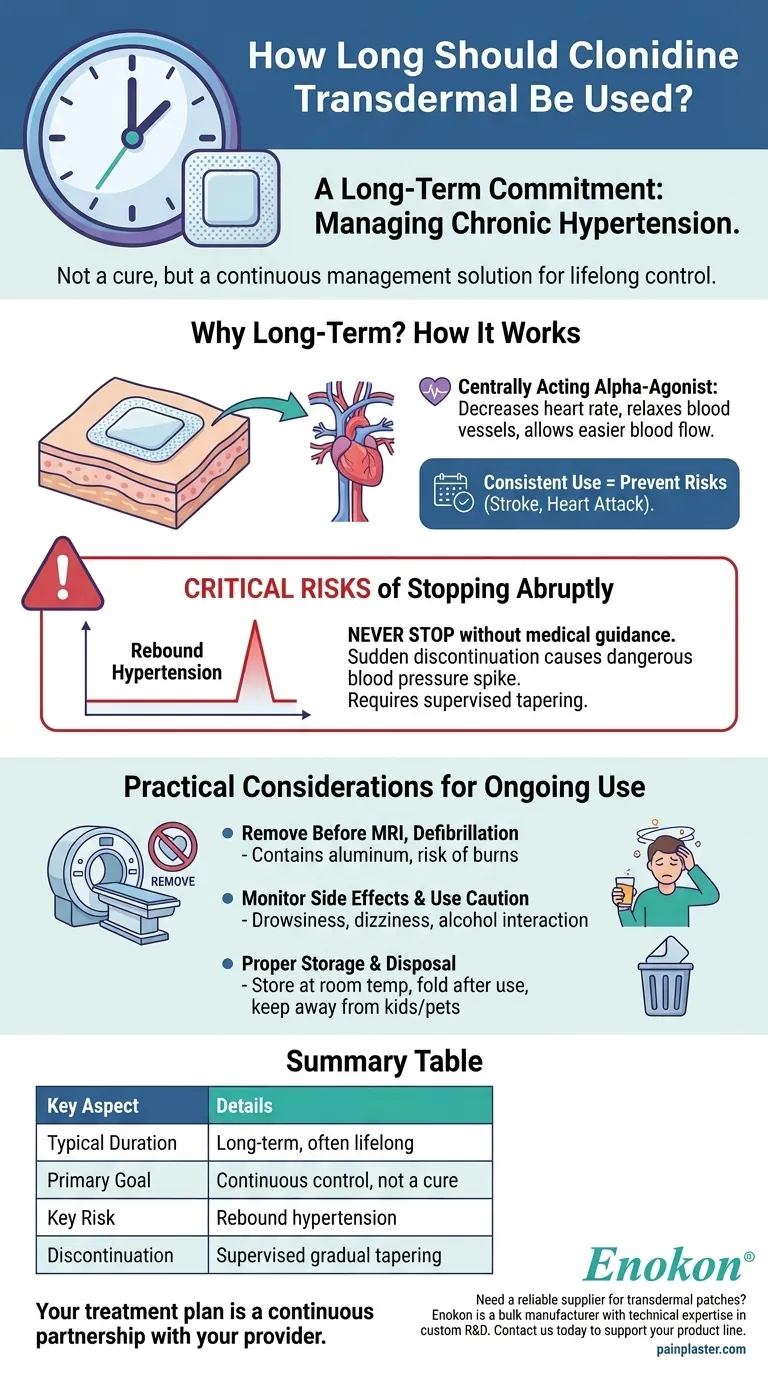
The most significant danger associated with clonidine is not its long-term use, but its sudden discontinuation. This is why you must never stop using it without medical guidance.
The Danger of Rebound Hypertension
Stopping clonidine suddenly can cause a rapid and dangerous increase in blood pressure, a condition known as rebound hypertension.
Your healthcare provider must oversee a gradual tapering process to wean you off the medication safely if a change in therapy is needed.
Ensuring Continuous Therapy
It is crucial to have an adequate supply of patches to avoid interruptions in your treatment.
You must also inform all doctors and dentists that you use clonidine before any surgery or medical procedure to ensure your treatment is managed correctly.
Practical Considerations for Ongoing Use
Using a medication long-term requires awareness of certain practical and safety measures to ensure it remains effective and safe.
Remove Before Certain Medical Scans
The clonidine patch contains aluminum and must be removed before an MRI to prevent the risk of skin burns at the patch site.
It should also be removed before defibrillation or cardioversion procedures.
Monitor for Potential Side Effects
Be aware of potential side effects like drowsiness or dizziness, especially when you first start the therapy.
Use caution when consuming alcohol or during activities affected by heat or exercise, as these can increase dizziness.
Proper Storage and Disposal
Store patches at room temperature in their foil pouches until you are ready to use them.
After use, fold the sticky sides of the patch together and dispose of it where children and pets cannot access it.
Making the Right Choice with Your Doctor
Your treatment plan is a collaborative decision between you and your healthcare provider, based on your specific health needs.
- If your primary focus is managing chronic high blood pressure: Plan on using clonidine transdermal as a long-term, and potentially lifelong, therapy for consistent control.
- If you are considering stopping or changing your medication for any reason: Never stop using the patch on your own; consult your doctor to develop a safe plan to gradually reduce the dose.
Ultimately, viewing your clonidine therapy as a continuous partnership with your provider is the key to maintaining your long-term health.
Summary Table:
| Key Aspect | Details for Clonidine Transdermal Use |
|---|---|
| Typical Duration | Long-term, often lifelong, for chronic hypertension management. |
| Primary Goal | Continuous control of blood pressure, not a cure. |
| Key Risk | Rebound hypertension if stopped abruptly. |
| Discontinuation | Must be supervised by a doctor with a gradual tapering plan. |
Need a reliable supplier for transdermal patches like clonidine?
As Enokon, a bulk manufacturer of reliable transdermal patches and pain plasters, we understand the critical need for consistent, high-quality medication delivery. Our technical expertise supports healthcare distributors and pharmaceutical brands with custom R&D and development to ensure patient safety and treatment efficacy.
Let's discuss how we can support your product line. Contact our team today to explore partnership opportunities.
Visual Guide
Related Products
- Far Infrared Heat Pain Relief Patches Transdermal Patches
- Silicone Scar Sheets Patch Transdermal Drug Patch
- Menthol Gel Pain Relief Patch
- Icy Hot Menthol Medicine Pain Relief Patch
- Mugwort Wormwood Pain Relief Patch for Neck Pain
People Also Ask
- Why is the selection of matrix materials critical when developing customized transdermal patches? Optimize Efficacy
- What are the physical impacts of external heat exposure on the performance and safety of transdermal patches? - Guide
- What are the clinical advantages of local transdermal delivery systems? Unlock Safer, More Effective Pain Relief Solutions
- What role does a skin tolerance scoring system play in the safety evaluation of transdermal patches? Key Safety Metrics
- How does high-purity far-infrared ceramic powder contribute to the efficacy of far-infrared physical therapy patches?












