
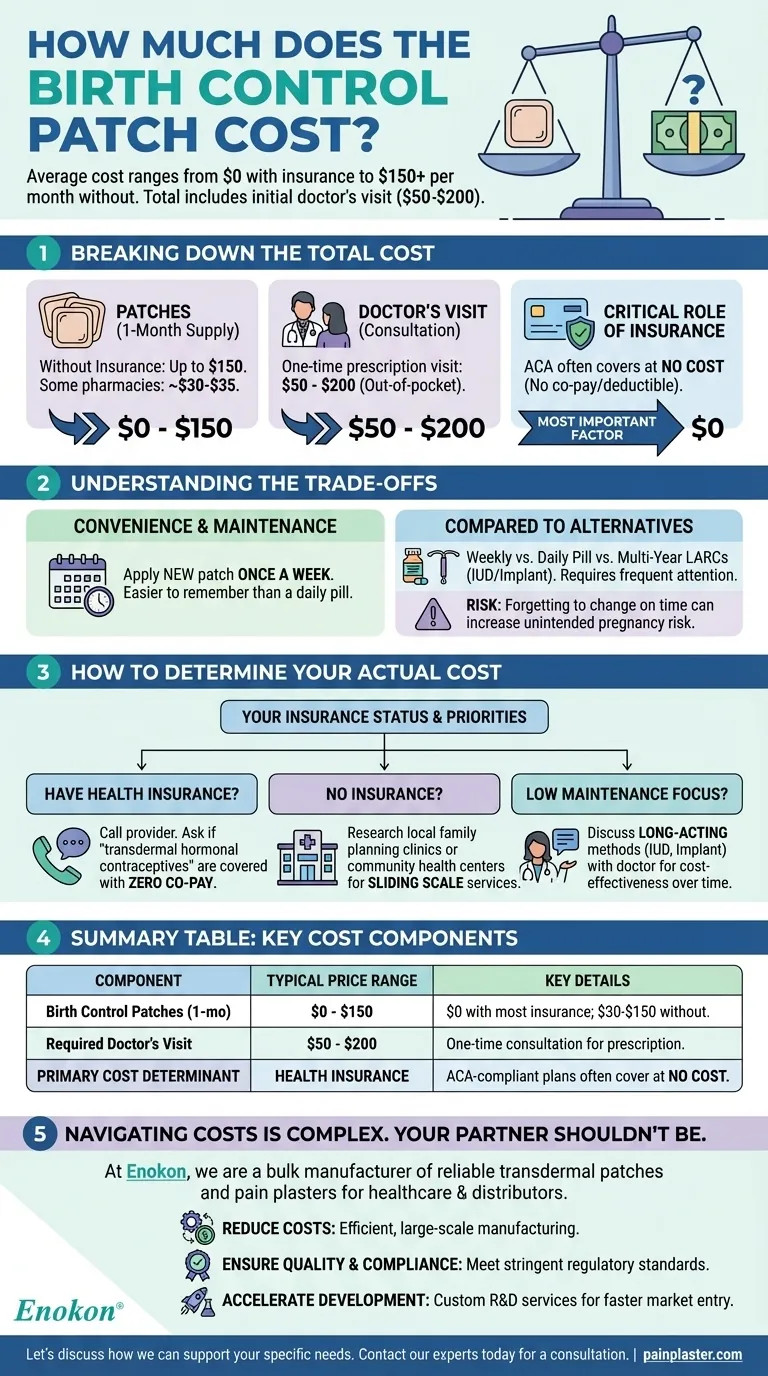
On average, the birth control patch can cost anywhere from $0 with insurance to as much as $150 per month without it. The total expense also includes the initial doctor's visit required for a prescription, which typically ranges from $50 to $200.
The sticker price of the birth control patch is misleading; your final cost is almost entirely determined by your health insurance coverage, not the pharmacy's list price.
Breaking Down the Total Cost
Understanding the final price requires looking at three separate components: the cost of the patches themselves, the required medical consultation, and the impact of your insurance plan.
The Sticker Price of the Patches
Without any insurance, a one-month supply of birth control patches can cost up to $150. Some pharmacies may offer it for a lower cash price, often in the $30 to $35 range, but this varies significantly.
The Cost of the Doctor's Visit
You cannot purchase the birth control patch over the counter; it requires a prescription from a healthcare provider. A one-time office visit for this consultation can cost between $50 and $200 if you are paying out-of-pocket.
The Critical Role of Insurance
For most people, health insurance is the single most important factor. Under the Affordable Care Act (ACA), most insurance plans are required to cover all FDA-approved contraceptive methods, including the patch, at no cost to you. This means no co-pay and no need to meet your deductible.
Understanding the Trade-offs
Choosing a birth control method involves more than just price. It's crucial to weigh the cost against the convenience and suitability for your lifestyle.
Convenience vs. Maintenance
The patch's primary benefit is its convenience. You only need to apply a new patch once a week, which many find easier to remember than taking a daily pill.
How It Compares to Alternatives
The patch is a highly effective weekly option. However, it requires more frequent attention than long-acting reversible contraceptives (LARCs) like the IUD or implant, which can last for several years after a single procedure.
Potential for Ineffectiveness
For the patch to be effective, you must remember to change it on the correct day each week. Forgetting to do so can increase the risk of an unintended pregnancy.
How to Determine Your Actual Cost
Your path forward depends almost entirely on your insurance status and personal priorities.
- If you have health insurance: Call your provider directly and ask if "transdermal hormonal contraceptives" like Xulane or Twirla are covered with zero co-pay.
- If you do not have insurance: Research local family planning clinics or community health centers, as they often provide services and prescriptions on a sliding scale based on your income.
- If your primary focus is low maintenance: Discuss long-acting methods like the IUD or implant with your doctor, as they may be more cost-effective over several years.
Ultimately, understanding your insurance benefits is the first and most critical step in determining the true cost of the patch.
Summary Table:
| Cost Component | Typical Price Range | Key Details |
|---|---|---|
| Birth Control Patches (1-month supply) | $0 - $150 | $0 with most insurance; $30-$150 without insurance. |
| Required Doctor's Visit | $50 - $200 | One-time consultation for a prescription. |
| Primary Cost Determinant | Health Insurance | ACA-compliant plans often cover patches at no cost. |
Navigating the cost of transdermal patches can be complex, but your manufacturing partner shouldn't be.
At Enokon, we are a bulk manufacturer of reliable transdermal patches and pain plasters for healthcare and pharmaceutical distributors and brands. We understand that precise pricing and supply chain reliability are critical to your business.
Partner with us to:
- Reduce Costs: Benefit from our efficient, large-scale manufacturing processes.
- Ensure Quality & Compliance: Leverage our technical expertise to meet stringent regulatory standards.
- Accelerate Development: Our custom R&D services can help you bring new transdermal products to market faster.
Let's discuss how we can support your specific needs. Contact our experts today for a consultation.
Visual Guide
Related Products
- Prostate Pain Kidney Health Care Patch for Men
- Heating Pain Relief Patches for Menstrual Cramps
- Silicone Scar Sheets Patch Transdermal Drug Patch
- Menthol Gel Pain Relief Patch
- Icy Hot Menthol Medicine Pain Relief Patch
People Also Ask
- What are the key components of Chinese herbal pain patches? Discover the Science Behind Natural Pain Relief
- What should be avoided when using Chinese pain patches? Key Safety Tips for Effective Relief
- What additional practices can enhance the effectiveness of Chinese pain patches? Boost Relief with Holistic Strategies
- How can Chinese pain patches help with back pain? Natural Relief & Healing Benefits
- What are Chinese pain patches used for? Natural Relief for Joint & Muscle Pain








