
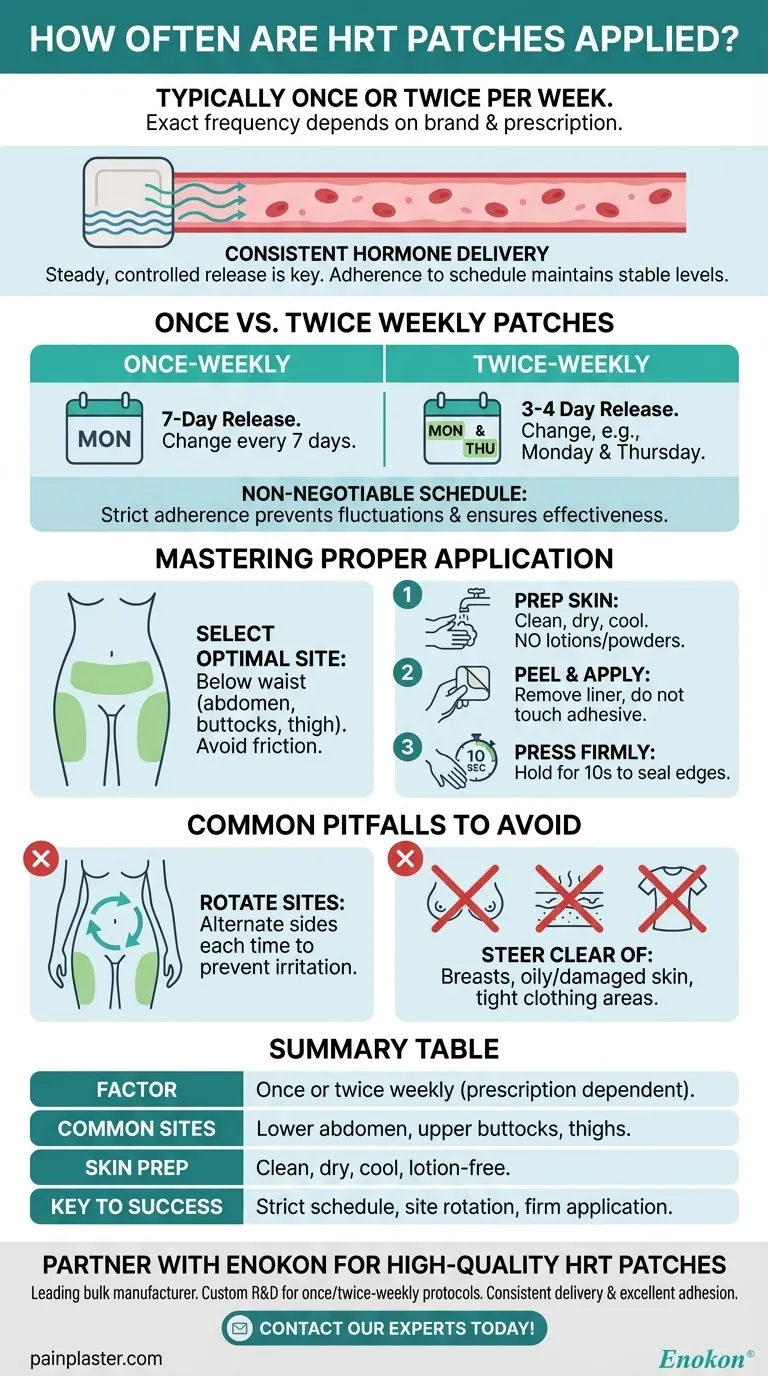
To be clear, Hormone Replacement Therapy (HRT) patches are typically applied either once or twice per week. The exact frequency is determined by the specific brand and dosage prescribed by your healthcare provider, as different patches are designed to release medication over different timeframes.
The key to effective hormone therapy is not just the frequency of application, but the consistency of the hormone delivery. Proper application technique and site selection are as critical as the schedule itself for ensuring the medication is absorbed correctly and works as intended.
The Core Principle: Consistent Hormone Delivery
The entire purpose of a patch-based HRT system is to provide a steady, controlled release of hormones directly into the bloodstream through the skin. Sticking to a precise schedule is essential to maintain this stable hormonal level and avoid the fluctuations that can lead to inconsistent symptom management.
Once vs. Twice Weekly Patches
Your specific prescription will dictate your schedule. Some patches are formulated to deliver a consistent dose over a 7-day period, requiring a once-weekly change. Others are designed for a 3-4 day release, necessitating a twice-weekly schedule (e.g., changing it on Monday and Thursday).
Why the Schedule is Non-Negotiable
Adhering strictly to your change-out days is crucial. Applying a new patch too early or leaving an old one on too long can disrupt the therapeutic levels of hormones in your system, potentially reducing the effectiveness of your treatment or causing unwanted side effects.
Mastering Proper Application for Maximum Efficacy
Where and how you apply the patch significantly impacts its absorption and adhesion. Following a precise method ensures you receive the full, intended dose of your medication.
Selecting the Optimal Application Site
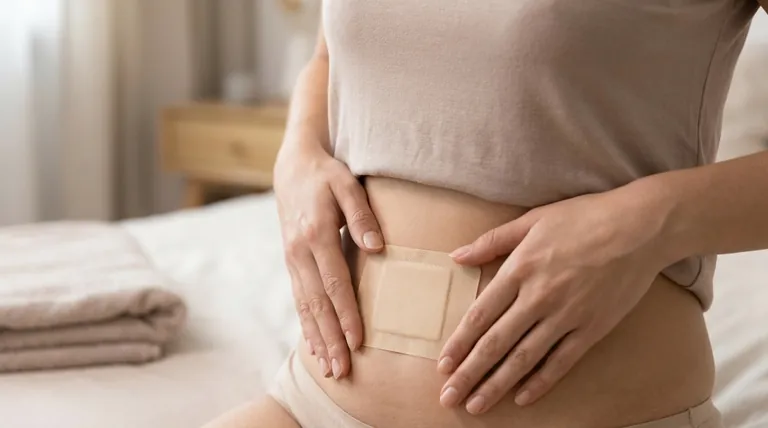
The patch should always be applied to an area of skin below the waist. The most common and effective locations are the lower abdomen or the upper buttocks/thigh. These areas generally have good blood flow and are protected from constant friction.
Preparing the Skin Correctly
For the patch to stick properly and deliver medication effectively, the skin must be clean, dry, and cool. Never apply a patch immediately after a hot shower or bath. Crucially, do not use any creams, lotions, moisturizers, or powders on the area before application, as these will prevent proper adhesion.
The Step-by-Step Application Process
First, open the protective pouch and remove the patch. Peel off the protective liner without touching the adhesive side. Immediately press the patch firmly onto the selected skin site and hold it for at least 10 seconds to ensure it is sealed, paying special attention to the edges.
Common Pitfalls to Avoid
Correct application involves avoiding specific areas and practices that can interfere with the patch's function or cause adverse reactions. This is a critical part of ensuring your therapy is both safe and effective.
The Importance of Site Rotation
You must rotate the application site with each new patch. Applying a patch to the exact same spot repeatedly can lead to skin irritation. A good practice is to alternate between the right and left side of your body with each change.
Areas and Conditions to Steer Clear Of
Never apply an HRT patch to your breasts or near the genital area. You must also avoid skin that is oily, damaged, cut, or irritated. Areas that have folds of skin or that are exposed to direct sunlight should also be avoided, as should any spot where tight clothing could rub against the patch and dislodge it.
Ensuring Your HRT is Effective
Your success with patch-based HRT depends on establishing a consistent and correct routine. The goal is to make the process a simple, repeatable part of your week.
- If your primary focus is consistent dosage: Adhere strictly to your prescribed once or twice-weekly schedule without deviation.
- If your primary focus is maximizing absorption: Always apply the patch below the waist to clean, dry, lotion-free skin, pressing firmly for 10 seconds.
- If your primary focus is preventing skin irritation: Methodically rotate your application site with every single patch change.
By mastering these simple but critical steps, you empower yourself to get the most benefit from your treatment.
Summary Table:
| Key Factor | Details |
|---|---|
| Typical Frequency | Once or twice per week, depending on the brand and prescription. |
| Common Sites | Lower abdomen, upper buttocks, or thighs (below the waist). |
| Skin Prep | Clean, dry, cool skin; free of lotions, oils, or powders. |
| Key to Success | Strict schedule adherence, proper site rotation, and firm application. |
Need reliable, high-quality HRT patches for your patients or brand?
As Enokon, a leading bulk manufacturer of transdermal patches, we specialize in producing consistent, effective hormone replacement therapy patches. Our technical expertise ensures precise drug delivery and excellent adhesion.
We offer custom R&D and development services to create patches tailored to your specific needs—whether for once-weekly or twice-weekly application protocols. Partner with us to provide your customers with reliable, comfortable, and effective HRT solutions.
Contact our experts today to discuss your custom patch requirements!
Visual Guide
Related Products
- Far Infrared Heat Pain Relief Patches Transdermal Patches
- Far Infrared Deep Heat Relief Patches Medicated Pain Relief Patches
- Far Infrared Pain Patch Relief Pain Reliever for Back
- Far Infrared Knee Pain Patch Heat Patches for Pain Relief
- Icy Hot Menthol Medicine Pain Relief Patch
People Also Ask
- Why is the selection of matrix materials critical when developing customized transdermal patches? Optimize Efficacy
- What role does a skin tolerance scoring system play in the safety evaluation of transdermal patches? Key Safety Metrics
- How does high-purity far-infrared ceramic powder contribute to the efficacy of far-infrared physical therapy patches?
- Why is an optical microscope used for the quality assessment of transdermal patches? Ensure Safety & Matrix Integrity
- How do transdermal patches and delivery systems compare to oral administration? Achieve Stable Drug Release & Results



















