
As a general rule, the clonidine transdermal patch is designed to be replaced once every 7 days. This weekly schedule ensures a continuous and stable delivery of medication to control your blood pressure effectively. You should remove the old patch and apply a new one on the same day each week.
The core principle of clonidine patch therapy is consistency. A strict 7-day replacement cycle is crucial for maintaining stable medication levels in your bloodstream, while systematically rotating the application site is essential for preventing skin irritation.
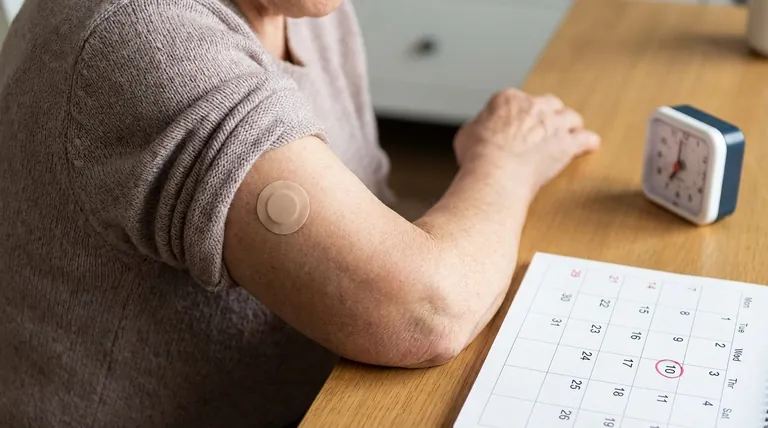
The 7-Day Replacement Cycle Explained
The design of the clonidine patch is based on a specific, controlled release of the medication over a full week. Understanding this mechanism helps clarify why the replacement schedule is so important.
Why a 7-Day Schedule?
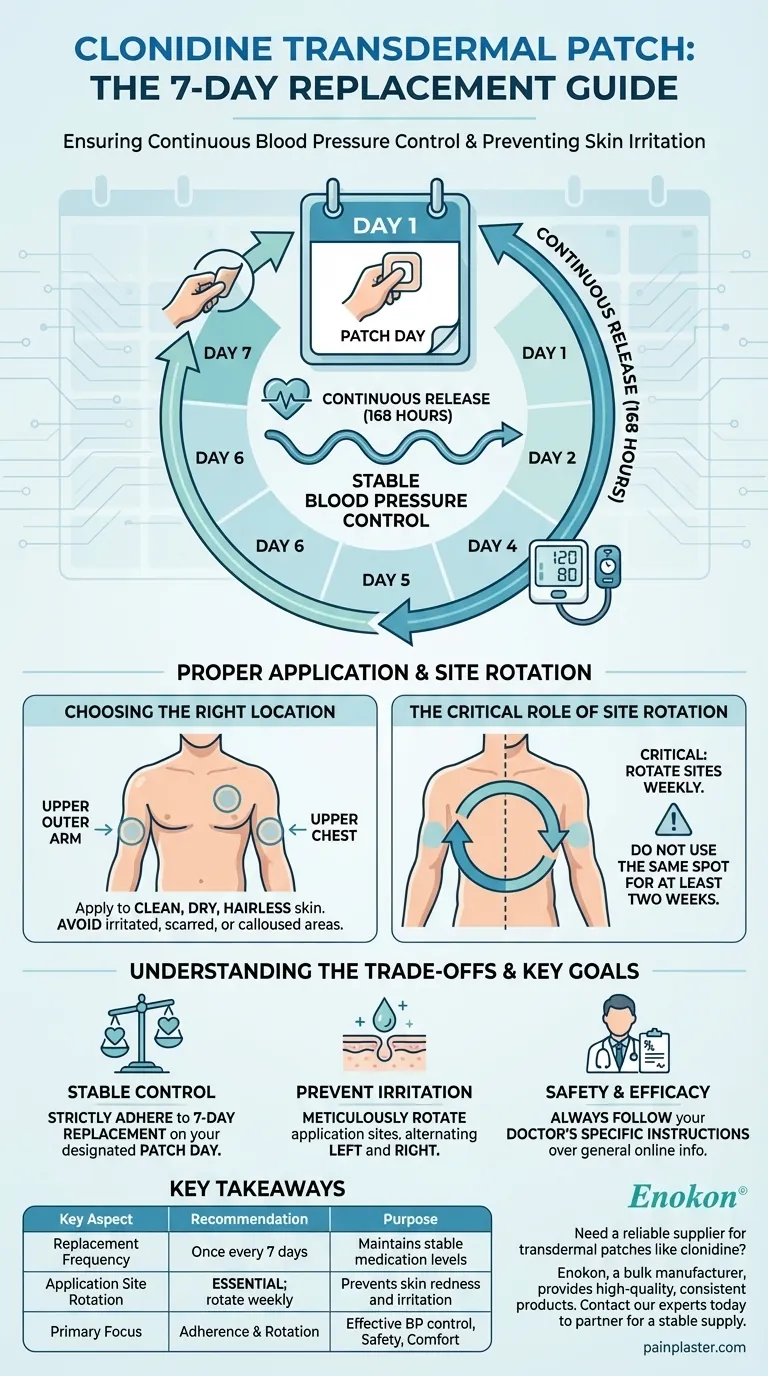
The clonidine patch is engineered to deliver a steady, therapeutic dose over a 168-hour period (7 days). This consistent release helps avoid the peaks and valleys in medication levels that can occur with oral pills, leading to smoother blood pressure control.
The Importance of Consistency
High blood pressure often has no symptoms, so it's vital to use the medication as directed, even when you feel well. Replacing the patch on the same designated day each week establishes a routine that maintains the drug's efficacy and prevents accidental lapses in treatment.
Establishing Your "Patch Day"
To ensure you never forget, choose a specific day and time that is easy to remember, such as every Sunday morning. Make it a fixed part of your weekly routine to remove the old patch and apply the new one.
Proper Application for Maximum Effectiveness
How and where you apply the patch is just as important as when you change it. Proper technique ensures the medication is absorbed correctly and minimizes potential side effects.
Choosing the Right Location
Apply the patch to a clean, dry, and relatively hairless area of skin. The best locations are the upper outer arm or the upper chest. Avoid any skin that is irritated, scarred, cut, or calloused.
The Critical Role of Site Rotation
Never apply a new patch to the exact same spot you just used. You should not use the same skin area two weeks in a row. Rotating application sites between the left and right sides of your body is critical for preventing skin redness and irritation.
What if a Patch Loosens or Falls Off?
The patch is designed to stay on during normal activities, including bathing and swimming. If the edges begin to lift, you can secure it with the adhesive cover that may be included with your prescription. If the patch falls off entirely before 7 days, apply a new one to a different location and maintain your original "patch day."
Understanding the Trade-offs and Potential Confusion
It is possible to encounter conflicting information regarding patch replacement schedules. It is crucial to understand why this happens and to rely on the single most important source of information.
Why You Might See Different Instructions
Different transdermal patches are designed for different medications and have different release rates. A patch for another condition might require replacement every 3 days, while clonidine is specifically formulated for a 7-day cycle. Always assume instructions are for a specific product.
The Golden Rule: Follow Your Prescription
The instructions provided by your doctor and printed on your pharmacy label are the definitive guide. They are specific to the exact brand and dosage you were prescribed. Never alter your schedule based on general information found online.
Making the Right Choice for Your Goal
Your actions directly impact the success of your treatment. Focus on these key principles to manage your high blood pressure effectively.
- If your primary focus is Stable Blood Pressure Control: Strictly adhere to replacing your patch once every 7 days, on the same day each week.
- If your primary focus is Preventing Skin Irritation: Meticulously rotate the patch application site, ensuring you do not use the same spot for at least two weeks.
- If your primary focus is Safety and Efficacy: Always prioritize the specific instructions from your prescribing doctor and pharmacist over any other source.
Following these guidelines empowers you to use the clonidine patch safely and achieve the best possible control over your health.
Summary Table:
| Key Aspect | Recommendation |
|---|---|
| Replacement Frequency | Once every 7 days |
| Purpose | Maintains stable medication levels for effective blood pressure control |
| Application Site Rotation | Essential; do not use the same skin area two weeks in a row |
| Primary Focus | Stable blood pressure control and preventing skin irritation |
Need a reliable supplier for transdermal patches like clonidine?
As Enokon, a bulk manufacturer of reliable transdermal patches and pain plasters, we provide healthcare and pharma distributors and brands with high-quality, consistent products. Our technical expertise supports custom R&D and development to meet your specific needs.
Contact our experts today to discuss how we can partner to ensure a stable supply of effective transdermal therapies.
Visual Guide
Related Products
- Far Infrared Heat Pain Relief Patches Transdermal Patches
- Silicone Scar Sheets Patch Transdermal Drug Patch
- Menthol Gel Pain Relief Patch
- Icy Hot Menthol Medicine Pain Relief Patch
- Mugwort Wormwood Pain Relief Patch for Neck Pain
People Also Ask
- Why is the selection of matrix materials critical when developing customized transdermal patches? Optimize Efficacy
- What are the physical impacts of external heat exposure on the performance and safety of transdermal patches? - Guide
- What role does a skin tolerance scoring system play in the safety evaluation of transdermal patches? Key Safety Metrics
- What are the clinical advantages of local transdermal delivery systems? Unlock Safer, More Effective Pain Relief Solutions
- How does high-purity far-infrared ceramic powder contribute to the efficacy of far-infrared physical therapy patches?












