
There is no single answer, as the correct replacement schedule depends entirely on the type of patch you are using. Medical patches for contraception, hormone therapy, and pain relief follow strict multi-day schedules, while simple cooling patches are used for just a few hours as needed.
The most critical factor for replacing any patch is its intended purpose. Contraceptive patches are typically replaced weekly, some hormone patches twice a week, powerful pain patches every 72 hours, and cooling patches after about 8 hours. Always refer to your specific product's instructions.
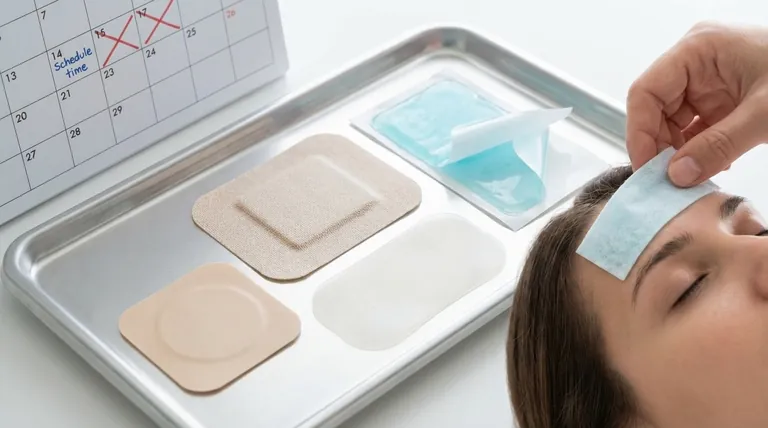
Why the Replacement Schedule Varies So Drastically
Different transdermal patches are designed with unique technologies and active ingredients. The replacement frequency is determined by the medication's dose, its rate of absorption through the skin, and the duration it's intended to be effective.
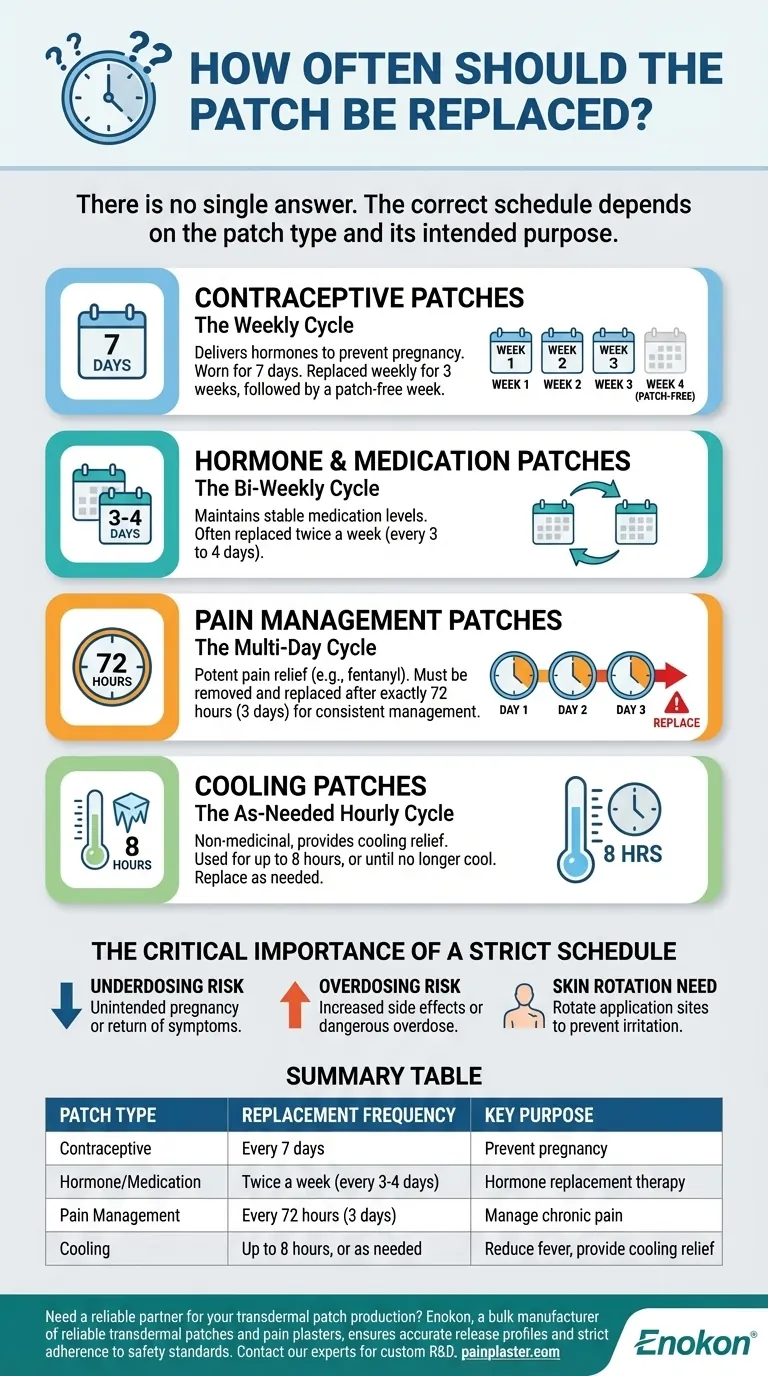
Contraceptive Patches: The Weekly Cycle
A contraceptive patch delivers hormones to prevent pregnancy. Its schedule is designed to align with a menstrual cycle.
Typically, a single patch is worn for 7 days. It is replaced on the same day each week for three consecutive weeks, followed by a patch-free fourth week.
Hormone & Medication Patches: The Bi-Weekly Cycle
Patches for hormone replacement therapy (HRT) or other continuous medications often have a different schedule.
These are frequently replaced twice a week, or every 3 to 4 days, to maintain a stable level of medication in the bloodstream.
Pain Management Patches: The Multi-Day Cycle
Certain potent pain relief patches, such as those containing fentanyl, are designed for slow, continuous release over several days.
These patches must be removed and replaced after exactly 72 hours (3 days) to ensure consistent pain management and prevent accidental overdose.
Cooling Patches: The As-Needed Hourly Cycle
Cooling patches for fever reduction are not medicinal and work on a much shorter timeline. They provide relief through evaporation.
These patches can be used for up to 8 hours, or until they no longer feel cool. They should be replaced as needed based on symptoms.
The Critical Importance of a Strict Schedule
Failing to follow the prescribed schedule for a medical patch can have significant consequences. The instructions are not guidelines; they are clinical requirements for safety and efficacy.
The Risk of Underdosing
Changing a patch too late means the level of medication in your body can drop.
For contraception, this could lead to an unintended pregnancy. For pain or hormone therapy, it can cause the return of symptoms the patch is meant to control.
The Risk of Overdosing
Applying a new patch too soon or forgetting to remove the old one can lead to having too much medication in your system.
This can increase the severity of side effects or lead to a dangerous overdose, especially with potent medications like painkillers.
The Need for Skin Rotation
Consistently applying a patch to the same spot can cause skin irritation, redness, or rashes.
Most instructions advise choosing a different, clean, and dry area of skin each time you apply a new patch. You should avoid using the same spot for at least a week.
Making the Right Choice for Your Patch
To ensure safety and effectiveness, you must identify your patch type and follow its specific protocol without deviation.
- If you are using a contraceptive patch: It is almost always worn for 7 days and replaced on the same day each week for 3 weeks, followed by a patch-free week.
- If you are using a hormone replacement patch: The most common schedule is twice a week (every 3-4 days), but you must follow your doctor's exact prescription.
- If you are using a long-acting pain patch: Adhere strictly to the 72-hour replacement schedule to maintain efficacy and prevent overdose.
- If you are using a fever-reducing cooling patch: Replace it when it no longer feels cool, typically after about 8 hours.
Ultimately, the instructions provided by the manufacturer and your prescribing doctor are the only definitive source of truth.
Summary Table:
| Patch Type | Typical Replacement Frequency | Key Purpose |
|---|---|---|
| Contraceptive | Every 7 days | Prevent pregnancy |
| Hormone/Medication | Twice a week (every 3-4 days) | Hormone replacement therapy |
| Pain Management | Every 72 hours (3 days) | Manage chronic pain |
| Cooling | Up to 8 hours, or as needed | Reduce fever, provide cooling relief |
Need a reliable partner for your transdermal patch production?
As Enokon, a bulk manufacturer of reliable transdermal patches and pain plasters, we understand the critical importance of precise dosing and consistent quality. Our technical expertise ensures your healthcare or pharma brand receives patches with accurate release profiles and strict adherence to safety standards.
Let's discuss your custom R&D and development needs. Contact our experts today to get started.
Visual Guide
Related Products
- Heating Pain Relief Patches for Menstrual Cramps
- Prostate Pain Kidney Health Care Patch for Men
- Silicone Scar Sheets Patch Transdermal Drug Patch
- Lidocaine Hydrogel Pain Relief Patch for Pain Relief
- Menthol Gel Pain Relief Patch
People Also Ask
- What are the benefits of Period Pain Heat Patches? Drug-Free, On-the-Go Relief
- What are the key benefits of heating patches for elderly individuals? Relieve Pain & Improve Mobility
- What percentage of people with back pain use heat patches for relief? Discover the Popular Choice for Pain Management
- What are the common uses of heat patches? Soothe Muscle Pain, Joint Stiffness & More
- Can heat patches be used for fresh injuries? Avoid This Common Mistake for Faster Recovery













