
For standard formulations, a transdermal fentanyl patch must be removed and replaced with a new one every 72 hours. This strict three-day cycle is critical for maintaining a consistent level of medication in your system to manage pain effectively and safely. Applying a new patch to a different, clean skin location each time is a non-negotiable part of the process.
The core principle of fentanyl patch use is consistency. Adhering to a precise 72-hour replacement schedule and rotating application sites are the two most critical factors for ensuring both patient safety and effective pain management.
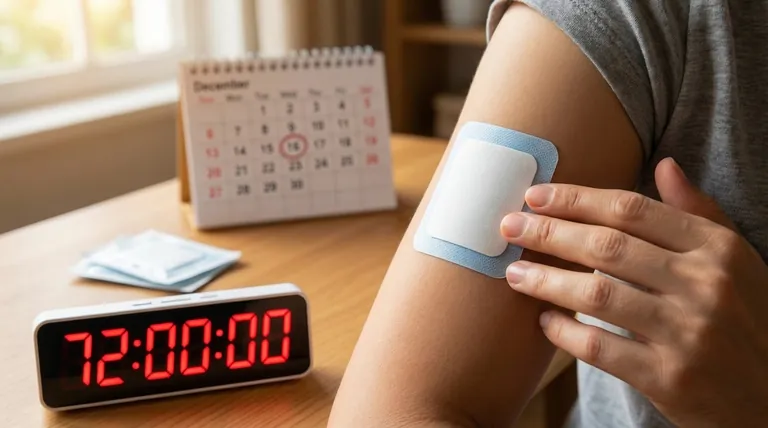
The 72-Hour Cycle Explained
Understanding why the 72-hour schedule is the standard reveals the science behind the patch's design. The patch is engineered to release fentanyl at a controlled, steady rate over this specific period.
Why 72 Hours is the Standard
The medication is embedded within the patch's matrix or reservoir system. This system is designed to deliver a specific dose (e.g., 25, 50, 100 mcg/hour) consistently over three days to maintain a therapeutic level of fentanyl in your bloodstream.
Deviating from this schedule disrupts this balance.
The Risk of Incorrect Timing
Changing the patch too early can lead to an excess of medication, increasing the risk of dangerous side effects like respiratory depression.
Waiting too long to change it causes the medication level to drop, leading to the return of pain (breakthrough pain) and potential symptoms of withdrawal.
Proper Application is Non-Negotiable
How and where you apply the patch directly impacts how the medication is absorbed. Following the correct procedure is just as important as following the schedule.
Choosing the Right Location
Patches should be applied to a flat, non-irritated area of skin, typically on the upper chest, back, or upper arms. These areas are less likely to have the patch rubbed off by clothing or movement.
Preparing the Skin
The chosen skin area must be clean and completely dry. Use only clear water to clean the site; do not use soaps, oils, lotions, or alcohol, as they can irritate the skin or affect how the patch sticks and absorbs.
The Importance of Site Rotation
Never apply a new patch to the same spot you just used. Consistently using the same location can cause skin irritation and may lead to unpredictable medication absorption.
A good practice is to avoid using the same skin area for at least one to two weeks, giving it ample time to recover.
Common Pitfalls and Critical Safety Rules
While the 72-hour rule is standard, you must be aware of potential variations and absolute safety protocols. Your specific prescription is the ultimate authority.
Always Follow Your Specific Prescription
While the vast majority of fentanyl patches are 72-hour formulations, you must confirm the duration with your pharmacist or doctor. The packaging and patient information leaflet provided with your medication will state the exact replacement schedule.
The Danger of Damaged Patches
Never cut or use a damaged patch. A compromised patch can release the medication too quickly, leading to a potentially fatal overdose. If a patch appears damaged, fold it in half with the sticky sides together and dispose of it properly.
Heat Exposure Increases Risk
External heat sources can dramatically increase the rate at which fentanyl is absorbed, causing a dangerous spike in medication levels. Avoid direct heat from heating pads, electric blankets, saunas, hot tubs, or prolonged sun exposure on the patch area.
Making the Right Choice for Your Goal
Adhering to a precise protocol is the only way to use a fentanyl patch safely and effectively. Your approach should be guided by your primary goal: consistent pain relief achieved through maximum safety.
- If your primary focus is consistent pain relief: Adhere strictly to the 72-hour replacement schedule and always rotate the application site to ensure predictable medication absorption.
- If your primary focus is safety: Always follow the specific instructions from your doctor and pharmacist, never use a damaged patch, and avoid exposing the patch to any direct heat source.
Properly managing your medication is the key to controlling your pain and ensuring your well-being.
Summary Table:
| Key Aspect | Guideline |
|---|---|
| Replacement Schedule | Every 72 hours (3 days) |
| Application Site | Upper chest, back, or upper arms |
| Site Rotation | Apply to a different, clean area each time |
| Critical Safety Rule | Never cut or use a damaged patch |
| Heat Exposure | Avoid direct heat sources (e.g., heating pads, hot tubs) |
Partner with Enokon for Your Transdermal Patch Needs
As a bulk manufacturer of reliable transdermal patches and pain plasters, Enokon provides healthcare and pharmaceutical distributors and brands with high-quality, consistent products. Benefit from our technical expertise for custom R&D and development to create solutions that meet strict safety and efficacy standards, just like those required for critical medications.
Contact our experts today to discuss your project and how we can support your brand's success.
Visual Guide

Related Products
- Far Infrared Heat Pain Relief Patches Transdermal Patches
- Silicone Scar Sheets Patch Transdermal Drug Patch
- Menthol Gel Pain Relief Patch
- Icy Hot Menthol Medicine Pain Relief Patch
- Mugwort Wormwood Pain Relief Patch for Neck Pain
People Also Ask
- Why is the selection of matrix materials critical when developing customized transdermal patches? Optimize Efficacy
- What are the clinical advantages of local transdermal delivery systems? Unlock Safer, More Effective Pain Relief Solutions
- What role does a skin tolerance scoring system play in the safety evaluation of transdermal patches? Key Safety Metrics
- What are the physical impacts of external heat exposure on the performance and safety of transdermal patches? - Guide
- How does high-purity far-infrared ceramic powder contribute to the efficacy of far-infrared physical therapy patches?















