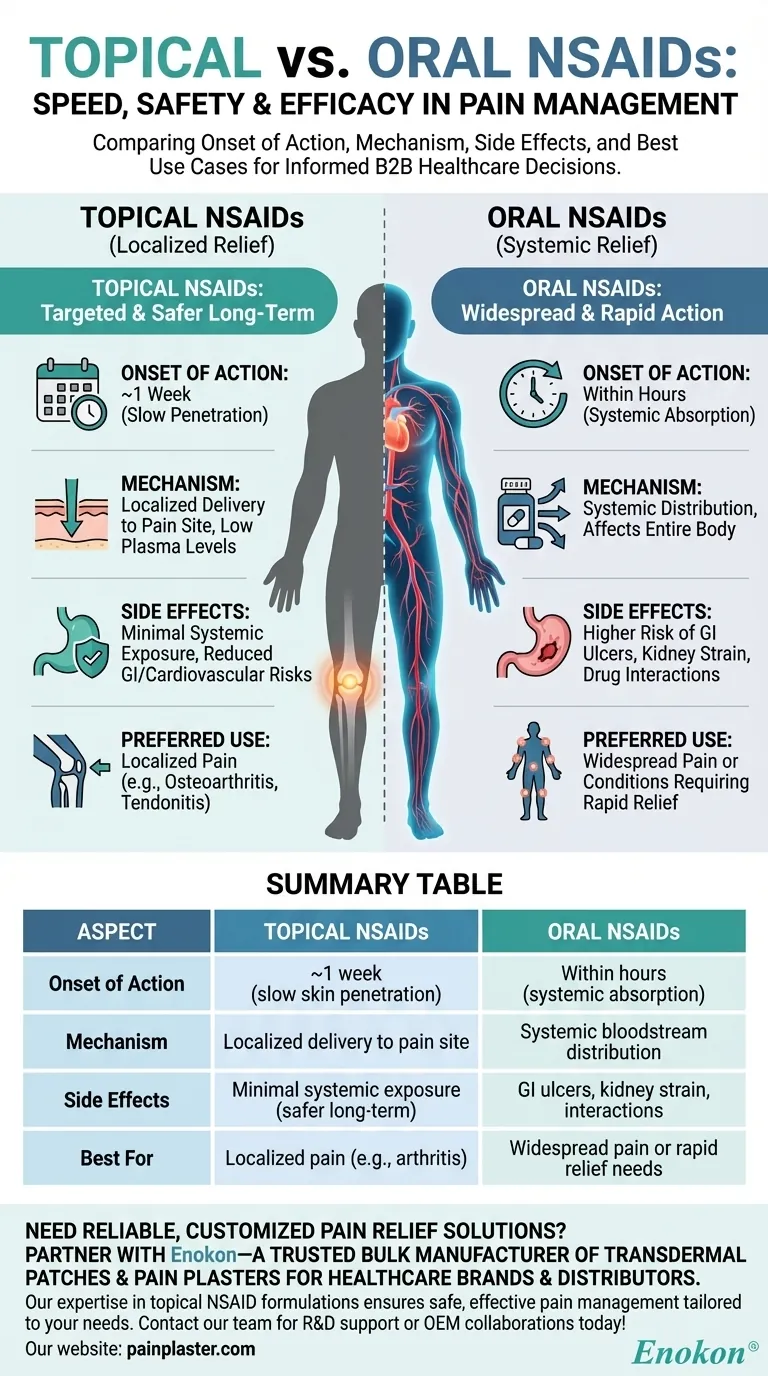
Topical NSAIDs generally take longer to provide pain relief compared to oral NSAIDs, often requiring about a week to show noticeable effects, whereas oral NSAIDs typically act faster due to systemic absorption. However, topical NSAIDs are preferred for localized joint pain as they minimize systemic side effects like gastrointestinal issues and drug interactions, offering targeted relief with lower plasma concentrations. Studies suggest they can be as effective as oral NSAIDs for pain relief while being safer for long-term use.

Key Points Explained:
-
Onset of Action
- Topical NSAIDs: Usually take around a week to provide relief, as they must penetrate the skin and underlying tissues to reach the affected area.
- Oral NSAIDs: Work faster (often within hours) because they are absorbed systemically and distributed throughout the body via the bloodstream.
-
Mechanism of Delivery
- Topical NSAIDs: Deliver the drug directly to the site of pain through skin penetration, affecting subcutaneous fat, muscle, and joint tissues without high systemic concentrations.
- Oral NSAIDs: Enter the bloodstream, providing widespread anti-inflammatory and analgesic effects but also increasing exposure to the gastrointestinal tract and other organs.
-
Side Effect Profile
- Topical NSAIDs: Significantly reduce systemic side effects such as peptic ulcers, gastrointestinal bleeding, and cardiovascular risks, making them safer for long-term use.
- Oral NSAIDs: Carry a higher risk of stomach irritation, kidney strain, and drug-drug interactions due to systemic absorption.
-
Clinical Effectiveness
- Studies indicate that topical NSAIDs can be as effective as oral NSAIDs for localized pain (e.g., osteoarthritis, tendonitis), though their slower onset may require patience from patients.
-
Preferred Use Cases
- Topical NSAIDs: Best for localized pain (e.g., knee or shoulder arthritis) where systemic effects are undesirable.
- Oral NSAIDs: More suitable for widespread pain or conditions requiring rapid relief, despite higher side effect risks.
Have you considered how the choice between topical and oral NSAIDs might depend on the patient’s overall health and pain location? These options highlight the balance between speed and safety in pain management—technologies that quietly shape modern healthcare.
Summary Table:
| Aspect | Topical NSAIDs | Oral NSAIDs |
|---|---|---|
| Onset of Action | ~1 week (slow skin penetration) | Within hours (systemic absorption) |
| Mechanism | Localized delivery to pain site | Systemic bloodstream distribution |
| Side Effects | Minimal systemic exposure (safer long-term) | GI ulcers, kidney strain, interactions |
| Best For | Localized pain (e.g., arthritis) | Widespread pain or rapid relief needs |
Need reliable, customized pain relief solutions? Partner with Enokon—a trusted bulk manufacturer of transdermal patches and pain plasters for healthcare brands and distributors. Our expertise in topical NSAID formulations ensures safe, effective pain management tailored to your needs. Contact our team for R&D support or OEM collaborations today!
Visual Guide
Related Products
- Capsaicin Chili Medicated Pain Relief Patches
- Natural Herbal Tube Cream for Pain Relief Analgesic Cream
- Icy Hot Menthol Medicine Pain Relief Patch
- Menthol Gel Pain Relief Patch
- Herbal Pain Relief Cream Pain Relieving Creams
People Also Ask
- What conditions should be reported to a care team before using capsaicin patches? Ensure Safe Pain Relief
- What conditions can capsaicin creams and patches help relieve? Find Targeted Pain Relief for Nerves & Joints
- What are the uses of nonprescription capsaicin patches? Natural Pain Relief for Muscles & Joints
- What should be avoided while using capsaicin patches? Essential Safety Tips for Effective Pain Relief
- How are capsaicin patches administered? A Guide to Clinical vs. At-Home Use