
The short answer is: the birth control patch begins working immediately if you apply it within the first 5 days of your period starting. If you start it at any other time in your cycle, you must use a backup method of contraception, like a condom, for the first 7 days to be protected from pregnancy.
Your protection from the patch hinges entirely on when you start it and how you use it. While its hormones begin working right away, true effectiveness depends on timing it with your cycle and using it perfectly consistently.
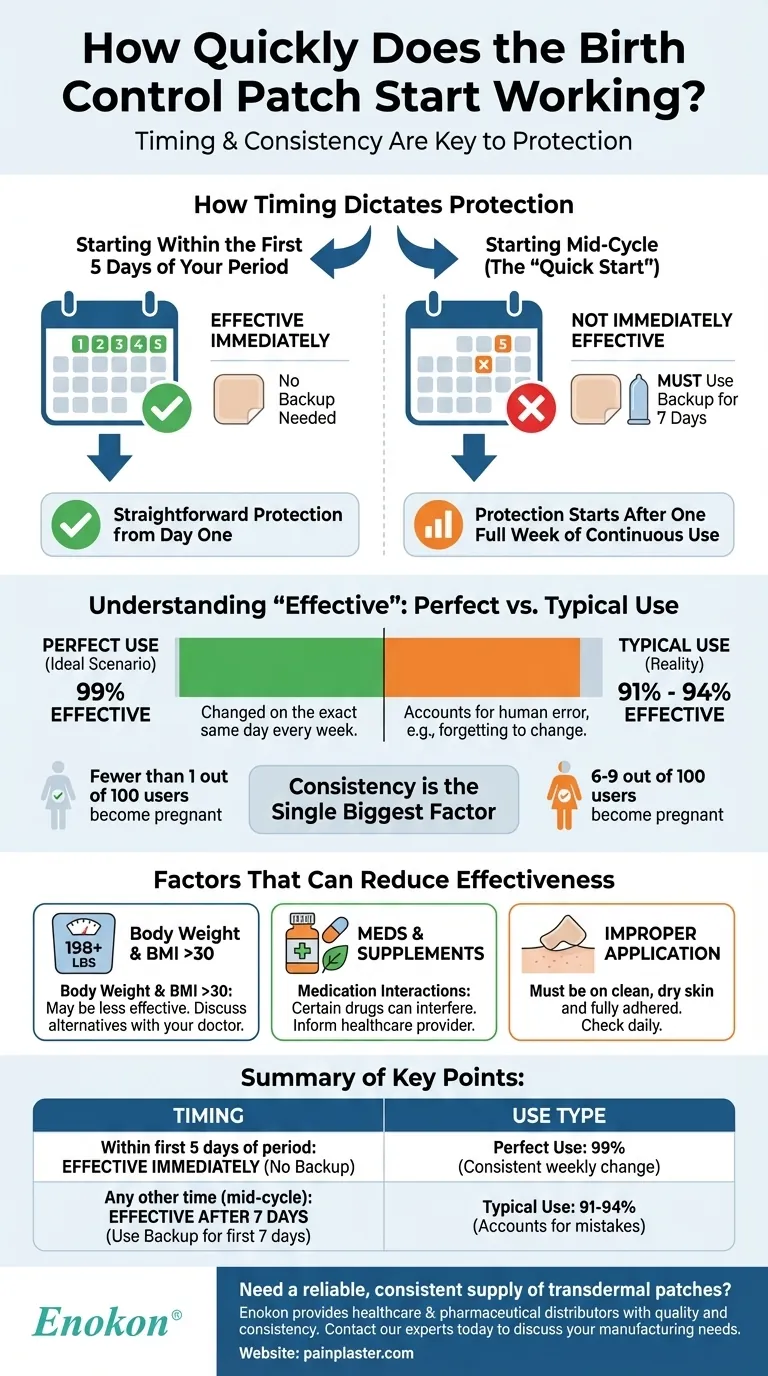
How Timing Dictates Protection
The effectiveness of your first patch is directly linked to your menstrual cycle. This timing determines whether you need to use a secondary form of birth control for the first week.
Starting Within the First 5 Days of Your Period
If you apply your first patch within 5 days of your period beginning, it is considered effective immediately.
You do not need to use a backup form of birth control. This is the most straightforward method for ensuring protection from day one.
Starting Mid-Cycle (The "Quick Start")
If you apply your first patch on any day after the first 5 days of your period, it is not immediately effective.
You must use a backup method of contraception, such as a condom, for the first 7 days. After one full week of continuous use, the patch will provide effective pregnancy prevention on its own.
Understanding "Effective": Perfect vs. Typical Use
When you see effectiveness rates for birth control, it's crucial to understand the difference between ideal scenarios and real-world application. The gap between these two numbers is caused by human error.
The Ideal Scenario: Perfect Use
With perfect use, meaning you change the patch on the exact same day every single week without fail, the patch is 99% effective.
This means that fewer than 1 out of 100 users will become pregnant in a year when following all instructions precisely.
The Reality: Typical Use
With typical use, which accounts for mistakes like forgetting to change the patch on time or the patch falling off, effectiveness drops to between 91% and 94%.
This more realistic rate means that between 6 and 9 out of 100 users may become pregnant in a year. Consistency is the single biggest factor in the patch's success.
Factors That Can Reduce Effectiveness
Beyond simple timing and consistency, other factors can interfere with the patch's ability to protect you from pregnancy. Being aware of these is critical for making an informed decision.
Body Weight and BMI
The patch may be less effective for individuals who weigh more than 198 pounds (90 kg) or have a BMI over 30.
If this applies to you, it is essential to discuss alternative birth control options with your doctor to ensure you have reliable protection.
Medication Interactions
Certain medications and supplements can interfere with the hormones in the patch, making it less effective.
Always inform your healthcare provider of all medications you are taking, including over-the-counter drugs and herbal supplements, to check for potential interactions.
Improper Application
The patch must be applied to clean, dry skin and be fully adhered to work correctly.
If the patch becomes loose, detached, or you forget to change it on your scheduled day, its effectiveness is compromised. Follow the package instructions carefully for replacing a dislodged or forgotten patch.
How to Apply This to Your Goal
Your path to effective pregnancy prevention depends on your starting point and your commitment to consistency.
- If your primary focus is immediate protection: Start the patch during the first 5 days of your menstrual period.
- If your primary focus is starting right away (mid-cycle): You must use condoms or another backup method for the first full week.
- If your primary focus is achieving maximum effectiveness: Set a recurring weekly alarm to change your patch on time and check it daily to ensure it is secure.
Ultimately, the birth control patch is a highly effective tool when used correctly and consistently.
Summary Table:
| Timing of First Patch Application | When It Becomes Effective | Backup Method Needed? |
|---|---|---|
| Within first 5 days of period | Immediately | No |
| Any other time (mid-cycle) | After 7 days | Yes, for first 7 days |
| Use Type | Effectiveness Rate | Key Factor |
|---|---|---|
| Perfect Use | 99% | Changing patch on the same day every week |
| Typical Use | 91% - 94% | Accounts for human error (e.g., forgetting to change) |
Need a reliable, consistent supply of transdermal patches?
As Enokon, a bulk manufacturer of reliable transdermal patches and pain plasters, we provide healthcare and pharmaceutical distributors and brands with the quality and consistency required for critical products like birth control patches.
Benefit from our technical expertise for custom R&D and development to ensure your products meet the highest standards of effectiveness and user safety.
Contact our experts today to discuss your manufacturing needs.
Visual Guide
Related Products
- Heating Pain Relief Patches for Menstrual Cramps
- Prostate Pain Kidney Health Care Patch for Men
- Silicone Scar Sheets Patch Transdermal Drug Patch
- Cooling Fever Patches Color Change Cold Fever Patch
- Mugwort Wormwood Pain Relief Patch for Neck Pain
People Also Ask
- What are the benefits of Period Pain Heat Patches? Drug-Free, On-the-Go Relief
- What are the key benefits of heating patches for elderly individuals? Relieve Pain & Improve Mobility
- What are the different types of heat patches? Find the Right Pain Relief for Your Needs
- What are the key differences between conventional heat patches and deep heat devices? Choosing the Right Pain Relief Solution
- What percentage of people with back pain use heat patches for relief? Discover the Popular Choice for Pain Management




