
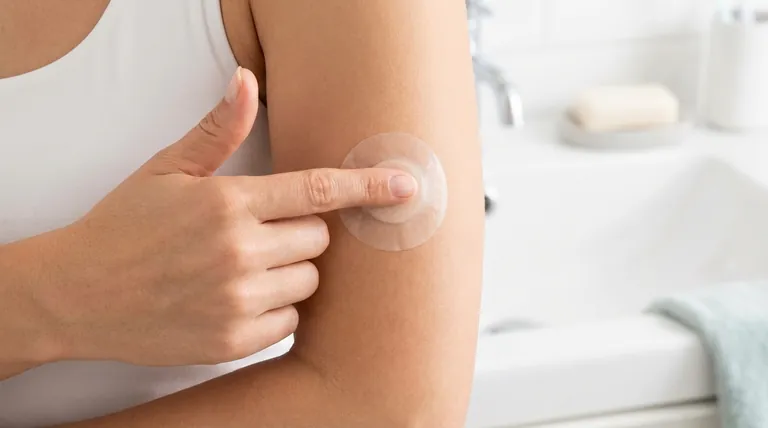
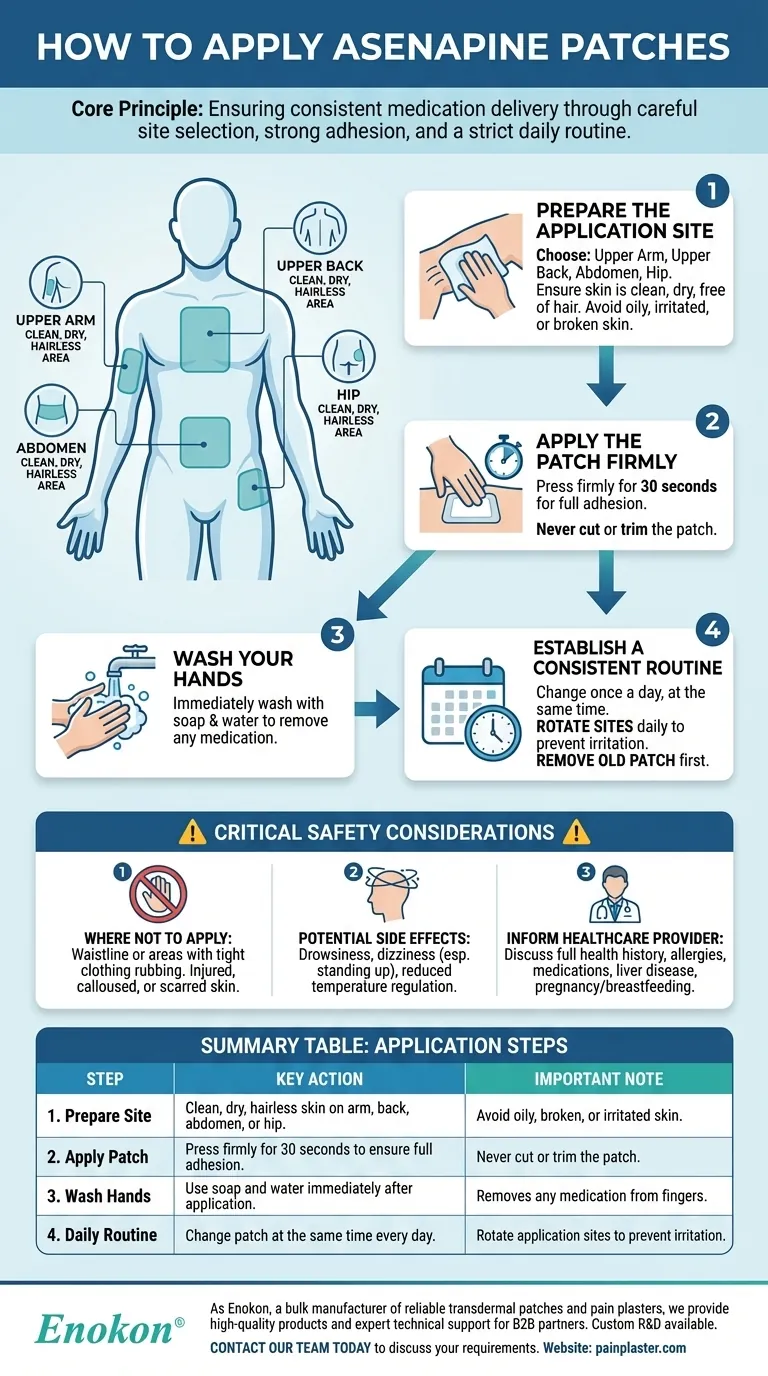
To apply an asenapine patch, place it on a clean, dry, and hairless area of your upper arm, upper back, abdomen, or hip. Press the patch down firmly for at least 30 seconds to ensure it adheres properly, and wash your hands immediately after application. The patch should be changed once a day, at the same time each day.
The core principle behind proper patch application is ensuring consistent medication delivery into your system. This is achieved through careful site selection, strong adhesion, and a strict daily replacement routine to maintain stable therapeutic levels.
The Step-by-Step Application Process
Proper application is not just about making the patch stick; it's about ensuring the medication is absorbed correctly and safely.
Prepare the Application Site
First, choose an appropriate area: the upper arm, upper back, abdomen, or hip. The skin must be clean, dry, and free of hair.
Avoid any skin that is oily, irritated, broken, or has been recently shaved. If you need to clear hair, trim it as close to the skin as possible rather than shaving.
Apply the Patch Firmly
Once the site is ready, apply the patch. Press down on it firmly with the palm of your hand for about 30 seconds.
This pressure ensures the adhesive makes full contact with the skin, which is critical for the medication to be released correctly. Never cut or trim the patch, as this will damage it and alter the dosage.
Wash Your Hands
Immediately after applying the patch, wash your hands thoroughly with soap and water to remove any medication that may have gotten on your fingers.
Establishing a Consistent Routine
Consistency is key to the effectiveness of any transdermal medication. A predictable routine minimizes the risk of error and helps maintain stable levels of the drug in your body.
Timing is Crucial
You must change the patch at the same time each day. This regularity is essential for maintaining the intended therapeutic effect of the medication.
Rotate Application Sites
Each time you apply a new patch, choose a different location from the previous day. Rotating sites helps prevent skin irritation, redness, or rashes that can develop from prolonged contact with the adhesive.
Always Remove the Old Patch First
Before applying a new patch, make sure you have located and removed the old one. Leaving an old patch on while applying a new one can lead to an overdose.
Critical Safety Considerations
Understanding what to avoid is just as important as knowing the correct application steps. These precautions are in place to prevent common problems and ensure your safety.
Where Not to Apply the Patch
Do not apply the patch to your waistline or any area where tight clothing might rub against it and cause it to peel off.
Also, avoid areas of skin that are injured, calloused, scarred, or irritated.
Potential Side Effects to Monitor
Be aware that this medication can cause drowsiness or dizziness, especially when standing up quickly. It can also reduce your body's ability to regulate its temperature, making you more susceptible to overheating.
Inform Your Healthcare Provider
Before using this medication, it is vital to discuss your full health history with your doctor. This includes any allergies, current medications (prescription and over-the-counter), liver disease, or a family history of diabetes. You must also inform them if you are pregnant, planning to become pregnant, or breastfeeding.
Ensuring Effective Treatment
Following the correct procedure ensures you receive the full therapeutic benefit of your medication while minimizing risks.
- If your primary focus is consistent dosage: Adhere strictly to the once-daily schedule, changing the patch at the exact same time each day.
- If your primary focus is skin health: Diligently rotate the application site with each new patch to prevent irritation.
- If your primary focus is overall safety: Always remove the old patch before applying a new one and be mindful of where you place it to avoid accidental removal.
Properly managing your medication is a critical part of your overall treatment plan.
Summary Table:
| Step | Key Action | Important Note |
|---|---|---|
| 1. Prepare Site | Clean, dry, hairless skin on arm, back, abdomen, or hip. | Avoid oily, broken, or irritated skin. |
| 2. Apply Patch | Press firmly for 30 seconds to ensure full adhesion. | Never cut or trim the patch. |
| 3. Wash Hands | Use soap and water immediately after application. | Removes any medication from fingers. |
| 4. Daily Routine | Change patch at the same time every day. | Rotate application sites to prevent irritation. |
Need a reliable supplier for transdermal patches like asenapine?
As Enokon, a bulk manufacturer of reliable transdermal patches and pain plasters, we provide healthcare and pharma distributors and brands with high-quality products and expert technical support. Benefit from our custom R&D and development expertise to create the perfect patch solution for your needs.
Contact our team today to discuss your requirements and learn how we can partner for success.
Visual Guide
Related Products
- Menthol Gel Pain Relief Patch
- Asthma Cough and Pain Relief Patch for Adults and Kids
- Lidocaine Hydrogel Pain Relief Patch for Pain Relief
- Icy Hot Menthol Medicine Pain Relief Patch
- Capsaicin Chili Medicated Pain Relief Patches
People Also Ask
- How effective are pain relief patches for muscle pain? Target Localized Pain with Transdermal Delivery
- How do pain relief patches compare to other pain relief methods? Discover Targeted, Long-Lasting Relief
- Who should consult a healthcare professional before using pain relief patches? Ensure Your Safety with Medical Advice
- What are the different types of pain relief patches available? Find the Right Solution for Your Pain
- Can pregnant women use pain relief patches? Your Essential Guide to Safe Pain Management



















