
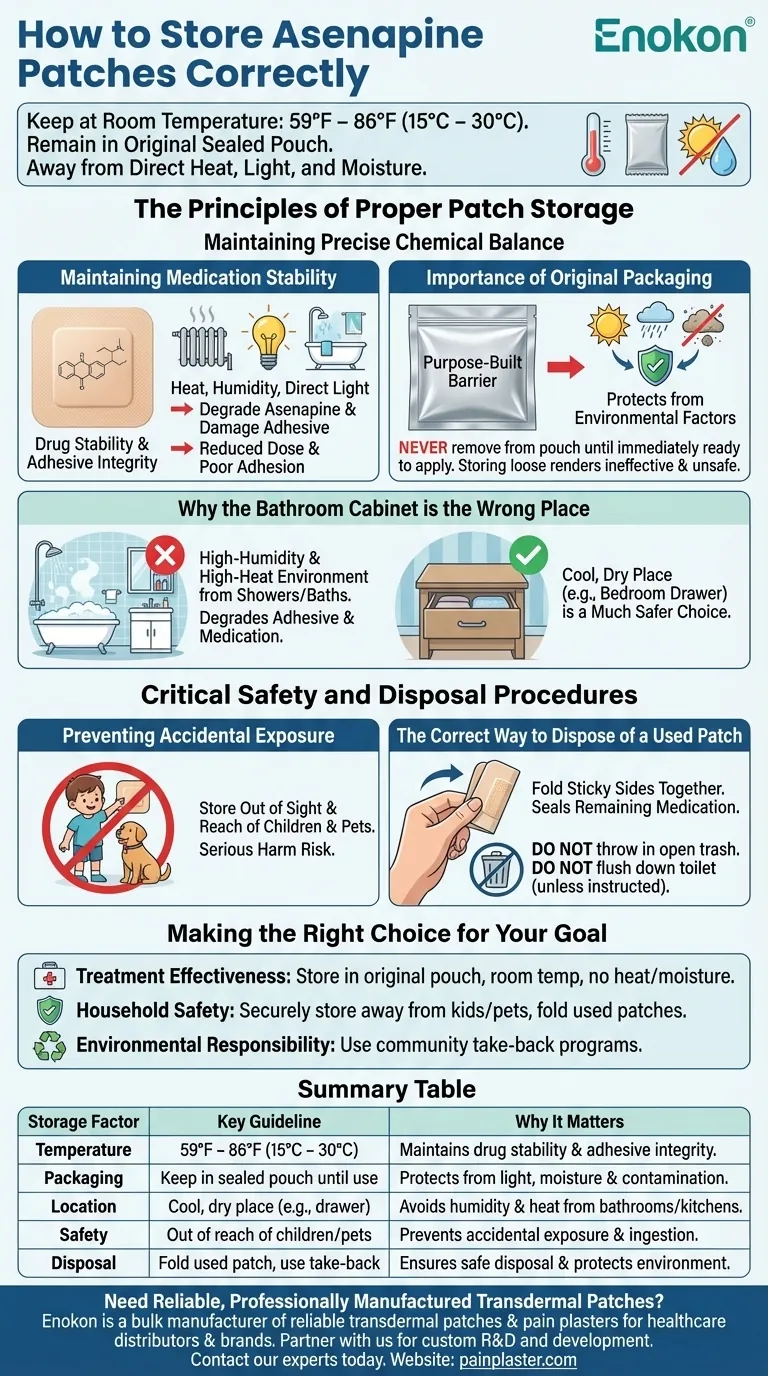
To store asenapine patches correctly, you must keep them at room temperature, between 59°F and 86°F (15°C and 30°C). They should remain in their original sealed pouch until the moment of application and be kept away from direct heat, light, and moisture.
The core principle of storing any medicated patch is to protect its integrity and prevent accidental exposure. Proper storage ensures the medication remains stable and delivers a consistent dose, while safe handling protects children and others from harm.
The Principles of Proper Patch Storage
Storing a transdermal patch isn't just about finding a convenient spot; it's about maintaining the precise chemical balance required for the medication to work as intended.
Maintaining Medication Stability
The effectiveness of an asenapine patch depends on two things: the stability of the drug itself and the integrity of the patch's adhesive layer.
Exposure to heat, humidity, or direct light can degrade the asenapine, potentially reducing the dose you receive. It can also damage the adhesive, preventing the patch from sticking properly to your skin and delivering the medication effectively.
The Importance of Original Packaging
The foil or plastic pouch a patch comes in is a purpose-built barrier. It is designed to protect the patch from the very environmental factors—light and moisture—that can compromise its function.
Never remove a patch from its pouch until you are immediately ready to apply it. Storing patches loose can render them ineffective and unsafe.
Why the Bathroom Cabinet is the Wrong Place
Many people store medications in the bathroom, but this is one of the worst places for a transdermal patch.
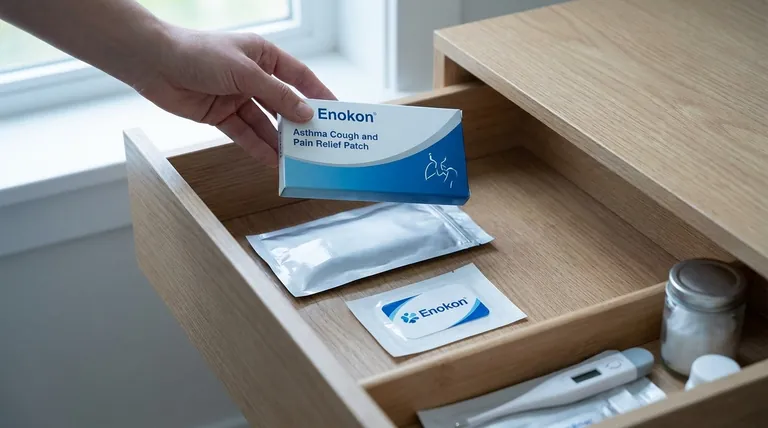
The steam and fluctuating temperatures from showers and baths create a high-humidity, high-heat environment. This is precisely the kind of setting that can degrade the patch's adhesive and the medication it contains. A cool, dry place like a bedroom drawer is a much safer choice.
Critical Safety and Disposal Procedures
An asenapine patch contains a powerful medication. Ensuring it is handled and disposed of correctly is a critical part of its safe use.
Preventing Accidental Exposure
Always store asenapine patches out of the sight and reach of children and pets. A curious child or pet could be seriously harmed by handling, ingesting, or applying a new or even a used patch.
Even after being worn, a patch can still contain a significant amount of residual medication.
The Correct Way to Dispose of a Used Patch
Once you remove a patch, do not simply throw it in an open trash can.
The safest method is to fold the patch in half with the sticky sides together. This seals in most of the remaining medication, making accidental contact less likely.
Handling Unused or Expired Patches
Never use a patch after its expiration date, as its effectiveness cannot be guaranteed.
Outdated or unused patches should be disposed of carefully. Ask your pharmacist about local medication take-back programs, which are the safest disposal option. Unless specifically instructed by a pharmacist, do not flush patches down the toilet, as this can introduce medication into the water supply.
Making the Right Choice for Your Goal
Adhering to proper storage and disposal is not just a suggestion; it is essential for ensuring your treatment is both effective and safe for everyone in your home.
- If your primary focus is treatment effectiveness: Always store patches in their original pouch at room temperature, away from heat and moisture, to ensure you receive the correct dose.
- If your primary focus is household safety: Keep all new and used patches securely stored away from children and pets, and always fold used patches in half before disposal.
- If your primary focus is environmental responsibility: Use a community medication take-back program for disposal and avoid flushing patches down the toilet.
Ultimately, treating your medication with care is a key part of managing your health effectively.
Summary Table:
| Storage Factor | Key Guideline | Why It Matters |
|---|---|---|
| Temperature | 59°F to 86°F (15°C to 30°C) | Maintains drug stability and adhesive integrity. |
| Packaging | Keep in sealed pouch until use | Protects from light, moisture, and contamination. |
| Location | Cool, dry place (e.g., drawer) | Avoids humidity and heat from bathrooms/kitchens. |
| Safety | Out of reach of children/pets | Prevents accidental exposure and ingestion. |
| Disposal | Fold used patch, use take-back programs | Ensures safe disposal and protects the environment. |
Need Reliable, Professionally Manufactured Transdermal Patches?
Proper storage is critical, but it starts with a high-quality, stable product. Enokon is a bulk manufacturer of reliable transdermal patches and pain plasters for healthcare and pharmaceutical distributors and brands.
Partner with us to ensure your products are designed for stability and ease of use from the start. Benefit from our technical expertise for custom R&D and development, ensuring your medicated patches meet the highest standards of efficacy and safety.
Contact our experts today to discuss your transdermal patch needs.
Visual Guide
Related Products
- Menthol Gel Pain Relief Patch
- Capsaicin Chili Medicated Pain Relief Patches
- Lidocaine Hydrogel Pain Relief Patch for Pain Relief
- Icy Hot Menthol Medicine Pain Relief Patch
- Far Infrared Deep Heat Relief Patches Medicated Pain Relief Patches
People Also Ask
- How do pain relief patches compare to other pain relief methods? Discover Targeted, Long-Lasting Relief
- How effective are pain relief patches for muscle pain? Target Localized Pain with Transdermal Delivery
- Who should consult a healthcare professional before using pain relief patches? Ensure Your Safety with Medical Advice
- What are some common applications of pain relief patches? Effective Relief for Muscle & Joint Pain
- What are pain relief patches and how do they work? Discover Non-Invasive Pain Management



















