
To ensure safety and effectiveness, asenapine patches must be stored in their original sealed pouch at room temperature, away from direct heat and moisture. For disposal, both used and unused patches should be carefully folded in half with the sticky sides pressed firmly together to seal in any remaining medication.
Improper handling of medicated patches can lead to incorrect dosing, reduced effectiveness, or accidental exposure to others. The core principle is to protect the patch's integrity before use and neutralize the active medication after use.
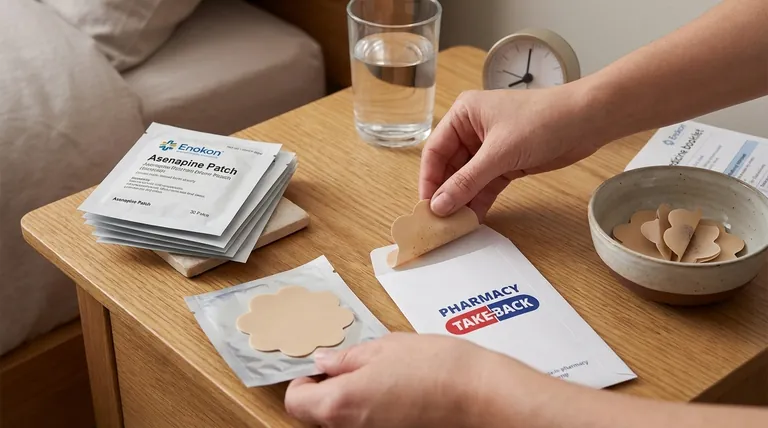
The Principles of Proper Storage
Storing your asenapine patches correctly is the first step in ensuring they deliver the intended therapeutic dose. The environment can significantly impact the medication's stability and adhesion.
Keep Patches in Their Original Pouch
The original packaging is designed to protect the patch from light, air, and humidity, all of which can degrade the active ingredient or the adhesive. Do not remove the patch from its pouch until you are ready to apply it.
Maintain Room Temperature
Store the patches at a consistent room temperature. Extreme heat can alter the chemical composition of the medication and damage the adhesive layer, potentially affecting how the drug is absorbed through your skin.
Avoid Heat and Moisture
The bathroom medicine cabinet is often a poor choice for storage due to fluctuating heat and humidity from showers. Choose a cool, dry place like a dresser drawer or a closet outside of the bathroom.
The Critical Steps for Safe Disposal
A used patch still contains a significant amount of active medication that can be harmful to children, pets, or the environment if disposed of improperly.
Neutralize the Active Surface
The single most important step is to fold the used patch in half so that the sticky, medicated side sticks to itself. This simple action seals the drug matrix and minimizes the risk of accidental contact.
The Best Option: Medicine Take-Back Programs
Whenever possible, dispose of old or unused patches through a community medicine take-back program. This is the safest method to ensure medications are destroyed properly and do not enter the water supply or fall into the wrong hands.
Why You Should Never Flush Patches
Flushing patches down the toilet introduces medication directly into the water system, which treatment facilities are not designed to remove. This poses a risk to wildlife and the environment.
Common Pitfalls to Avoid
Proper handling extends beyond storage and disposal. Avoiding common application errors is crucial for the medication to work as intended.
Cutting or Trimming the Patch
Never cut or alter an asenapine patch. The patch is designed as a complex system to release medication at a controlled rate, and cutting it can lead to an unpredictable and unsafe dose.
Applying to an Unsuitable Location
Apply the patch only to a clean, dry, and hairless area on the upper arm, upper back, abdomen, or hip. Avoid skin that is oily, irritated, broken, or scarred. Also, avoid the waistline, where tight clothing can rub the patch off.
Forgetting to Rotate Application Sites
To prevent skin irritation, you must apply each new patch to a different location. Rotating sites allows the skin to recover fully between applications.
Making the Right Choice for Your Goal
Following these guidelines ensures you receive the full benefit of your medication while protecting those around you.
- If your primary focus is medication effectiveness: Always store patches in their original pouch at room temperature and apply to a clean, dry, approved site.
- If your primary focus is safety for your household and the environment: Always fold used patches sticky-side-in and use a medicine take-back program for final disposal.
Proper handling is a critical part of your treatment plan, ensuring your medication works safely and effectively from start to finish.
Summary Table:
| Aspect | Key Guideline | Why It's Important |
|---|---|---|
| Storage | Keep in original pouch at room temperature. | Protects medication from degradation by light, air, and humidity. |
| Application | Apply to clean, dry, hairless skin; rotate sites. | Ensures consistent drug absorption and prevents skin irritation. |
| Disposal | Fold patch sticky-sides together; use take-back programs. | Seals in residual medication, protecting children, pets, and the environment. |
Need a reliable partner for your transdermal patch needs?
As a bulk manufacturer of pharmaceutical-grade transdermal patches, Enokon provides the technical expertise and rigorous quality control required for products like asenapine patches. We ensure consistent drug delivery, stable adhesion, and proper packaging to maintain integrity from our facility to the end-user.
Partner with us to develop your patches with confidence. We offer custom R&D and manufacturing for healthcare and pharma brands, ensuring your products are safe, effective, and easy to use.
Contact our experts today to discuss your project requirements.
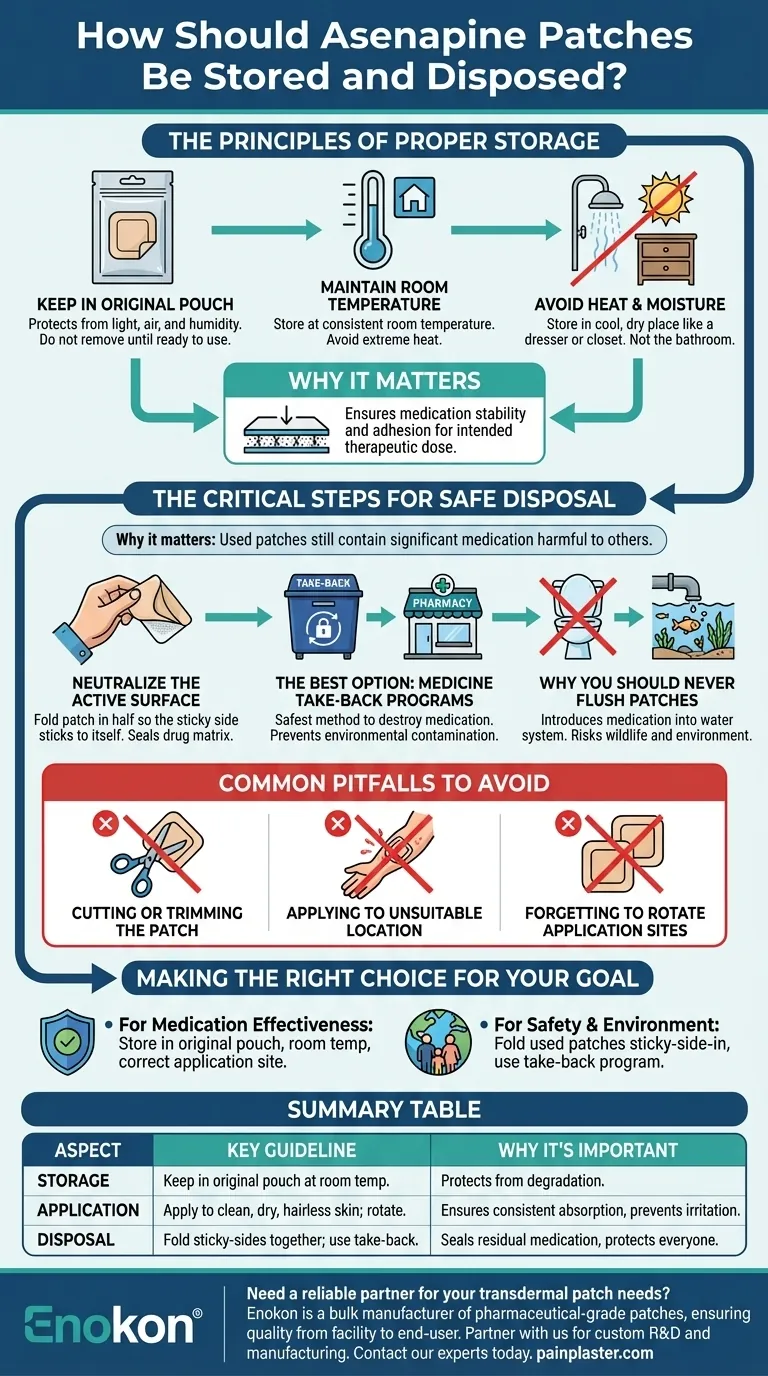
Visual Guide
Related Products
- Silicone Scar Sheets Patch Transdermal Drug Patch
- Far Infrared Heat Pain Relief Patches Transdermal Patches
- Menthol Gel Pain Relief Patch
- Icy Hot Menthol Medicine Pain Relief Patch
- Mugwort Wormwood Pain Relief Patch for Neck Pain
People Also Ask
- What role does a silicone-based transdermal delivery system play in Parkinson's? Enhancing Early-Stage Patient Care
- How is the long-term skin tolerance of silicone-based transdermal patches evaluated in clinical settings? R&D and Safety
- Why is a polarizing microscope used to evaluate the long-term stability of transdermal drug patches? Ensure Efficacy.
- What are common adverse effects of transdermal drug delivery? Risks & Prevention Tips
- What are the advantages of transdermal drug patches? Optimize Medication Delivery with Patches











