
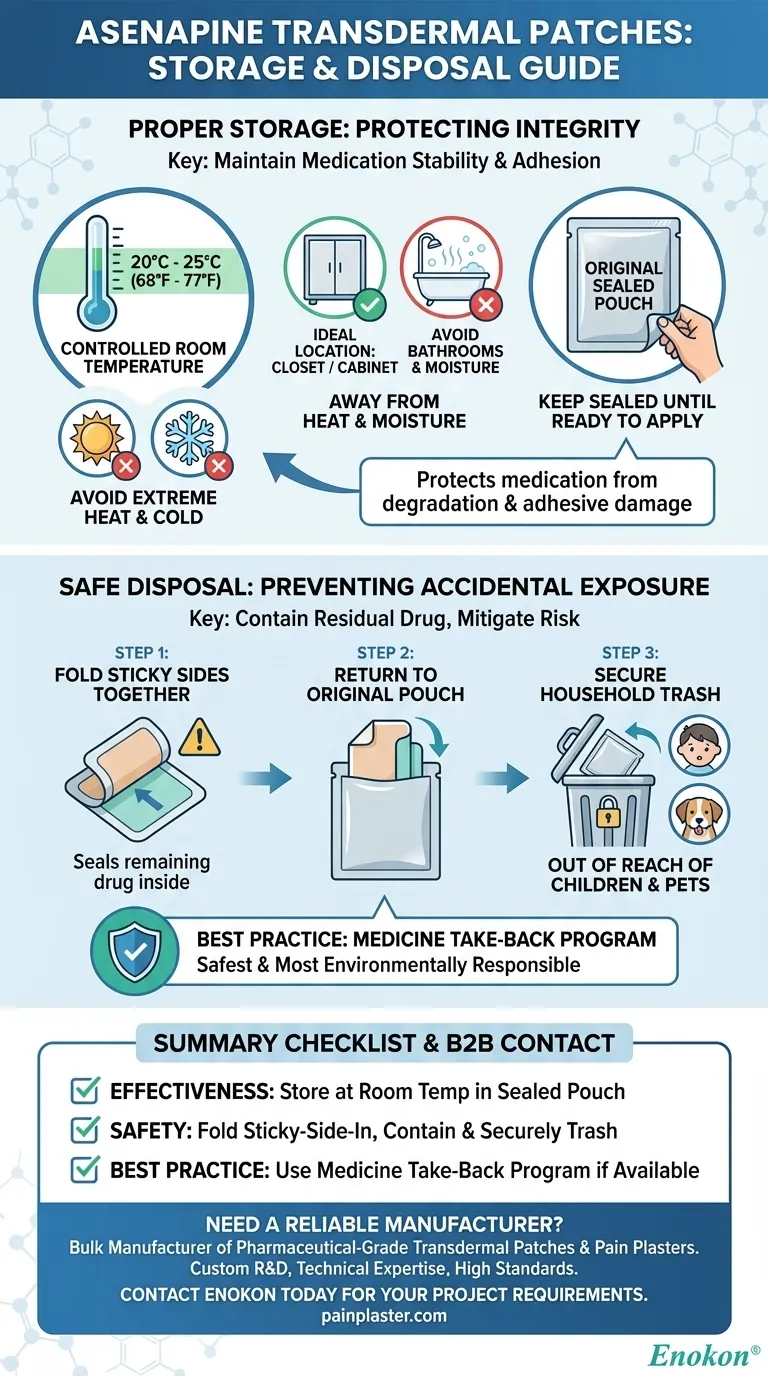
To ensure safety and effectiveness, asenapine transdermal patches must be stored at room temperature away from heat and moisture, and kept in their original sealed pouch until you are ready to apply one. After use, the patch should be folded with the sticky sides together, placed back into its pouch, and disposed of in a secure household trash can that is out of reach of children and pets.
The core principle is twofold: proper storage protects the medication's integrity to ensure you receive the correct dose, while meticulous disposal prevents accidental and dangerous exposure to the potent residual drug left in a used patch.
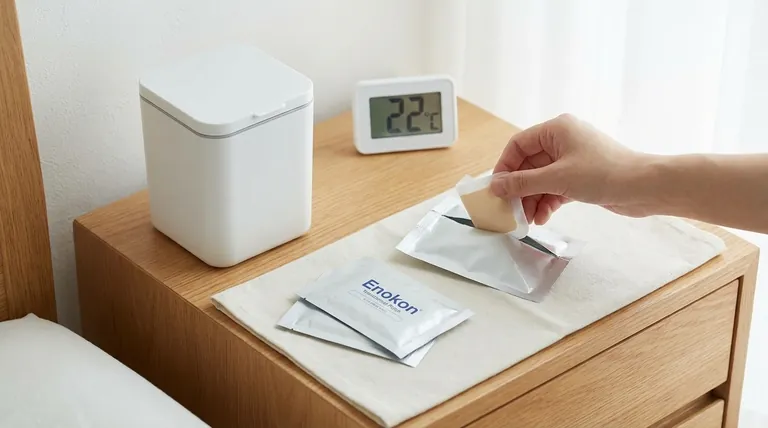
Proper Storage: Protecting Medication Integrity
Correctly storing your asenapine patches is the first step in ensuring your treatment is effective. The environment can directly impact the stability of the medication and the patch's ability to adhere to your skin.
The Importance of Room Temperature
Asenapine patches should be stored at a controlled room temperature, typically between 20°C to 25°C (68°F to 77°F).
Extreme heat can degrade the active medication, potentially reducing the patch's therapeutic effect. Conversely, cold can alter the adhesive, making it less effective at sticking to the skin.
Shielding from Heat and Moisture
Moisture and humidity are enemies of transdermal patches. They can compromise the adhesive backing and damage the drug itself.
For this reason, you should avoid storing patches in a bathroom where steam from showers is common. A bedroom closet or a kitchen cabinet away from the stove are much better locations.
Keeping Patches in the Sealed Pouch
Each patch is individually sealed in a protective pouch for a reason. This pouch shields it from light, air, and humidity.
Only open a pouch when you are immediately ready to apply the patch. This ensures you receive the full, correct dose as intended by your doctor.
Safe Disposal: Preventing Accidental Exposure
Even after a full day of use, a transdermal patch contains a significant amount of its active ingredient. Disposing of it carelessly creates a serious risk for others.
The First Step: Fold and Contain
Once you remove a used patch, the first step is to fold it in half with the sticky, medication-containing sides pressed firmly together.
This action seals the remaining drug inside and prevents it from being transferred to anyone who might touch it. Placing the folded patch back into its original pouch adds another layer of security.
Why This Method is Critical
A discarded patch that is not folded can easily stick to a child's or pet's skin, leading to accidental absorption of a powerful antipsychotic medication.
This can result in accidental poisoning, which is a medical emergency. The simple act of folding and containing the patch mitigates this serious hazard.
Choosing the Right Disposal Location
The contained patch should be placed in a household trash can with a secure lid, making it inaccessible.
If a medicine take-back program is available in your community, this is the safest and most highly recommended method for disposing of any unused or expired patches.
Common Pitfalls to Avoid
It is crucial to understand that disposal instructions can vary between different types of transdermal patches. What is safe for one medication may be dangerous for another.
Do Not Generalize Instructions
Some powerful medications, like certain opioid or methylphenidate patches, have historically been recommended for flushing down a toilet to prevent misuse.
This is not the recommendation for asenapine. Always follow the specific instructions provided for your medication to ensure safe and environmentally responsible disposal.
The Hazard of an Unsecured Trash Can
Simply tossing a used patch into an open wastebasket is not enough.
Curious toddlers or pets can easily retrieve items from an open can. Always use a covered trash receptacle that they cannot access.
A Simple Checklist for Asenapine Patch Safety
Following a clear, consistent routine for storage and disposal is the best way to ensure both safety and treatment efficacy.
- If your primary focus is medication effectiveness: Always store patches at room temperature in their sealed pouches, away from bathrooms or direct sunlight.
- If your primary focus is preventing accidental harm: Always fold used patches sticky-side-in, place them in the original pouch, and dispose of them in a secure trash can.
- If your primary focus is the highest level of safety: Utilize an authorized medicine take-back program to dispose of any unwanted patches whenever one is available.
By handling your medication with care from the moment you receive it to the moment you discard it, you take control of your treatment and protect those around you.
Summary Table:
| Action | Key Guideline | Why It's Important |
|---|---|---|
| Storage | Keep in sealed pouch at 20°C-25°C (68°F-77°F), away from moisture. | Protects medication integrity and skin adhesion for correct dosing. |
| Disposal | Fold patch sticky-sides together, place in pouch, discard in secure trash. | Prevents accidental poisoning of children/pets from residual drug. |
| Best Practice | Use a medicine take-back program if available. | Highest level of safety and environmental responsibility. |
Need a reliable manufacturer for your transdermal patch portfolio?
As a bulk manufacturer of pharmaceutical-grade transdermal patches and pain plasters, Enokon provides healthcare and pharma distributors with the technical expertise for custom R&D and development. Ensure your products are delivered with the highest standards of stability, safety, and clear patient guidance.
Contact our experts today to discuss your project requirements.
Visual Guide
Related Products
- Silicone Scar Sheets Patch Transdermal Drug Patch
- Far Infrared Heat Pain Relief Patches Transdermal Patches
- Menthol Gel Pain Relief Patch
- Icy Hot Menthol Medicine Pain Relief Patch
- Mugwort Wormwood Pain Relief Patch for Neck Pain
People Also Ask
- What role does a silicone-based transdermal delivery system play in Parkinson's? Enhancing Early-Stage Patient Care
- How is the long-term skin tolerance of silicone-based transdermal patches evaluated in clinical settings? R&D and Safety
- Why is a polarizing microscope used to evaluate the long-term stability of transdermal drug patches? Ensure Efficacy.
- What are common adverse effects of transdermal drug delivery? Risks & Prevention Tips
- What are the advantages of transdermal drug patches? Optimize Medication Delivery with Patches











