
To ensure safety and effectiveness, buprenorphine patches must be stored at room temperature in their original sealed packaging, away from children and pets. For disposal, the safest method is a drug take-back program, but used patches should always be folded in half with the sticky sides together first to contain the remaining potent medication.
Because both new and used buprenorphine patches contain enough opioid to cause serious harm or death, especially to a child, every step from storage to disposal must be handled with extreme care to prevent accidental exposure, misuse, or diversion.
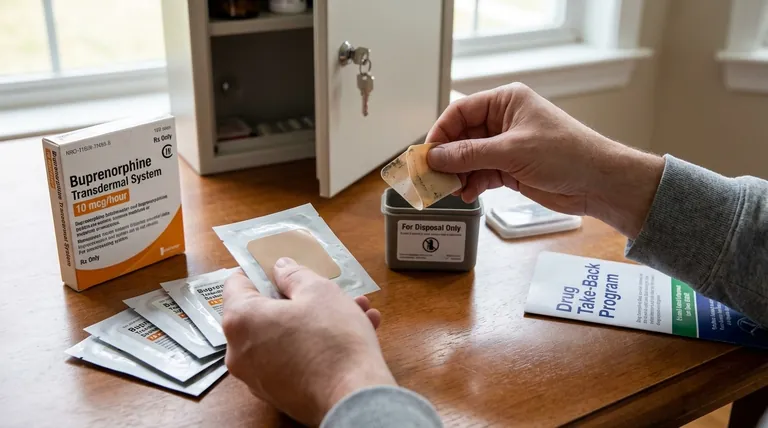
Proper Storage: Maintaining Safety and Efficacy
How you store the patches before use is critical for ensuring they deliver the correct dose and do not pose a risk to others in your home.
Keep Patches in Their Sealed Pouch
Each patch is individually sealed for a reason. Do not remove it from its protective pouch until you are ready to apply it. This protects the medication from air and moisture, which can affect its integrity and adhesion.
Maintain Room Temperature
Store the pouches at a controlled room temperature, typically between 59°F and 86°F (15°C and 30°C). Keep them away from sources of direct heat and moisture, such as a sunny windowsill or a bathroom medicine cabinet.
Secure the Location
Always store buprenorphine patches in a secure location that is out of the sight and reach of children and pets. Accidental exposure to this medication can be fatal.
Safe Handling During Application
Proper application ensures the medication works as intended and prevents dangerous situations.
Apply to Clean, Dry Skin
Apply the patch to a clean, dry, and relatively hairless area of skin, such as the upper outer arm, upper chest, or upper back. Press down firmly with the palm of your hand for at least 30 seconds to ensure the edges are sealed.
Avoid Direct Heat
Never expose the patch to direct heat sources like heating pads, electric blankets, saunas, or hot tubs. Heat can cause the medication to be absorbed into your body too quickly, significantly increasing the risk of a life-threatening overdose.
Check Adhesion Daily
Briefly check the patch each day to make sure it is still adhering properly. If a patch falls off, do not reapply it. Fold it sticky-side in, dispose of it, and apply a new patch to a different skin site.
Critical Steps for Disposal
Disposing of buprenorphine patches correctly is one of the most important safety responsibilities for patients and caregivers.
The First Step for All Used Patches: Fold It
As soon as you remove a used patch, immediately fold it in half so the sticky, medication-containing side sticks to itself. This is the single most important step to prevent the remaining drug from sticking to someone or something else.
Preferred Disposal Method: Take-Back Programs
The safest way to dispose of both used and unused patches is through a U.S. Drug Enforcement Administration (DEA)-authorized medicine take-back program. These are often located at pharmacies or police stations and are the best way to prevent diversion and environmental contamination.
If a Take-Back Program Is Unavailable
If you cannot get to a take-back program, official FDA guidance for potent opioids like buprenorphine is to flush them down the toilet. While this has environmental concerns, the FDA has determined that the risk of accidental ingestion by a child or pet outweighs the environmental risk.
Never Use an Open Trash Can
Do not simply throw a used patch into an open household trash can where a child or pet could find it. If flushing is not an option and a take-back program is unavailable, place the folded patch in a durable container before placing it in a secure trash receptacle.
Understanding the Risks
Recognizing the potential dangers is key to handling this medication responsibly.
The Danger of Used Patches
A used patch is not empty. It can still contain a significant amount of buprenorphine, enough to cause a fatal overdose if ingested or absorbed by someone for whom it was not prescribed, particularly a child.
Risk of Accidental Transfer
If a patch partially or fully detaches, it could accidentally stick to another person through close contact or from bed linens. This can lead to an unintended and dangerous dose of the opioid.
The Disposal Dilemma
The recommendation to flush buprenorphine patches is a harm-reduction strategy. It prioritizes preventing an immediate and potentially fatal poisoning in the home over the long-term, lower-level risk of environmental contamination.
Making the Right Choice for Safety
Your priority should always be preventing accidental exposure and ensuring the medication is managed securely.
- If your primary focus is in-home safety: Always store patches out of reach of children and pets, and immediately fold and dispose of used patches after removal.
- If your primary focus is community and environmental safety: Use an authorized drug take-back program as your first and only choice for disposing of all used and expired patches.
- If you lack access to a take-back program: Follow the FDA's guidance to flush used patches to eliminate the immediate and severe risk of accidental poisoning in your home.
Responsible management of this powerful medication protects you, your family, and your community.
Summary Table:
| Aspect | Key Guideline | Why It's Important |
|---|---|---|
| Storage | Keep in sealed pouch at room temperature, away from children/pets. | Maintains drug integrity and prevents accidental poisoning. |
| Application | Apply to clean, dry skin; avoid direct heat; check adhesion daily. | Ensures correct dosing and prevents overdose risk. |
| Disposal | Fold used patch sticky-side in; use take-back program or flush if unavailable. | Prevents misuse and accidental exposure to potent opioid residue. |
Need a reliable supplier for safe, high-quality transdermal patches? As Enokon, a bulk manufacturer of pharmaceutical-grade transdermal patches and pain plasters, we combine rigorous quality control with expert custom R&D to ensure every patch delivers consistent, safe medication. Partner with us to develop secure, effective transdermal solutions for your healthcare brand or distribution network. Contact our specialists today to discuss your requirements!
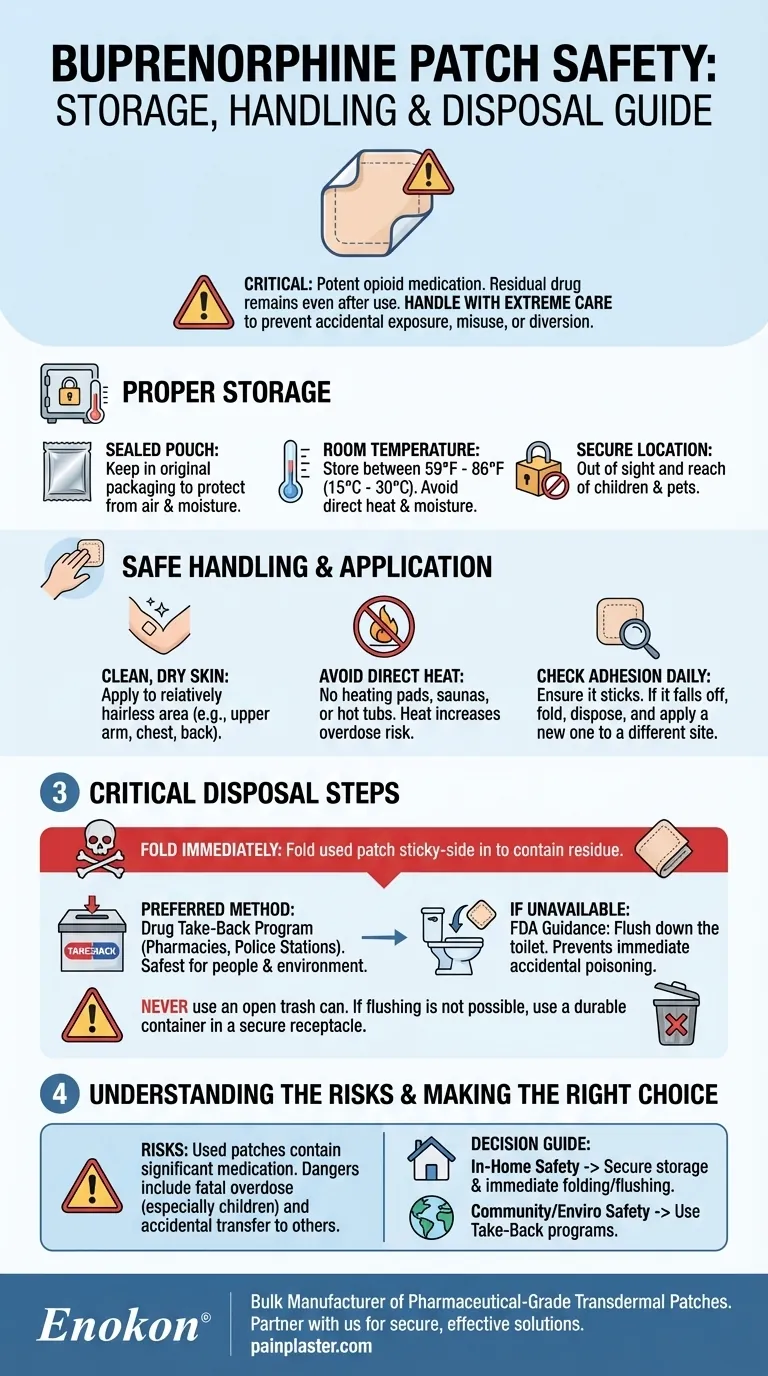
Visual Guide
Related Products
- Menthol Gel Pain Relief Patch
- Asthma Cough and Pain Relief Patch for Adults and Kids
- Lidocaine Hydrogel Pain Relief Patch for Pain Relief
- Herbal Medicated Anti Diarrhea Patch for Digestive Relief
- Icy Hot Menthol Medicine Pain Relief Patch
People Also Ask
- How do pain relief patches compare to other pain relief methods? Discover Targeted, Long-Lasting Relief
- How effective are pain relief patches for muscle pain? Target Localized Pain with Transdermal Delivery
- Who should consult a healthcare professional before using pain relief patches? Ensure Your Safety with Medical Advice
- Can pregnant women use pain relief patches? Your Essential Guide to Safe Pain Management
- What are some common applications of pain relief patches? Effective Relief for Muscle & Joint Pain



















