
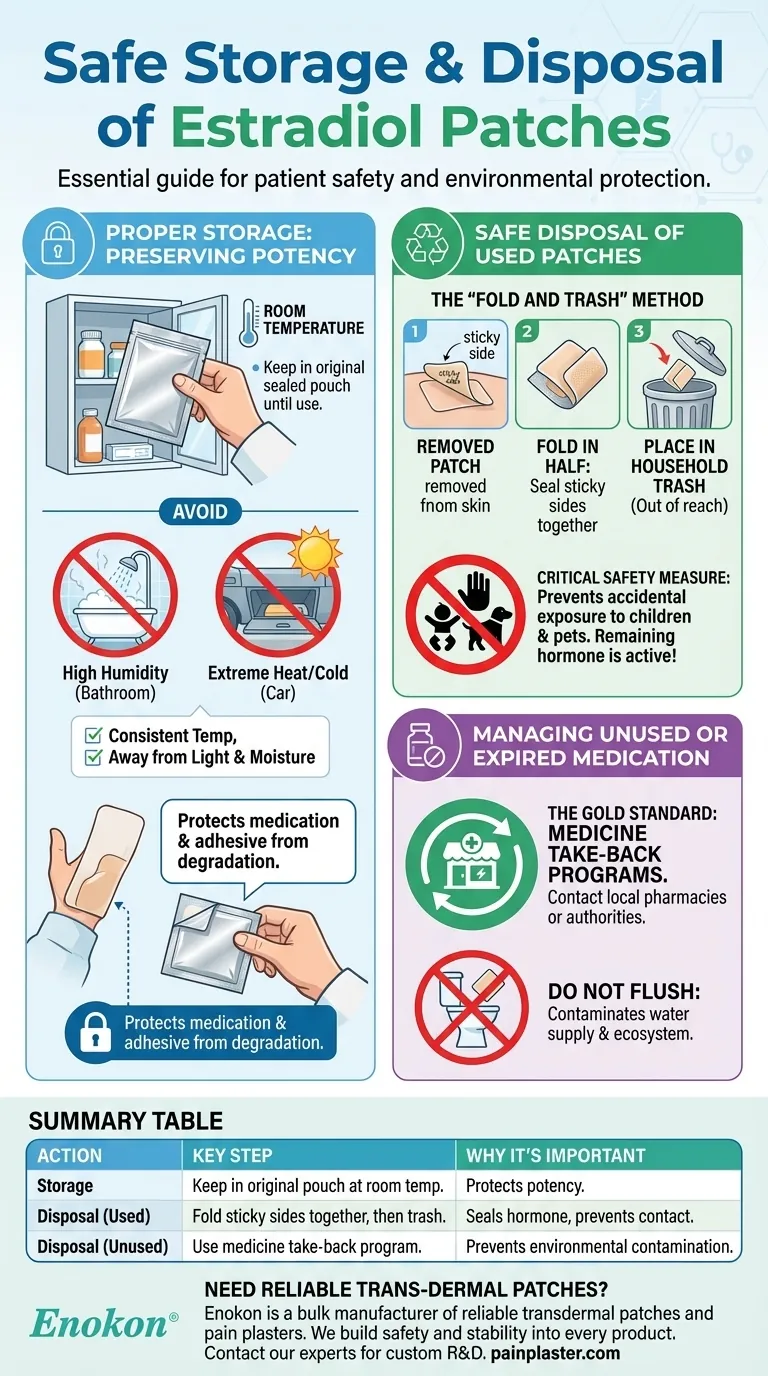
Proper handling of estradiol patches is straightforward but essential for safety and effectiveness. Store them at room temperature in their original sealed pouch until you are ready to use them. Used patches should be folded in half with the adhesive sides pressed together and discarded in the household trash, while unused or expired medication should be taken to a medicine take-back program.
Storing and disposing of estradiol patches correctly is not just about maintaining the medication's integrity; it is a critical safety measure to prevent accidental hormone exposure to children, pets, and the environment.
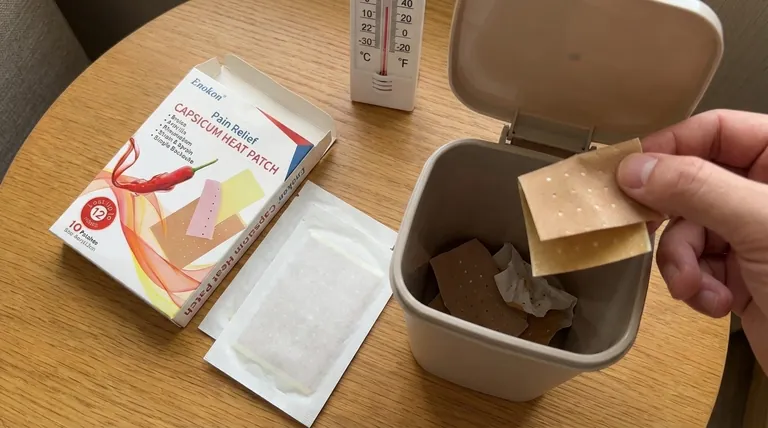
Proper Storage: Preserving Potency and Safety
How you store your patches directly impacts their effectiveness. The goal is to protect the medication and the adhesive from degradation.
Keep Patches in Their Original Pouch
Each patch is sealed in a protective pouch. Do not open it until the moment you are ready to apply it. This pouch protects the patch from light, air, and moisture, all of which can compromise the medication.
Maintain Room Temperature
Store the pouches at a consistent room temperature, away from extreme heat or cold. Avoid storing them in places with fluctuating conditions, such as a bathroom medicine cabinet (due to humidity) or a car's glove compartment.
Safe Disposal of Used Patches
A used patch still contains a significant amount of active hormone. Disposing of it correctly is a critical safety step.
The "Fold and Trash" Method
As soon as you remove a used patch, fold it in half so the sticky, adhesive sides press firmly together. This seals the medication surface.
Why Folding is Critical
Folding the patch deactivates the delivery system and prevents the remaining estradiol from leaching into the environment or coming into contact with another person or pet. An improperly discarded patch can stick to skin and transfer hormones.
Place in Household Trash
Once folded, the patch can be safely discarded in a household trash can. Ensure the can has a lid or is otherwise inaccessible to curious children or pets.
Managing Unused or Expired Medication
Disposing of unused or expired medication requires a different approach than for a single used patch, as the environmental and safety risks are higher.
Do Not Flush Patches
Never flush estradiol patches down the toilet. The hormones can contaminate the water supply, posing a risk to wildlife and the ecosystem.
The Gold Standard: Medicine Take-Back Programs
The safest and most environmentally responsible method for disposing of unneeded medication is a medicine take-back program. Many pharmacies, hospitals, and police departments offer this service. You can contact your local pharmacist or garbage/recycling department to find a program in your community.
Understanding the Risks and Responsibilities
Beyond simple storage and disposal, responsible use involves being aware of potential risks to yourself and others.
Risk of Accidental Exposure
The primary reason for careful disposal is to prevent accidental exposure. Children and pets are especially vulnerable to the potent effects of hormones if they find and handle a discarded patch.
Avoiding Skin Irritation
To prevent skin irritation, always apply your patch to a clean, dry, and hairless area of skin as directed by your doctor. It is important to rotate application sites and not use the same spot twice in a row.
Adhering to Your Prescription
Never cut or trim an estradiol patch unless specifically instructed by your healthcare provider, as this can alter the dose you receive. Always use the lowest effective dose for the shortest necessary duration and maintain regular medical checkups.
A Simple Checklist for Responsible Use
Use these guidelines to ensure you are handling your medication correctly at every stage.
- If you are storing your medication: Always keep patches sealed in their original pouch at room temperature, away from direct heat and moisture.
- If you have just removed a patch: Immediately fold it in half with the sticky sides together and throw it away in a trash can that is out of reach of children and pets.
- If you have unused or expired patches: Use a medicine take-back program as your primary disposal method and never flush them down the toilet.
Following these steps ensures your medication is both effective for you and safe for everyone in your home and community.
Summary Table:
| Action | Key Step | Why It's Important |
|---|---|---|
| Storage | Keep in original pouch at room temperature. | Protects potency by shielding from light, air, and moisture. |
| Disposal (Used Patch) | Fold in half, sticky sides together, then trash. | Seals in remaining hormone to prevent accidental contact. |
| Disposal (Unused/Expired) | Use a medicine take-back program. | Prevents environmental contamination; safest option. |
Need Reliable, Safe Transdermal Patches for Your Brand?
Proper handling is critical for patient safety. At Enokon, we are a bulk manufacturer of reliable transdermal patches and pain plasters for healthcare and pharma distributors and brands. We build safety and stability into every product. Benefit from our technical expertise for custom R&D and development to ensure your patches meet the highest standards from production to patient use.
Contact our experts today to discuss your project requirements.
Visual Guide
Related Products
- Heating Pain Relief Patches for Menstrual Cramps
- Prostate Pain Kidney Health Care Patch for Men
- Menthol Gel Pain Relief Patch
- Icy Hot Menthol Medicine Pain Relief Patch
- Lidocaine Hydrogel Pain Relief Patch for Pain Relief
People Also Ask
- What are the benefits of Period Pain Heat Patches? Drug-Free, On-the-Go Relief
- What are the key benefits of heating patches for elderly individuals? Relieve Pain & Improve Mobility
- What are the different types of heat patches? Find the Right Pain Relief for Your Needs
- What are the key differences between conventional heat patches and deep heat devices? Choosing the Right Pain Relief Solution
- What percentage of people with back pain use heat patches for relief? Discover the Popular Choice for Pain Management















