
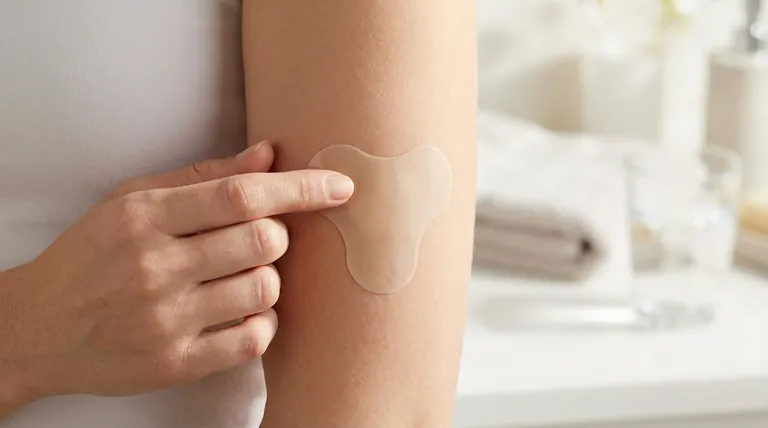
To use a nitroglycerin patch correctly, you should apply one new patch each day to a clean, dry, and hairless area of skin on your upper body or upper arms. The patch should be worn for a period of 12 to 14 hours and then removed, allowing for a "patch-free" interval of 10 to 12 hours before applying the next one. This specific on-and-off schedule is essential for the medication to remain effective.
The most critical aspect of using nitroglycerin patches is not just how you apply them, but adhering to the prescribed daily "patch-off" period. This break is essential to prevent your body from developing a tolerance, which would render the medication ineffective for preventing chest pain.
The Step-by-Step Application Process
Proper application ensures you receive the correct dose of medication consistently and safely. Following a precise routine is key.
Prepare the Application Site
First, choose a suitable spot on your upper body or upper arms. The skin should be clean, dry, and hairless to ensure the patch sticks properly.
Avoid applying the patch to skin folds, scarred areas, or any skin that is irritated or damaged. It is also important to avoid areas below the elbows or knees.
Apply the Patch Correctly
Wash and dry your hands thoroughly before handling the patch. When you apply the new patch, press it firmly onto the skin with the palm of your hand for about 10-15 seconds.
Make sure the edges are stuck down well. If a patch happens to fall off, simply apply a new one to a different site and continue your original schedule.
Rotate Sites Daily
To prevent skin irritation, you must rotate the application site each day. Do not use the same spot for several days in a row. After removing a patch, the old site may be cleaned with soap and water.
The Critical "Patch-Off" Period: Preventing Tolerance
The timing of when you wear and remove the patch is just as important as where you place it. This schedule is designed to combat a specific biological response.
Understanding Nitrate Tolerance
Nitroglycerin works by relaxing and widening blood vessels. However, with continuous exposure, the body's blood vessels become less responsive to the medication.
This phenomenon is known as nitrate tolerance. If tolerance develops, the patch will no longer be effective at preventing episodes of angina (chest pain).
The 12-Hour Rule
To prevent tolerance, a daily patch-off period of 10 to 12 hours is required. This break allows your blood vessels to regain their sensitivity to the medication.
Your doctor will instruct you on the best schedule, which typically involves wearing the patch during the day (e.g., 8 AM to 8 PM) and removing it overnight.
Key Safety Precautions to Understand
While effective, nitroglycerin requires awareness of potential side effects and interactions to ensure your safety.
Managing Common Side Effects
You may experience dizziness, lightheadedness, or drowsiness. To minimize this, avoid standing up too quickly from a sitting or lying position.
Refrain from driving or operating heavy machinery until you know how the medication affects you. You should also avoid consuming alcohol, as it can intensify these side effects.
Critical Safety Warnings
Some patches contain a thin layer of aluminum. This metal can heat up during a Magnetic Resonance Imaging (MRI) scan and cause skin burns. Always inform your doctor and the MRI technician that you are wearing a nitroglycerin patch before the procedure.
Proper Handling and Disposal
After removing a used patch, fold it in half with the sticky sides together. This prevents accidental exposure to any remaining medication.
Dispose of the patch in a manner that keeps it away from children and pets. Do not flush patches down the toilet; ask your pharmacist about medication take-back programs.
Applying This to Your Treatment Plan
Your primary goal is to use this medication to safely and consistently prevent angina. The strategy for achieving this involves diligence and adherence to a few core principles.
- If your primary focus is maximizing angina prevention: Strictly adhere to the 12-14 hour "on" and 10-12 hour "off" schedule to prevent nitrate tolerance.
- If your primary focus is personal safety: Always be mindful of potential dizziness, avoid standing up quickly, and immediately inform MRI staff you are using a patch.
- If your primary focus is consistent treatment: Make a habit of rotating the application site every single day to prevent skin irritation and ensure proper absorption.
Ultimately, using nitroglycerin patches effectively is about creating a consistent daily routine that balances medication delivery with the body's need for a rest period.
Summary Table:
| Key Aspect | Guideline |
|---|---|
| Application Site | Clean, dry, hairless skin on upper body/arms |
| Wear Time | 12-14 hours per day |
| Patch-Free Interval | 10-12 hours daily (to prevent tolerance) |
| Site Rotation | Rotate daily to avoid skin irritation |
| Critical Safety | Remove patch before MRI; can cause skin burns |
Need a reliable supplier for nitroglycerin or other transdermal patches?
As Enokon, a bulk manufacturer of trusted transdermal patches and pain plasters, we provide healthcare and pharma distributors with consistent quality and custom R&D expertise. Ensure your patients receive effective, safe medication with patches designed for optimal delivery.
Contact our experts today to discuss your manufacturing needs and how we can support your brand.
Visual Guide

Related Products
- Herbal Medicated Anti Diarrhea Patch for Digestive Relief
- Asthma Cough and Pain Relief Patch for Adults and Kids
- Menthol Gel Pain Relief Patch
- Icy Hot Menthol Medicine Pain Relief Patch
- Lidocaine Hydrogel Pain Relief Patch for Pain Relief
People Also Ask
- What activities should be avoided while using this patch? Key Precautions for Safe & Effective Use
- What should be avoided when using the patch? Key Safety Tips for Herbal Patch Users
- What should be done if a patch falls off or a dose is missed? Quick Fixes & Safety Tips
- What should be done if a patch comes loose or falls off? Ensure Continuous & Effective Treatment
- What lifestyle factors should be considered with the patch? Ensure Safe and Effective Medication Delivery



















